
The most expensive way to power your business in 2026 isn’t a high-usage month; it’s the hidden cost of staying loyal to a single direct supplier. With wholesale gas prices jumping 30% in early September and non-commodity charges now making up 64% of your electricity bill, finding alternatives to direct energy suppliers for business is no longer just an option, it’s a necessity. We understand that for many UK business owners and farmers, the lack of transparency and the time-consuming nature of comparisons make energy management feel like a constant struggle.
This guide shows you how to move beyond basic contracts toward managed solutions that protect your bottom line. You’ll learn how to secure expert market guidance and a “done-for-you” switching experience that cuts through industry jargon to deliver real results. We will explore how independent brokerage models provide the clarity and long-term price stability you need to take control of your overheads without the stress of going it alone.
Key Takeaways
- Understand why standard direct supplier renewals often lead to “lazy” pricing and how to access a broader range of market offers instead.
- Discover the most effective alternatives to direct energy suppliers for business by transitioning from time-consuming DIY research to a managed consultancy model.
- Learn how to time your contract renewals proactively using market data to avoid volatile price spikes and expensive out-of-contract rates.
- Identify the benefits of a “done-for-you” switching service that provides specialist support for the unique energy needs of farms, charities, and SMEs.
- Shift your energy procurement from a reactive transaction to a strategic partnership that ensures long-term price stability and transparency.
Why Direct Supplier Contracts May Not Be Optimal for Your Business
Many UK business owners stick with their current energy supplier because it feels like the path of least resistance. However, relying on a single direct relationship often limits your financial flexibility. The six largest suppliers still control about 92% of the market, but this dominance hasn’t necessarily translated into better value for the end user. When you only look at one supplier’s offerings, you miss out on the broader market movements that could lower your overheads.
Managing energy procurement in-house has become a significant drain on resources. Between tracking wholesale fluctuations and understanding complex policy costs, the time investment is substantial. For many, the DIY approach results in “lazy” pricing, where businesses accept renewal quotes that are far higher than what’s available elsewhere. This is why many organisations are now looking for What is an energy broker? to help them identify more effective alternatives to direct energy suppliers for business.
The Hidden Costs of Direct Renewals
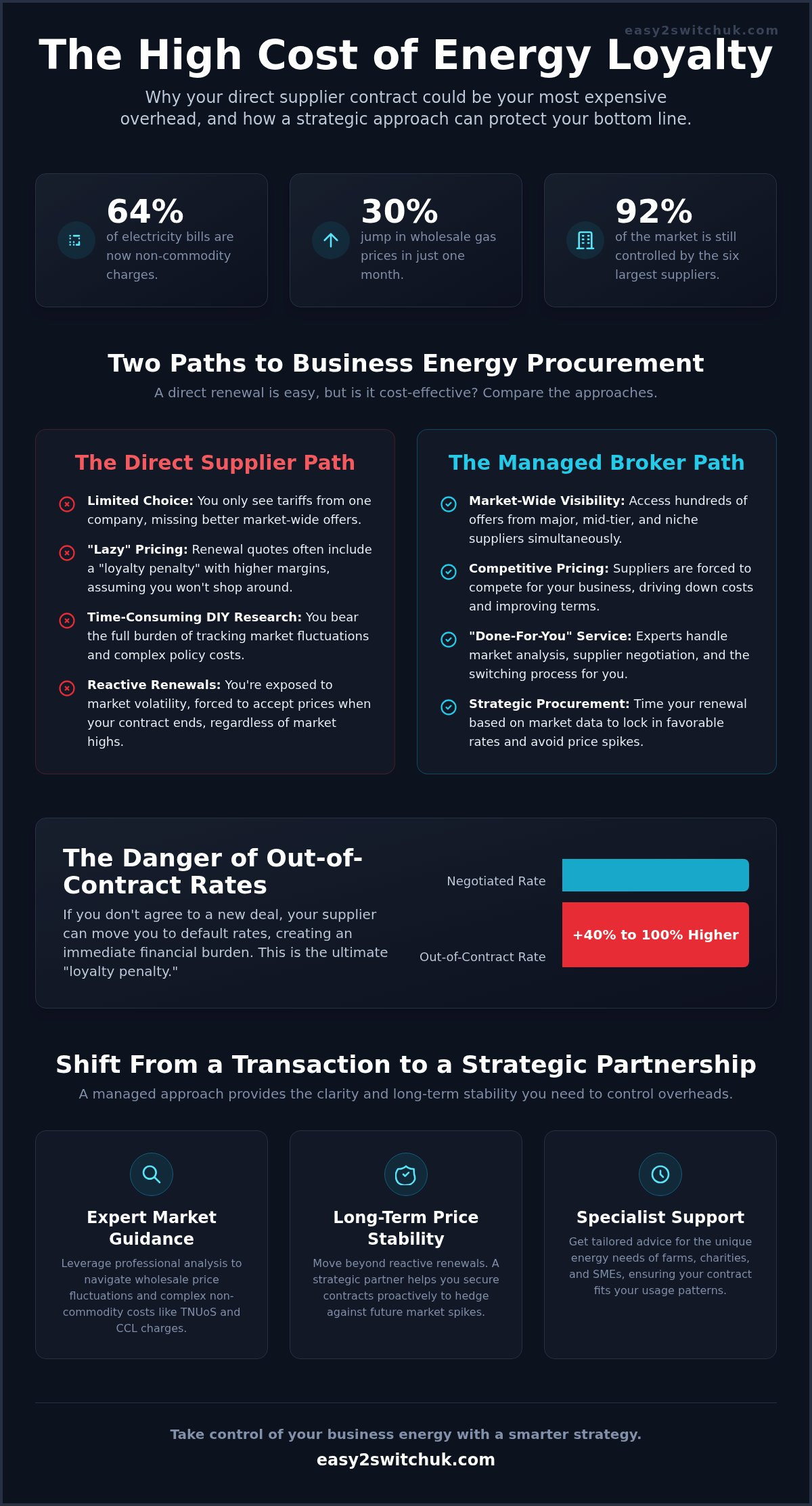
A direct renewal quote is rarely the most competitive deal on the market. Suppliers often rely on the “loyalty penalty,” assuming that busy managers won’t have the time to shop around. These quotes frequently include higher margins because the supplier knows they aren’t competing against anyone else in that moment. For specific sectors like farming, these standard contracts often ignore the seasonal usage patterns that require a more tailored approach. If you don’t agree to a new deal, you’ll likely be moved to out-of-contract rates. These default rates can be 40% to 100% higher than negotiated fixed prices, creating an immediate financial burden.
Market Volatility and the 2026 Energy Landscape
The 2026 market is defined by extreme volatility. In September 2026, wholesale gas prices rose by 30% in just 30 days, while electricity followed with a 25% increase. Relying on a single supplier’s view makes it difficult to hedge against these spikes effectively. Additionally, non-commodity costs like Transmission Network Use of System (TNUoS) charges rose by over 60% in April 2026. New Climate Change Levy (CCL) rates also took effect on 1 April 2026, set at £0.00801 per kWh for both electricity and natural gas. These layers of cost make bills more complex than ever. While the government’s April 2026 review of Ofgem aims to strengthen consumer protection, the lack of a business price cap means you remain fully exposed to market swings unless you adopt a more proactive procurement strategy.
The Brokerage Model: A Strategic Alternative to Direct Procurement
Adopting alternatives to direct energy suppliers for business often means shifting toward a managed brokerage framework. While a direct supplier is restricted to their own internal tariffs, a broker operates as an impartial intermediary between your organisation and the wider market. This relationship allows you to bypass standard retail prices and access wholesale-linked rates that aren’t typically advertised on public websites. Most brokers work on a commission-based structure, ensuring the service is cost-neutral for your business while the consultant handles the heavy lifting of market analysis and contract negotiation.
There’s a significant difference between using a basic comparison tool and partnering with a specialist. Comparison sites often prioritise speed and simple transactions, whereas a dedicated broker examines your specific usage profile to find a long-term fit. An energy broker is a strategic procurement partner for UK businesses that bridges the gap between complex market data and actionable savings. This model ensures you aren’t just another account number in a supplier’s database, but a client with a bespoke energy strategy designed to protect your margins.
How Energy Brokers Provide Market-Wide Visibility
Brokers have the infrastructure to scan hundreds of supplier offers simultaneously. This includes access to niche and mid-tier suppliers that don’t have large marketing budgets and only work through intermediaries. Smaller firms often struggle with high overheads, but understanding the competitive value of energy efficiency and procurement can help them regain control. By leveraging a broker’s network, you gain visibility into parts of the market that remain hidden to those who only deal with major suppliers. This market-wide view forces suppliers to compete for your custom, driving down costs.
Specialised Support for Farming and Charities
Farms and charities have unique requirements that standard business contracts often fail to address. A farm might have high seasonal usage for grain drying or livestock management, requiring a flexible tariff that doesn’t penalise peak-time consumption. Similarly, many charities don’t realise they qualify for a reduced VAT rate of 5% or exemptions from the Climate Change Levy (CCL). Our business energy consultants specialise in identifying these specific reliefs, ensuring you don’t overpay on your utility bills. If you’re looking for a simpler way to manage these complexities, speaking with a specialist at Easy2switch UK Ltd can provide the clarity you need to move forward with confidence.
Direct vs. Intermediary: A Framework for Commercial Comparison
Choosing between a DIY approach and an intermediary model often comes down to how you value your time. When you manage energy directly, you’re limited to the specific products one supplier wants to sell you. This often means missing out on broader market opportunities that could lower your overheads. By exploring alternatives to direct energy suppliers for business, you shift from a restrictive single-supplier view to a comprehensive market perspective. This transition isn’t just about the price per unit; it’s about the quality of support you receive and the long-term stability of your budget.
The difference in account management is particularly stark. Direct suppliers rely on large, often impersonal call centres where you might speak to a different agent every time you call. In contrast, an intermediary provides a dedicated point of contact. This personal consultancy support ensures that your specific industry needs, whether you’re running a busy farm or a local charity, are understood and prioritised. This creates a sense of reliability, knowing that complex market variables are being handled by capable hands.
Efficiency and Resource Allocation
Procuring energy in-house is rarely as “free” as it appears. You have to account for the man-hours spent on hold, comparing confusing tariffs, and chasing renewal letters. Partnering with a commercial energy broker provides a “done-for-you” advantage that returns these hours to your core business operations. Streamlining the administrative burden of switching and renewals allows you to focus on growth rather than paperwork. This level of delegated management ensures that your energy strategy remains proactive, helping you avoid the last-minute panic of an expiring contract.
Contract Transparency and Hidden Terms
Direct agreements often contain clauses that can catch businesses off guard, particularly regarding deemed rates. If a contract expires and you haven’t negotiated a new one, you’ll be moved to expensive out-of-contract rates. In September 2026, these rates reached 40.0p per kWh for electricity and 12.0p per kWh for gas, which can be double the cost of a negotiated deal. Brokers act as auditors, reviewing terms to ensure they align with Ofgem’s guide to business energy contracts. They identify hidden fees and ensure that the terms and conditions won’t penalise your specific usage patterns. This transparency is vital for maintaining budget predictability in a market where non-commodity costs now make up over 60% of the typical bill.
Strategic Procurement: Moving Beyond the ‘Standard’ Supplier Relationship
Proactive energy management is about more than just finding a lower unit rate; it involves a fundamental shift from reactive switching to a long-term procurement strategy. Many organisations wait until their current contract is days away from expiring, which forces them into a weak negotiating position. By exploring alternatives to direct energy suppliers for business, you can leverage market data to secure deals when wholesale prices are favourable, rather than when you’re desperate. This forward-thinking approach ensures you’re always one step ahead of the market.
Tracking wholesale trends is essential in the current climate. Geopolitical tensions and European storage levels can drive prices up rapidly, as seen in the volatility throughout 2026. A standard direct relationship rarely offers the flexibility to dodge these spikes. Independent consultants use this data to identify ‘windows of opportunity,’ allowing you to lock in rates before predicted surges. This proactive approach integrates procurement with energy efficiency, creating a holistic strategy that reduces both your consumption and your costs.
Timing the Market for Better Rates
UK energy markets fluctuate based on seasonal demand and global events. Waiting until the last minute to renew a direct contract often leaves you exposed to whatever the market looks like on that specific day. Consultants monitor these fluctuations daily, providing the impartial advice needed to navigate a crowded international market. This ensures your business isn’t just reacting to a renewal letter, but actively timing its entry into the market for maximum advantage. Taking control in this way provides a level of budget certainty that standard contracts simply cannot match.
Bespoke Solutions for High-Usage Industries
Large-scale agricultural operations and growing multi-site businesses face unique challenges that one-size-fits-all contracts can’t solve. Managing multiple meters across different locations requires a centralised strategy to ensure consistency and prevent high-usage sites from draining your budget. Understanding farm electricity prices UK is a critical part of this, as agricultural energy needs are far more specialised than standard commercial profiles. A specialist brokerage approach ensures that every site is optimised for its specific operational requirements, whether you’re running heavy machinery or large cold-storage facilities.
If you want to move beyond the limitations of standard contracts and take control of your energy overheads, it’s time to speak with a specialist. You can request a free energy audit from Easy2switch UK Ltd today to see how a managed procurement strategy can benefit your business or farm.
Partnering with Easy2switch for Stress-Free Energy Management
Managing commercial utility costs shouldn’t feel like a full-time job. At Easy2switch UK Ltd, our mission is to simplify the transition from restrictive contracts toward more flexible, managed solutions. We act as a reliable specialist for organisations that want to move away from standard supplier ecosystems but don’t have the time to audit the market themselves. By providing clear alternatives to direct energy suppliers for business, we help you regain control over your overheads without the administrative headache of DIY procurement.
Our approach is rooted in calm efficiency. We understand the specific pressures facing the UK farming industry and the charity sector. These aren’t standard SMEs; they require a partner who understands seasonal usage peaks and complex tax exemptions. We provide impartial advice that bridges the gap between technical market data and your bottom line. Because our service is commission-based, you receive expert consultancy at no direct cost to your business, ensuring the process remains risk-free and cost-neutral from day one.
Our 3-Step Switching Process
We’ve designed our procurement model to be as low-friction as possible. The journey begins with a free energy review where we conduct a comprehensive market scan tailored to your consumption profile. Once we’ve identified the most competitive options, we provide impartial advice on which tariffs offer the best long-term stability. Finally, we handle the managed switch. This means our team takes care of the paperwork and supplier communications, ensuring you aren’t left chasing signatures or waiting on hold with call centres. It’s a streamlined experience that allows you to focus on running your farm or business while we handle the market variables.
Why UK Businesses Choose Easy2switch
The primary reason clients partner with us is the breadth of choice we provide. While a direct supplier can only offer their own products, we give you access to hundreds of offers from a diverse range of providers. This market-wide visibility is one of the most powerful alternatives to direct energy suppliers for business, as it forces competition and uncovers value that remains hidden to the general public. Our support is pragmatic and reassuring; we don’t use dense jargon to confuse the process. Instead, we offer a personalized service that prioritises your individual needs over a one-size-fits-all corporate solution. This commitment to local accountability and transparency has made Easy2switch UK Ltd a trusted partner for businesses across the country.
Take control of your energy costs with a free review today and discover how a managed strategy can provide the price stability your organisation needs for 2026 and beyond.
Take Control of Your Business Energy Strategy
Securing long-term price stability in a volatile market requires moving away from the limitations of standard renewals. By exploring alternatives to direct energy suppliers for business, you gain the market-wide visibility needed to time your contract entries effectively. You’ve seen how a managed brokerage model removes the administrative burden of switching while ensuring that your specific industry requirements, particularly in the farming and charity sectors, are fully addressed.
As an independent UK energy consultancy, Easy2switch UK provides the specialist expertise needed to navigate complex market variables with ease. Our service is entirely free for you to use, with no hidden fees or stressful paperwork to manage. We handle the technical details so you can focus on your core operations with confidence. Secure a Free, No-Obligation Energy Review for Your Business today and start your transition toward a more transparent, cost-effective energy future. Taking control of your overheads has never been simpler.
Frequently Asked Questions
What is an energy broker and how do they differ from suppliers?
An energy broker is an independent consultant that acts as an intermediary between your business and the energy market. Unlike a supplier who only sells their own tariffs, a broker scans hundreds of offers to find the best fit for your specific needs. They provide impartial advice and manage the procurement process, making them one of the most effective alternatives to direct energy suppliers for business. This ensures you aren’t limited to a single company’s pricing.
Is using an energy broker really free for my business?
Yes, our brokerage service is free for the end-user because we earn a commission directly from the energy supplier you choose. This fee is built into the energy tariff, ensuring the consultancy remains cost-neutral for your business or farm. There are no hidden fees or separate invoices for our time. This model allows us to provide professional market guidance while you focus on your core operations without any financial risk.
How much can a typical UK business save by switching from a direct supplier?
While exact savings vary based on your usage profile, moving away from direct renewals can prevent you from paying “lazy” pricing or expensive out-of-contract rates. In September 2026, out-of-contract electricity rates reached 40.0p per kWh, which is significantly higher than negotiated deals. By exploring alternatives to direct energy suppliers for business, you can often secure long-term price stability and avoid the 40% to 100% price hikes associated with default supplier contracts.
Can a broker help with both gas and electricity for my farm?
We provide comprehensive support for both gas and electricity contracts, specifically tailored to the unique demands of the agricultural sector. Our specialists understand that a farm’s energy profile is different from a standard SME, often requiring flexible tariffs for seasonal equipment. We manage the procurement for both utilities simultaneously, ensuring your entire energy strategy is aligned and optimised for the specific operational requirements of your farming business.
How long does the switching process take when using a consultancy?
The initial market scan and review can be completed very quickly, often within a single phone call or online consultation. Once you select a tariff, the actual transition between suppliers typically takes a few weeks to finalise, depending on your current contract’s notice period. We handle all the administrative paperwork and supplier communications during this time, ensuring the process is fast, simple, and requires minimal input from your side.
Will my energy supply be interrupted during the switch?
No, your energy supply will never be interrupted during the switching process. The transition is purely administrative and relates only to who bills you and the rate you pay. You use the same pipes, wires, and meters that are already installed at your premises. The physical delivery of gas and electricity remains constant, meaning there is no risk of downtime for your business, farm, or charity during the switch.
What happens if I’m currently in a contract with a direct supplier?
If you’re currently in a contract, we can still conduct a free energy review to identify your future options. You don’t have to wait until your contract expires to start looking at the market. We can help you lock in a new rate up to several months in advance, protecting you from future price spikes. This proactive approach ensures you’re ready to switch the moment your current obligations end, avoiding expensive default rates.
Do brokers only work with the ‘Big Six’ energy companies?
We work with a vast network that goes far beyond the “Big Six” suppliers to include hundreds of offers from mid-tier and niche providers. Many of these specialist suppliers don’t market directly to the public and only offer their most competitive rates through independent consultancies. This breadth of choice is vital for finding the right fit, as smaller or industry-specific suppliers often provide better value and more tailored service than the largest market players.
