
What if the lowest headline rate isn’t the best fit for your vineyard? Vineyard energy contracts UK businesses can choose from need to reflect more than annual usage. Demand can shift between growing, harvest, wine production and visitor seasons, while cold storage, pumps and processing equipment may need a reliable supply throughout the year.
Comparing contracts can feel difficult because unit rates tell only part of the story. Renewal dates, payment arrangements and other terms affect how well an offer fits. A contract that suits a quieter period may be less suitable when production ramps up.
This guide explains how to match contract options to your vineyard’s operating patterns and what to check before you commit. You’ll learn which details about equipment, seasonal use and supply needs can shape your choice, how to compare full contract terms rather than one headline rate, and how to plan energy use and renewal with more confidence.
Key Takeaways
- Build a clear energy profile using bills, activity patterns, meter details and supply constraints.
- For vineyard energy contracts UK, assess electricity and gas separately when they serve different parts of your operation.
- Compare offers side by side, checking payment arrangements and renewal conditions as well as rates and contract duration.
- Set a renewal calendar and review equipment schedules separately from procurement decisions.
- If you use a broker, ask how commission is paid and whether it’s included in the supplier’s tariff.
Why vineyard energy contracts should reflect how your business operates
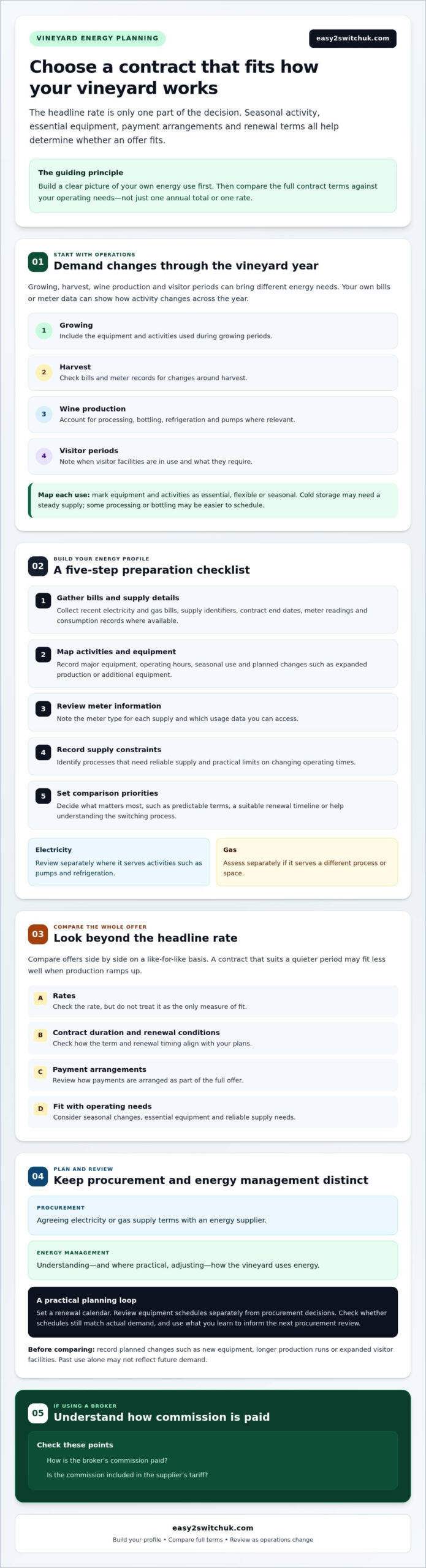
A vineyard energy contract sets out the commercial terms for supplying electricity or gas to your business. The right fit depends on how and when you use energy, not just on the rate offered. Growing, harvest, wine production and visitor periods can each bring different demands, so an offer suited to one operating pattern may not suit another.
It helps to separate procurement from energy management. Procurement is about agreeing supply terms with an energy supplier. Management is about understanding and, where practical, adjusting how the vineyard uses energy. Reviewing both gives you a clearer basis for assessing vineyard energy contracts UK suppliers offer. It also avoids assuming one contract structure or usage pattern will suit every site.
Assess your operating profile before comparing offers. Your seasonal activities, essential equipment and plans for change help show which supply terms deserve closer attention.
Which vineyard activities shape energy demand?
Start by listing the activities that use energy across the site. Depending on your setup, these might include refrigeration, wine processing, bottling, pumps, lighting and visitor facilities. The mix can vary considerably. A vineyard that handles production and storage on site may have different requirements from one that sends grapes elsewhere for processing.
Mark each use as essential, flexible or seasonal. Cold storage may need a steady supply, while some processing or bottling tasks may be easier to schedule. Note when visitor areas are in use, too. This map helps distinguish equipment that needs continuity from activity that may be planned around operating priorities.
How can seasonal operations affect an energy contract decision?
Use your own bills or meter data to compare typical periods with busier ones. Look for changes around harvest, production runs and visitor seasons instead of relying on a single annual total. Where electricity and gas serve different activities, review each supply separately so one pattern doesn’t obscure the other.
Seasonality doesn’t mean every supplier offers a seasonal tariff. Instead, it helps you explain your requirements and judge whether available contract terms suit your business throughout the year. Before requesting offers, record planned changes such as new equipment, longer production runs or expanded visitor facilities. These may alter future demand, so comparisons based only on past use could give an incomplete picture.
Energy management is an ongoing cycle, not a one-off contract decision. The Strategic Energy Management principles offer an overview of planning, acting and reviewing energy use. For a vineyard, that can mean checking whether equipment schedules still match actual demand, then using what you learn to inform the next procurement review.
How to build a vineyard energy profile before comparing contracts
A well-organised energy profile makes supplier offers easier to compare on a like-for-like basis. It also helps you explain what the vineyard needs, rather than relying on a broad estimate that may miss seasonal peaks or planned changes. Use this five-step process to prepare.
- 1. Gather bills and supply details. Collect recent electricity and gas bills, supply identifiers, contract end dates and any available meter readings or consumption records.
- 2. Map activities. Note major equipment, its operating hours and when it is used. Include seasonal changes and plans such as expanding production or adding equipment.
- 3. Review meter information. Record the meter type for each supply and what usage data you can access. This helps establish how closely you can examine changes through the year.
- 4. Record constraints. Identify equipment or processes that need a reliable supply, along with practical limits on changing operating times.
- 5. Set priorities. Decide what matters most in a contract comparison, such as predictable terms, a suitable renewal timeline or help understanding the switching process.
What information should you gather before requesting offers?
Keep the information together in one working file. If both fuels serve the vineyard, assess electricity and gas separately. For example, electricity might run pumps and refrigeration, while gas serves a separate process or space. Their usage patterns and contract details may differ. For broader context on farm energy procurement, see this UK farm electricity prices guide.
How do meters and usage data help reveal operating patterns?
Meter type and available data affect how much detail you can use to investigate demand. Standard readings may help you compare consumption across billing periods, while a smart meter or half-hourly electricity data, if available for your site, may show more detail about when usage rises. Don’t assume every vineyard has the same meter setup or access to the same data. Check your bills, meter information and supplier records, then use what’s available to identify higher-use periods. The data alone may not explain why usage changed.
With your profile ready, you can request comparisons using consistent information and explain any essential supply requirements. A farm energy broker such as Easy2switch can organise supplier comparisons and support the switching process by phone or online. The supplier pays commission, which is incorporated into the tariff, so ask how it affects the offer being compared. A clear brief gives you a stronger basis for assessing vineyard energy contracts UK options, but it doesn’t guarantee a particular saving.
How to compare vineyard energy contracts beyond the headline rate
A low unit rate can catch the eye, but it doesn’t show the full cost or whether an offer fits your vineyard. Use the same consumption information for each quote, then compare every stated term. Your profile, including seasonal demand and essential equipment, gives you a consistent basis for assessing vineyard energy contracts UK suppliers offer.
Which contract details matter alongside the unit rate?
The unit rate is the amount charged for each unit of energy used. The standing charge is a daily amount for the supply, which applies independently of how much energy you use. Both contribute to the bill, so a lower unit rate alone doesn’t establish which offer is the better fit. Other charges may also apply, depending on the quotation and contract.
Set out the details side by side. Check each written quotation for its exact terms, and ask for clarification where anything is unclear.
| What to compare | What to check |
|---|---|
| Unit rate | How much is charged per unit of electricity or gas used? |
| Standing charge | What daily charge applies to the supply? |
| Contract duration | How long does the agreement run? |
| Other terms | What conditions, charges or limitations are stated? |
| Payment arrangements | How and when are payments collected? |
| Renewal conditions | What does the offer say about renewal and ending the agreement? |
Contract lengths, payment arrangements, renewal processes and applicable charges can vary. Don’t assume a term applies in the same way across suppliers. The 2026 business energy comparison guide offers wider context for comparing business offers.
How do you judge whether an offer suits seasonal demand?
Check each quotation against the vineyard’s own usage records and priorities. Consider whether its terms remain workable during harvest or production peaks as well as quieter periods. Neither a fixed nor a variable arrangement is automatically right for every seasonal business. The fit depends on your requirements and the specific offer.
If you expect consumption to change, ask the supplier or adviser how the quoted terms apply in that situation. For example, clarify what happens if production expands or equipment changes during the contract. Request explanations in writing, then compare the responses alongside the rates. This gives you a clearer view of the commitment before choosing, rather than relying on assumptions or one headline figure.
How to plan vineyard energy management and contract renewal
A simple calendar helps keep energy decisions from becoming urgent during the busiest point in the vineyard year. Track the contract end date, schedule an internal review, allow time to compare offers and note when a decision needs to be made. Check the current agreement for its renewal and notice conditions rather than relying on a standard deadline.
What should a vineyard’s energy review include?
Bring recent bills and available meter data together with production changes and equipment schedules. This helps you consider energy use in context. For example, a change in refrigeration settings may be worth investigating alongside storage needs, while pump schedules can be reviewed against irrigation and operating requirements. Treat these as questions to examine, not guaranteed ways to reduce consumption.
Keep procurement and operational tasks distinct. Procurement covers reviewing the existing agreement, comparing supplier offers and deciding whether to switch. An operational review covers how and when equipment runs, including whether out-of-hours use is necessary. Assign one person to track contract dates and gather questions about energy use, even if different people handle the two workstreams.
How can you prepare for a renewal without rushing the decision?
Start internal preparation early enough to check the existing contract, collect accurate business information and agree on what matters in the next offer. Then compare written quotations using the same consumption profile and decision criteria. If production plans or equipment have changed, record those changes so the comparison reflects the business you expect to operate, not only its past usage.
- Calendar: Record the contract end date, review points, comparison period and decision date.
- Procurement file: Keep the current agreement, offer terms, supplier confirmations and decision criteria together.
- Operations log: Note equipment-schedule questions, unusual usage and changes to production or site activity.
Write down assumptions as well as decisions. If an offer depends on stated consumption or particular terms, keep that detail with the quotation and confirm important points with the supplier in writing. A clear record makes it easier to explain why an offer suited the vineyard and provides a useful starting point for the next review of vineyard energy contracts UK.
For an overview of what adviser support may involve, read this commercial energy broker guide. You can also review energy comparison support when considering supplier comparisons for your vineyard.
How an energy broker can support vineyard contract decisions
A broker can help organise your requirements, compare available supplier offers and support the switching process if you decide to change contracts. That can make a complex decision more manageable, particularly when your vineyard has seasonal demand or both electricity and gas supplies. A broker doesn’t set supplier tariffs, and using one doesn’t guarantee savings. The value is in understanding the options and their terms more clearly.
What should vineyard operators ask an energy broker?
Ask which suppliers and offers are included in the comparison, and what information about your business the recommendation is based on. Check whether the quotes use your actual consumption details and explain how seasonal operations or essential equipment have been considered.
It’s reasonable to ask directly how the adviser is paid. Request a plain explanation of any commission, how it’s incorporated into the tariff and whether you’ll pay any charges. Also confirm who will contact the supplier and what assistance is available if you choose to switch. Get important explanations in writing so you can compare them with the supplier’s contract terms.
How can Easy2switch help with a vineyard energy review?
Easy2switch is a UK-wide energy consultancy with a specialism in farming. It helps customers compare business electricity and gas contracts from suppliers and supports the switching process by phone or online. Preparing recent bills, contract details and a summary of seasonal operations can help make a comparison relevant to your vineyard’s requirements.
The service is free to the customer. The chosen supplier pays commission, which is incorporated into the customer’s tariff. That’s different from a commission-free service, so ask how the commission affects the tariff and consider it alongside the full written offer. Comparing options can help you make a more informed choice, but it doesn’t guarantee a saving or mean switching will be right for your business.
If you’re reviewing vineyard energy contracts UK suppliers can offer, a practical next step is to gather your bills and current contract details, then request a tailored review. Compare your energy options to discuss available offers and switching support.
Make your next vineyard energy decision with confidence
A sound energy decision starts with a clear picture of how your vineyard operates. Use bills and available meter data to understand seasonal demand, then compare written offers across their full terms, not just the unit rate. Keeping renewal dates and energy-use reviews on a simple calendar can also help you make decisions before they become rushed.
These steps give you a practical basis for assessing vineyard energy contracts UK suppliers offer and deciding what suits your business. If you’d like support comparing available electricity or gas contracts, Easy2switch specialises in serving farming customers across the UK. Its service is free to the customer; the chosen supplier pays commission, which is incorporated into the tariff. Ask how that commission affects the offer, and review the full terms before deciding.
Request help comparing your vineyard energy options and take a considered next step. With the right information in hand, you can approach your next contract decision with greater clarity and control.
Frequently Asked Questions
Are vineyard energy contracts different from other business energy contracts?
Vineyards use commercial energy contracts, but their operating patterns can make some terms more suitable than others. Growing, harvest, production and visitor periods may affect when and how much the business uses. Before comparing vineyard energy contracts UK suppliers offer, consider essential equipment, seasonal demand and any planned changes. Check the full contract, since available terms vary by supplier and offer.
How can a vineyard compare electricity contracts in the UK?
Compare written offers using consistent electricity consumption information and check more than the unit rate. Review the standing charge, contract length, payment arrangements, other stated terms and renewal conditions. Use bills or available meter data to understand typical and busier periods, then assess how each offer fits the vineyard’s equipment and priorities. Ask for unclear terms to be explained in writing before making a decision.
Can a vineyard get an energy contract that reflects seasonal demand?
Seasonal usage can inform a contract comparison, but don’t assume suppliers offer a specific seasonal tariff. Record when demand rises, such as during harvest or production, and explain those patterns when requesting offers. Ask how each contract’s terms apply if usage changes, and get the explanation in writing. Compare the available options against your actual operating needs rather than assuming a fixed or variable arrangement is automatically best.
What information does a vineyard need to switch energy suppliers?
Start with recent energy bills, current contract details, supply information and available meter readings or consumption records. Note the contract end date and check the agreement for renewal, notice and termination conditions. A list of major equipment, seasonal operating patterns and planned changes can help explain your requirements. The supplier or adviser can confirm what else is needed and how the switching process works for your specific supply.
Is an energy broker free for a UK vineyard to use?
Easy2switch’s brokerage service is free to the customer. The chosen energy supplier pays commission, and that commission is incorporated into the customer’s tariff. Ask the adviser to explain how commission affects the quoted tariff and whether any other customer charges apply. Review the written offer and its full terms before deciding. Using a broker can support comparison and switching, but it doesn’t guarantee savings or make every offer suitable.
When should a vineyard review its business energy contract?
Review the agreement early enough to understand its end date, renewal process and any notice conditions before making a decision. Don’t assume there’s a standard deadline. Check the current contract and confirm any points you’re unsure about with the supplier. Allow time to gather bills, review operational changes and compare written offers. A calendar reminder for the contract date and internal review can help prevent a rushed choice.
Can energy management reduce a vineyard’s energy use?
Energy management can help identify where usage occurs and which practices may be worth reviewing, though it can’t guarantee a reduction. Compare bills or available meter data with equipment schedules and production activity. You might investigate refrigeration settings or pump timings while keeping product storage and operational requirements in mind. Record any changes and review the resulting usage data so decisions are based on what happens at your own site.
