
Combining gas and electricity might make your business energy simpler, but it won’t automatically make it cheaper. If you’re comparing dual fuel business energy UK options, look at the full contract rather than assuming a business deal works like a household bundle.
One supplier and fewer account details can be convenient. But business offers can differ in unit rates, standing charges, contract lengths and renewal terms, and a combined deal may not beat two separate contracts. The right choice depends on your usage and the terms of each offer.
This guide explains what dual fuel means for UK businesses, when combining contracts may help and when separate suppliers could suit you better. It covers how to compare gas and electricity costs fairly, what information to gather and why it helps to check contract end dates early. Easy2switch compares supplier offers and supports the switching process, helping you review your options and decide what fits your business.
Key Takeaways
- Dual fuel business energy UK means arranging gas and electricity, but one supplier doesn’t necessarily mean one combined contract or a guaranteed discount.
- Check gas and electricity charges separately, including the unit rate and standing charge for each fuel.
- For a fair comparison, gather recent bills, confirm usage and contract dates, and compare offers over the same period.
- Decide whether simpler administration is worth having one supplier, or whether separate gas and electricity offers better suit your business.
- Easy2switch compares supplier offers and supports switching. Its service is free to the customer, with commission paid by the chosen supplier and incorporated into the tariff.
What does dual fuel business energy mean in the UK?
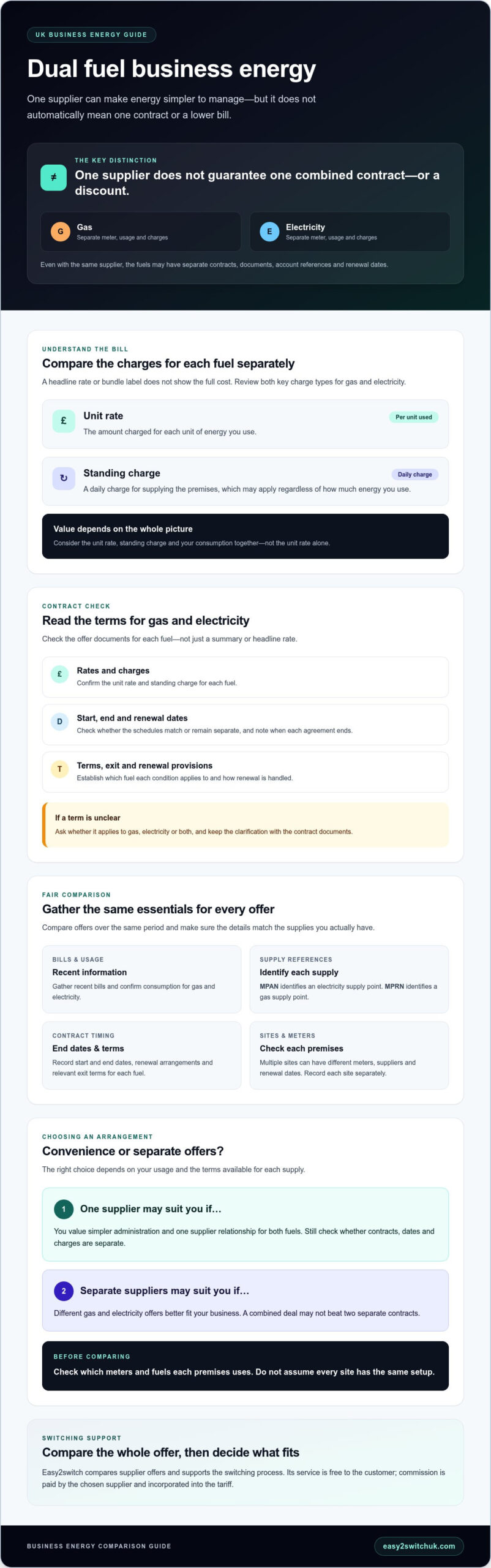
For a business, dual fuel means arranging gas and electricity supply, potentially through the same supplier. The fuels still use separate meters and supply arrangements, so “dual fuel” doesn’t necessarily mean one combined contract, one bill or a guaranteed discount.
That distinction matters when comparing dual fuel business energy UK options. A supplier may handle both fuels, while the rates, charges and terms are set out separately. The bundle label alone won’t tell you whether the offer suits your business. Check the documents for each fuel and compare the complete terms.
Business deals shouldn’t be assumed to work like household dual fuel tariffs. Available arrangements and contract structures can vary by supplier and business requirements. Before relying on a combined offer, confirm that it’s available and check exactly what it covers. For wider background on the sector, see this overview of the energy policy of the United Kingdom.
Does one supplier always mean one business energy contract?
No. One supplier relationship for both fuels doesn’t automatically mean gas and electricity share a single contract or identical terms. They may have separate renewal dates, account references or contract documents. Before agreeing to an offer, confirm which terms apply to each fuel, when each agreement ends and whether changing one contract affects the other. This helps keep separate deadlines from being overlooked under one supplier name.
Which businesses might consider a dual fuel arrangement?
A business premises that uses both gas and electricity may want to explore a combined arrangement, for example, a workplace using electricity for equipment and gas for heating. Farms and other businesses can also review whether using one supplier fits their energy needs. Not every site uses both fuels, so start by checking the meters and supply arrangements you actually have.
For organisations with multiple premises, don’t assume one site’s setup applies everywhere. Sites may have different meters, suppliers and renewal dates, even if they belong to the same business. Make a record for each site before comparing offers. This helps show what could be combined and where separate arrangements may be more practical.
How do business gas and electricity contracts work when combined?
Even when one supplier provides both fuels, gas and electricity are measured and supplied through separate arrangements. Each has its own meter and usage record, and the offer should show how charges apply to each fuel. A shared supplier may make administration simpler, but it doesn’t make the billing details identical.
Review the bill components separately. The unit rate is the amount charged for each unit of energy used. The standing charge is a daily charge for supplying the premises, which may apply regardless of how much energy you use. Your total cost depends on both charges and your consumption, so a low unit rate alone doesn’t show whether an offer is better value.
Gas and electricity may also have different contract lengths, start and end dates, renewal arrangements and other terms. Check whether a combined offer starts and ends for both fuels at the same time or keeps them on separate schedules. For anyone comparing dual fuel business energy UK offers, the terms for each fuel matter as much as the supplier name.
What contract details should a business check for each fuel?
Review the offer and contract documents, not just a summary or headline rate. Check the following for both gas and electricity:
- Unit rate and standing charge: Confirm the consumption rate and daily fixed charge for each fuel.
- Contract dates: Note the start and end dates, and whether they match across both supplies.
- Applicable terms: Establish whether each quoted rate or condition applies to gas, electricity or both.
- Exit and renewal provisions: Check the offer for relevant exit terms and how renewal is handled.
If the paperwork doesn’t make clear whether a term covers one fuel or both, ask for clarification before accepting. Keep the answer with the contract documents so you can refer to it when comparing offers.
Which meter and account details help suppliers prepare an offer?
Suppliers may ask for recent bills, consumption information and meter identifiers to prepare a relevant quote. The MPAN identifies an electricity supply point. The MPRN identifies a gas supply point. These references help distinguish supplies, particularly when a business has multiple premises or meters.
Check that the identifiers, business details and usage figures match your bills before comparing or accepting an offer. Incorrect details can make it harder to assess the right supply and terms. If you’d like help reviewing business gas and electricity options, Easy2switch business energy brokerage compares supplier offers and supports the switching process.
Is dual fuel business energy better than separate gas and electricity deals?
Not automatically. Using one supplier for both fuels may simplify account management, but it doesn’t guarantee better value. Consider a combined offer only if its terms suit your business and compare well with the separate gas and electricity options available to you.
Assess the offers as a whole, not by a “dual fuel” label or one attractive headline rate. Check what you’d pay for each fuel over the relevant contract period. Also consider whether one supplier relationship or aligned renewal dates would make administration easier. The right fit depends on your priorities, usage and contract requirements.
| Option | Potential benefit | Trade-off to consider | Check before choosing |
|---|---|---|---|
| Combined supplier arrangement | One supplier relationship may make it easier to manage both supplies, particularly if renewal dates align. | Convenience doesn’t necessarily mean better overall value, and the fuels may still have different terms. | Review the gas and electricity rates, charges, contract dates and conditions individually. |
| Separate gas and electricity deals | Separate offers may provide terms or renewal timing that better fit each supply. | Managing different suppliers or contract dates may require more oversight. | Compare each quotation and account for the extra administration involved. |
When might a combined supplier arrangement suit a business?
A combined arrangement may appeal if your organisation values a simpler supplier relationship or would benefit from managing both renewals together. That convenience is useful only if the contract details work for the business. Confirm whether the renewal dates align and assess both fuels’ terms before deciding. Don’t treat a bundle label as proof of a discount.
When could separate gas and electricity contracts be worth comparing?
Separate contracts may be worth reviewing if gas and electricity use differs, or if the supplies have different end dates and requirements. Assess each quotation on its own merits. Available terms and renewal flexibility can vary, so don’t assume one arrangement is better without reviewing the actual offers.
For a broader comparison, use this business energy comparison guide. It can help you assess dual fuel business energy UK choices alongside your wider business energy requirements.
How can you compare dual fuel business energy UK offers fairly?
A fair comparison starts with accurate information and consistent assumptions. Whether you’re reviewing a combined offer or separate suppliers, check that each quote covers the same premises, fuels and comparable contract periods. Then assess gas and electricity charges separately instead of relying on one headline figure.
What information should you prepare before comparing offers?
Gather recent bills for both fuels and the details of your current contracts. Note your premises, business requirements, preferred contact method and contract preferences. This gives you a reliable starting point and helps you identify questions before reviewing new terms.
- 1. Gather bills: Collect recent gas and electricity bills, including usage figures and meter details where available.
- 2. Confirm usage: Check the consumption figures for each fuel and make sure they relate to the correct premises and meters.
- 3. Check contract dates: Record each contract’s end date and review the current agreement for applicable notice or renewal conditions.
- 4. Compare offers: Compare each fuel’s unit rate and standing charge over a comparable contract period. Note any questions and confirm the full terms before agreeing to switch.
How can you avoid comparing unlike offers?
Check what each quotation covers. One may include both fuels for one site, while another covers only one fuel or different premises. Confirm the contract period, start and end dates, and whether the quoted terms apply to gas, electricity or both. Keep the unit rate and standing charge for each fuel visible as separate items. This makes differences easier to spot when a combined headline figure might hide them.
Verify that the quote uses the correct business details, meter identifiers and consumption information too. If the usage estimate or site information is wrong, the offer may not reflect the supply you’re comparing. Before accepting, ask the supplier to clarify anything you don’t understand, including renewal conditions and relevant exit provisions in the offer.
For a closer look at gas-specific factors, read this business gas supplier comparison guide. A consistent checklist helps you judge dual fuel business energy UK offers against your actual requirements, rather than choosing on convenience or a headline rate alone.
Ready to compare business gas and electricity options? Review supplier offers with Easy2switch, which provides practical support with comparison and switching.
How can a business arrange dual fuel energy and get switching support?
Start by identifying what your business needs, then review supplier offers against those requirements. A broker can help compare available options and provide practical support, but the decision remains yours. Check that an offer covers the right fuels and premises before agreeing to it.
The process involves sharing relevant business and energy details, reviewing offers for your requirements, asking questions about anything unclear, and confirming your chosen option. Availability and contract structures can vary, so don’t assume every supplier can provide a suitable combined arrangement.
What does a business energy broker do during a supplier search?
A broker compares supplier offers against the information and preferences you provide. This can help you review gas and electricity terms without treating a dual fuel label as proof that an offer fits. Easy2switch provides business energy brokerage and practical switching support. Its service is free to the customer. The chosen supplier pays Easy2switch a commission, which is incorporated into the customer’s tariff. Review the specific rates and terms presented to you.
For more context on how brokerage works, read this commercial energy broker guide.
What should you confirm before accepting a business energy offer?
Read the offer and contract documents carefully. Confirm:
- Supplier and fuels: Which supplier is named, and whether the offer covers gas, electricity or both.
- Charges: The unit rate and standing charge for each fuel.
- Contract dates: The start and end dates, including whether they align across both supplies.
- Conditions: Any applicable renewal, exit or other contract terms.
- Business and meter details: Check that the offer uses the correct business, premises and supply information.
Raise questions before agreeing to switch. A clear understanding of the offer helps you choose based on your business needs, not an assumption about what “combined” includes.
Compare business energy options with Easy2switch online or by telephone, and review the specific supplier offer before deciding whether to proceed.
Make your next energy decision with confidence
The right dual fuel business energy UK arrangement is the one that fits your business, not simply the one that groups gas and electricity together. Before committing, weigh the convenience of one supplier against the complete terms for each fuel. Make sure the offer matches your premises and requirements.
You don’t have to review supplier options alone. Easy2switch compares available offers and assists with switching online or by telephone. The customer-facing brokerage service is free. The chosen supplier pays Easy2switch a commission incorporated into the selected tariff. Review the specific rates, charges and contract conditions before deciding whether to proceed.
When you’re ready, compare business energy options with Easy2switch. Gather your bills and contract details to start a comparison, then review the offers and terms before choosing an arrangement for your business.
Frequently Asked Questions
Is dual fuel business energy always cheaper than separate contracts?
No. A combined arrangement may simplify supplier administration, but it doesn’t automatically offer better value than separate gas and electricity deals. Compare each fuel’s unit rate, standing charge, contract dates and conditions across the offers you’re considering. Weigh any convenience, such as aligned renewals, against the actual terms. Choose based on your business’s needs, not the bundle label or a single headline rate.
Can a business have gas and electricity with different suppliers?
Yes, a business can arrange gas and electricity separately, including with different suppliers, subject to the offers and contract terms available for each supply. Separate quotations may better match your usage or contract dates. Keep a record of each supplier, account reference and renewal deadline. For premises with multiple meters or sites, check each supply individually rather than assuming they share the same arrangement.
How do I compare dual fuel business energy offers?
Compare offers using the same premises, fuels and a comparable contract period. Check the gas and electricity unit rates and standing charges separately, then review contract dates and applicable conditions. Make sure each quote uses accurate business, meter and consumption details. To assess dual fuel business energy UK options fairly, compare the full terms rather than relying on a bundle description or one headline figure.
What information do I need to get a business energy quote?
Gather recent gas and electricity bills, which can show usage, account details and meter identifiers. Suppliers may ask for the electricity MPAN, the reference for the electricity supply point, and the gas MPRN, the reference for the gas supply point. Have your business and premises details ready too. Check these details against your bills so the quote is based on the correct supplies.
Can I switch business gas and electricity at the same time?
You may be able to arrange both switches together, but whether they can proceed on the same dates depends on the individual contracts, supplier offers and arrangements for each supply. Gas and electricity can have different end dates or terms, so check both agreements before making plans. Confirm the proposed start dates and any relevant conditions with the supplier or broker handling the offers.
Is an energy broker free for UK businesses, and how does commission work?
Easy2switch’s brokerage service is free to the customer. If you choose an offer, the selected energy supplier pays Easy2switch a commission, which is incorporated into the customer’s tariff. The brokerage doesn’t charge the customer directly, but the commission forms part of the tariff. Review the quoted rates and contract terms, and ask questions if you need clarity before accepting an offer.
