
The first step to reducing energy costs for livestock farms may not be changing equipment or cutting usage. It’s finding out what is driving the bill. Without a clear picture of electricity and gas consumption, you could focus on the wrong areas or miss avoidable energy use.
It’s also reasonable to worry that efficiency changes could affect animal care. Essential heating, ventilation, lighting and milking processes need to work reliably. A practical plan starts with evidence from your farm, so you can investigate savings without compromising welfare or disrupting day-to-day operations.
This UK guide explains how to review energy use, identify opportunities and prioritise changes for your livestock farm. You’ll learn how to distinguish lower consumption from better contract terms, and when comparing electricity or gas supplier offers may help. The aim is a clear sequence: measure first, protect essential operations, then assess improvements and supply options.
Key Takeaways
- Farm energy use depends on livestock, buildings, equipment and routines. Identify your biggest cost drivers before deciding what to change.
- Use bills, meter records and equipment checks to investigate unusual consumption and distinguish essential animal-care use from avoidable use.
- Compare operating adjustments, maintenance and equipment upgrades for suitability, disruption and the checks required before taking action.
- Turn audit findings into a manageable plan by assigning responsibility, setting review dates and tracking energy use against relevant production measures.
- For reducing energy costs for livestock farms, supplier comparison can complement efficiency work. Easy2switch helps farms compare electricity and gas offers, with supplier commission incorporated into the tariff.
Where livestock farms use energy, and how to find the biggest cost drivers
There are two ways to reduce an energy bill: use fewer units or pay a more suitable rate for the energy you buy. These are different problems. A lower tariff won’t fix unnecessary consumption, and an efficiency change won’t necessarily improve your contract price or terms. To reduce energy costs for livestock farms, first establish which part of the bill needs attention.
Energy use depends on livestock, buildings, equipment and daily routines. Intensive systems may rely on more machinery and controlled environments, as outlined in Intensive animal farming, but the actual cost drivers need to be identified on your farm. Start with bills and meter readings, then compare them with farm operations before choosing measures.
Which livestock-farm activities may use the most energy?
On a dairy farm, milking equipment and milk cooling are useful areas to check. Other farms may use substantial energy for ventilation, heating, lighting, feeding equipment, water heating or pumping. Don’t assume every system is present or runs on electricity. Identify which equipment uses electricity, gas or another fuel, and note when it operates.
Look at routines as well as equipment. Record when ventilation runs, whether lighting follows working hours and how often pumps operate. These observations can help distinguish necessary animal-care loads from patterns that may need investigation. On their own, they don’t prove that energy is being wasted.
How to establish an energy-use baseline
Gather recent bills, meter readings, contract details and any available half-hourly consumption data. Compare like with like, including the billing period and energy type. Keep electricity and gas figures separate, and include other fuels in your records if they contribute to farm operations.
Then record production levels and operating hours alongside consumption. Depending on the farm, useful context could include livestock numbers, milking activity or the hours that ventilation and heating systems run. This makes it easier to explain changes in use rather than treating every increase as avoidable.
- Compare periods carefully: note changes in production, occupancy, weather or operating routines that could affect demand.
- Flag anomalies: investigate unexpected changes in meter readings or consumption before deciding what caused them.
- Separate usage from price: review unit rates and standing charges alongside consumption to see whether the bill changed because of use, contract terms or both.
A clear baseline gives you a practical starting point. It helps direct attention to the right equipment and gives you a reference for assessing changes later.
How to audit livestock-farm energy use without compromising animal welfare
A useful energy audit looks for avoidable use without treating essential animal care as an opportunity to cut corners. Ventilation, temperature control and access to clean water must continue to meet livestock needs. Start by understanding how the farm operates, investigate unusual readings and rank possible actions by likely benefit, cost, risk and disruption.
Build a farm energy-use map
Gather bills, meter readings and available half-hourly data. Where practical, map meters and equipment to buildings, processes or livestock areas. Record what each item does, its usual run times and control settings, and any relevant maintenance history. If a meter serves several areas, note that limitation rather than attributing its reading to just one process.
Compare energy patterns with production levels and seasonal changes in operations. Heating or ventilation demand may shift with the weather, while equipment use can change as livestock numbers or routines change. GOV.UK’s official government energy statistics provide wider context for farm energy use in England, but your own records are needed to understand what drives consumption on your holding.
Spot waste while protecting livestock
Walk through mapped areas during normal operation. Observe what runs, when it runs and whether controls match the intended routine. Look for issues to investigate, such as:
- Equipment running outside its required operating period, or avoidable standby use.
- Water or air leaks that may cause pumps or other equipment to work harder.
- Controls that don’t appear to respond as expected, or maintenance concerns that could affect performance.
- Unexpected changes in consumption that don’t match production, operating hours or seasonal conditions.
Don’t respond to high use by simply reducing ventilation, heating or lighting. First check that settings and equipment suit the animals, housing and conditions. If a proposed change could affect welfare, seek advice from a qualified farm energy assessor, veterinarian or relevant technical professional before acting. Do the same for specialist equipment or control systems you’re not confident assessing.
Rank your findings in a simple action list: what needs checking, who will follow it up and how you’ll confirm the result. Separate low-risk operational questions from changes that need technical assessment. This makes reducing energy costs for livestock farms a measured process rather than a guess, with animal needs central to every decision.
Once you understand consumption, reviewing contract terms is a separate step. Farms can use farm energy contract comparison to discuss supplier options with Easy2switch, which specialises in farming and helps compare electricity and gas offers.
Which energy-saving measures should livestock farms compare first?
Start with changes that address a measured issue and are unlikely to disrupt essential work. Adjusting a lighting schedule or repairing a fault may be easier to assess than replacing a ventilation system or investing in on-site generation. Larger upgrades may still be suitable, but they need stronger evidence and careful comparison before you commit.
Operational and maintenance changes to investigate
Review lighting schedules, shutdown routines and control settings against actual working patterns. Where present, check the condition and operation of pumps, fans, refrigeration and compressed-air systems. A fault, leak or poorly adjusted control can make equipment work harder than necessary. Maintenance can help prevent avoidable consumption, but it can’t guarantee a fixed saving.
| Measure | Suitable farm context | Likely operational impact | Checks before action |
|---|---|---|---|
| Adjust lighting schedules | Areas where lighting is sometimes left on beyond working or livestock needs | May reduce unnecessary hours of use | Confirm safe access and appropriate light levels for staff and animals |
| Review shutdown routines and standby use | Equipment that isn’t required to run continuously | Can limit avoidable running time without replacing machinery | Check manufacturer guidance and confirm the equipment can be switched off safely |
| Inspect pumps, fans and motors | Farms with these systems and evidence of faults, leaks or poor performance | Repairs or control adjustments may improve operation | Ask a suitable technician to assess condition, settings and maintenance needs |
| Compare equipment upgrades | Equipment with high measured use or frequent maintenance needs | A newer or better-matched option may suit the required duty more effectively | Compare specifications, operating hours, installation needs and whole-life costs |
| Assess on-site generation | Sites with suitable space and energy use that may align with generation times | Could supply some farm demand, depending on system and usage patterns | Check site suitability, load timing, supplier specifications and an independent business case |
Compare options using farm-specific evidence
Prioritise measures by verified energy use, feasibility, operational risk and expected payback. For an upgrade, compare purchase and installation costs with the value of expected energy savings over a suitable period. Use measured demand, operating hours and supplier specifications, and ask another competent person to check the assumptions. Treat projected savings cautiously unless the calculation reflects your farm’s actual use and energy rates.
Assess solar or other generation against when the farm uses energy, not just total annual consumption. Check site suitability, likely generation patterns and practical requirements before deciding. Easy2switch provides energy brokerage to compare supplier offers; it doesn’t install equipment or generation systems. Match each opportunity to the right route: operational changes, technical improvements or a separate supply-contract review.
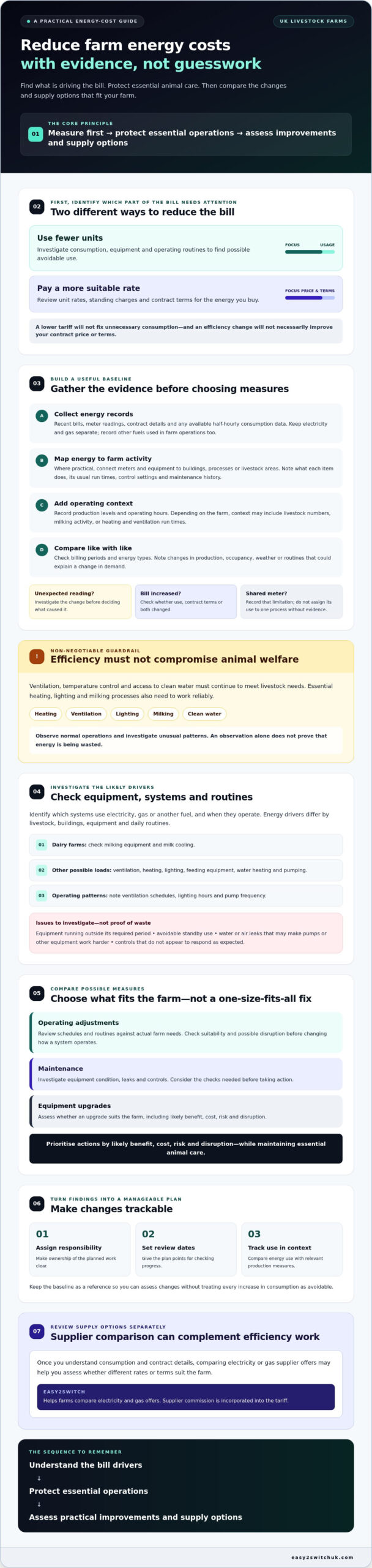
How to turn farm energy data into a practical cost-reduction plan
An audit is useful only when its findings lead to clear actions and follow-up. For each proposed change, record the issue it addresses, who is responsible, when it should happen and when you’ll review the result. Rank actions by the strength of the evidence, feasibility, likely disruption and animal-welfare considerations. Start with practical changes you can test, and review the business case carefully for larger investments.
Set priorities and monitor progress
Use meter readings or available consumption data to check whether an action changed energy use. Compare similar operating periods, noting what else changed, such as livestock numbers, production cycles, weather or equipment hours. If you have readings for a specific building or process, use them to assess that action. If not, avoid claiming a precise result from a whole-farm bill that includes many other loads.
Keep three outcomes distinct:
- Confirmed consumption reduction: a measured decrease in energy used, with relevant changes in farm activity taken into account.
- Forecast saving: an estimate based on assumptions that still needs to be checked against actual performance.
- Tariff change: a change in the price or contract terms, not a reduction in the amount of energy consumed.
Revisit the plan when production, livestock numbers or equipment change. An action that suited one operating pattern may need reviewing under different conditions. This evidence-led process helps prevent expected savings from being mistaken for achieved results.
Assess contracts separately from consumption
Review contract renewal dates, terms, bills and the farm’s business energy requirements alongside your efficiency plan. Check that billing details match meter records, and note questions to resolve before comparing supplier offers. A lower unit rate may reduce the cost of each unit purchased, but it won’t reduce consumption by itself. Keep the two measures separate when reviewing progress.
For more on farm contract considerations, read the UK farm electricity prices guide. The business energy comparison guide explains what to consider when reviewing supplier options.
Once you understand your usage and contract requirements, discuss suitable farm energy contracts with Easy2switch. Its farming-specialist brokerage helps compare electricity and gas supplier offers. The service is free to the customer, with supplier-paid commission incorporated into the tariff.
How an energy broker can help livestock farms review supply options
Supplier comparison is most useful once you understand your farm’s consumption and contract requirements. Bills and usage records can help clarify how much electricity or gas you need, when demand is highest and which contract terms matter to daily operations. A broker can help compare supplier offers, but changing contracts is separate from reducing the amount of energy the farm uses.
For reducing energy costs for livestock farms, treat contract review as one part of a wider plan. Compare available terms with your needs, and check the details rather than focusing only on the unit rate. A comparison can’t guarantee a particular tariff, saving or outcome.
What information to prepare before comparing suppliers
Having the relevant details to hand can make supplier comparisons more straightforward. Gather:
- Recent energy bills and electricity or gas meter details.
- Contract end dates and any relevant terms or renewal information.
- Business details that may be needed to discuss supplier offers.
- A clear note of whether the farm needs electricity, gas or both, and any operational priorities that affect supply requirements.
Requirements can vary by supplier and situation, so confirm with the broker which documents and process steps apply. If a bill, meter detail or contract date is unclear, resolve it where possible before comparing offers.
What to expect from Easy2switch’s farm energy service
Easy2switch specialises in farming and helps farms compare electricity and gas contracts from supplier offers. You can discuss your requirements by phone or online, then consider the options against the information you’ve provided. If you decide to switch, Easy2switch supports you through the process. It acts as an energy consultancy and broker, not as the energy supplier.
The brokerage service is free to the customer. The chosen supplier pays commission, which is incorporated into the tariff. Supplier remuneration is therefore part of the arrangement. Ask how it applies to any offer you’re considering, and compare the full contract details before deciding.
Once you’ve reviewed your consumption and know what you need from a contract, you can Discuss your farm’s energy options with Easy2switch. This lets you explore supplier offers without assuming that switching is the right choice.
Take the next step towards better energy control
Reducing energy costs for livestock farms starts with understanding what drives consumption, then choosing practical changes that fit your operation and protect animal welfare. Use farm records to check whether actions genuinely reduce energy use, and keep those results separate from savings linked to a contract or tariff change.
Once you understand your usage and requirements, supplier comparison can help you assess electricity or gas options. Easy2switch specialises in serving the farming industry and can discuss your requirements by phone or online. Its customer-facing brokerage service is free, with commission paid by the chosen supplier and incorporated into the tariff.
Discuss your farm’s energy options and explore supplier offers that may suit your needs. With clear records and a measured plan, you can take practical steps towards greater control of your farm’s energy costs.
Frequently Asked Questions
How can livestock farms reduce energy costs?
Livestock farms can reduce energy costs by identifying high-use equipment, addressing avoidable consumption and reviewing energy contract prices and terms. Start with bills and meter readings, then compare usage with production and operating hours to identify areas for further checks. Prioritise practical changes that fit the farm’s needs. Reducing energy costs for livestock farms works best as a measured process that protects animal welfare and checks results against actual consumption.
Which livestock farm equipment uses the most electricity?
There’s no single answer for every farm because equipment and routines vary. Dairy farms may use electricity for milking systems and milk cooling, while other holdings may have substantial demand from ventilation fans, pumps, refrigeration, lighting or feeding equipment. Make an equipment list and note run times to identify likely drivers on your site. Check whether each system uses electricity, gas or another fuel before deciding where to focus.
Can livestock farms reduce energy use without affecting animal welfare?
Farms can investigate avoidable use while keeping livestock needs central to decisions. Check for equipment running unnecessarily, leaks, poorly maintained systems or controls that don’t match intended routines. Don’t cut ventilation, heating, lighting or water provision without assessing the animals’ needs and getting appropriate technical advice. If a proposed adjustment could affect conditions in livestock housing, consult a relevant competent professional before changing settings or operating practices.
How do I carry out an energy audit on a livestock farm?
Begin by gathering energy bills, meter readings and available half-hourly data. Map meters and equipment to buildings or processes, then record operating hours, control settings and maintenance concerns. Observe routines and compare consumption with production and seasonal changes. Investigate unexpected patterns before labelling them waste, then rank possible actions by evidence, feasibility, disruption and welfare considerations. Seek advice from a qualified farm energy assessor or relevant technical professional for specialist systems.
Does switching energy supplier reduce a farm’s energy consumption?
No. Switching supplier or contract may change the price or terms for energy, but it doesn’t itself reduce the number of units a farm uses. Consumption changes through operational adjustments, maintenance or equipment improvements, and should be checked against meter readings. Treat these as separate parts of cost control: understand usage, assess practical efficiency measures and review whether another supplier offer better suits the farm’s contract requirements.
How can a farm compare business energy contracts?
Gather recent bills, meter details, contract end dates and relevant business information. Confirm whether you need electricity, gas or both, then compare supplier offers with your requirements. Look beyond the unit rate: check standing charges, contract terms and billing details to understand the overall offer. An energy broker can help with supplier comparisons. Ask what information is needed and how the comparison and switching process works before deciding.
Is an energy broker’s service free for livestock farms?
Easy2switch’s customer-facing brokerage service is free to the farm. The chosen energy supplier pays commission, which is incorporated into the customer’s tariff, so the service isn’t commission-free or wholly independent of supplier remuneration. Easy2switch specialises in serving the farming industry and helps compare electricity or gas supplier offers. Customers can discuss their requirements by telephone or online, and should review the relevant contract terms before choosing an offer.
