
What should you do first when an energy bill is squeezing the money your business needs to operate? If you’re thinking, “my business is struggling with high energy bills,” it’s understandable to feel pressure, especially when you’re unsure whether the cause is higher usage, contract rates or a billing error.
Treat the problem as two connected issues: managing any immediate payment difficulty and finding out what’s driving the bill. Business energy contracts aren’t covered by the domestic Ofgem price cap, so check your contract terms and bill details. If payment is becoming difficult, contact your supplier promptly to discuss your situation and possible next steps.
This guide explains how to check a bill, identify likely causes of higher costs and review energy use. It also covers comparing contract offers and planning ahead, including how a business energy broker can support a supplier comparison and switch. Use these steps to move from immediate cash-flow concerns to informed decisions about future energy costs.
Key Takeaways
- If “my business is struggling with high energy bills,” distinguish a higher-than-usual bill from an unexpected charge or an immediate payment problem.
- Check the bill and due date, then speak to your supplier early and keep a record of what you agree.
- Compare meter readings, usage, contract terms and operating patterns to narrow down what may be driving the increase.
- Turn your findings into a practical plan with a named owner, a next action, a review date and evidence of progress.
- Once urgent payment concerns and bill causes are addressed, an energy broker can compare supplier offers and support switching. Easy2switch receives supplier commission incorporated into the selected tariff, with no direct brokerage fee to the customer.
My business is struggling with high energy bills: identify the immediate problem
A sharp energy bill can put pressure on working capital, payroll and other essentials, but there isn’t one explanation that fits every business. If you’re thinking, “my business is struggling with high energy bills,” first separate the size of the bill from the urgency of paying it. This helps you decide what needs attention now and what needs investigating.
The British Chambers of Commerce has reported that 27% of businesses responding to its survey found energy bills difficult to pay. This figure describes the survey’s respondents during the period when it was conducted. It’s context about reported business concerns, not a forecast, a current measure of every UK business or evidence that your own bill is unaffordable.
Is the bill unaffordable, unexpectedly high, or both?
A high bill may be larger than you’d like but still manageable within your available cash flow. An unexpected bill differs from what you budgeted for or usually receive, even if you can pay it. An immediate payment problem is different: the due date is approaching, and paying would leave the business unable to cover essential commitments. A bill can be both unexpected and unaffordable, so assess each issue separately.
Compare the latest bill with previous bills for a similar period, then check what cash will be available before its due date. Seasonal businesses may use more energy during a busy or colder period. Changes in opening hours, production or equipment use can also affect consumption. Don’t assume a larger bill means the supplier made an error, but don’t let uncertainty about the amount distract you from a payment deadline.
Which parts of the bill should you check first?
Start with details you can verify: account information, the billed period, consumption and the meter readings used in the calculation. Compare those readings with your own meter records or photographs, if available, and check whether the bill uses actual or estimated readings. Note any mismatch rather than treating the total as confirmed.
Keep the payment date in view while you check the figures. Accuracy and affordability are separate questions: a bill may be correct but difficult to pay, or an incorrect reading may need investigating even if payment is manageable. Changes in a bill can reflect usage, unit rates, meter readings or contract terms, so check each before settling on a cause.
- Usage: Compare consumption with a previous period of similar length and business activity.
- Readings: Check the meter record against the reading printed on the bill.
- Account and period: Confirm the bill relates to the correct premises and dates.
This first review is a practical starting point for energy management principles: understand how energy is used before deciding what to change. You don’t need to identify the final cause immediately. Gather the facts, note what remains unclear and keep the payment deadline in view.
First Steps if Your Business Can’t Pay Energy Bills
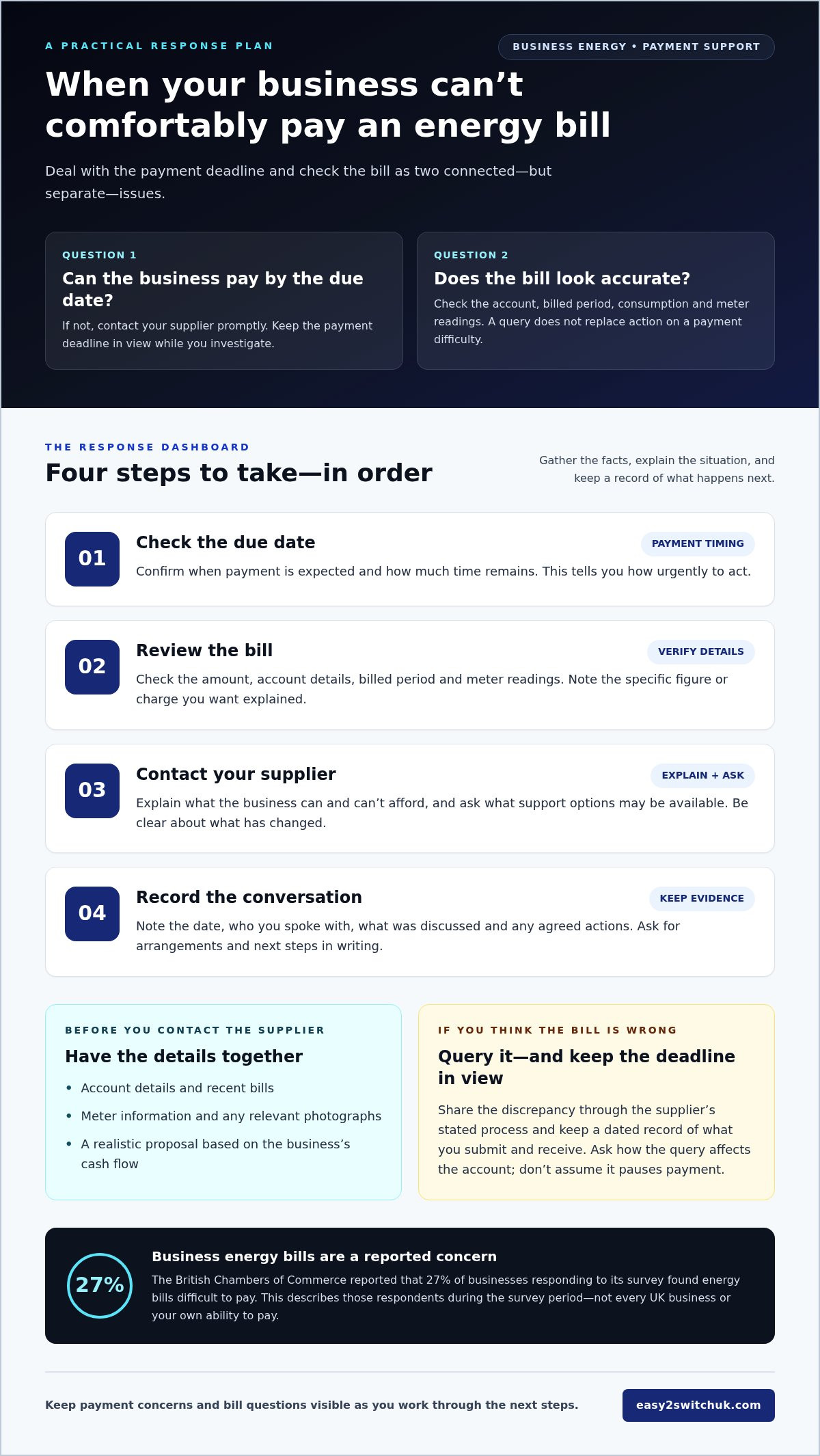
If your business can’t comfortably meet an energy payment, separate the immediate cash-flow problem from any concern that the bill is wrong. Don’t wait for arrears to build before speaking to your supplier. Early, clear communication gives you a chance to explain the situation and understand possible next steps. The support available depends on your circumstances and the supplier.
Work through these steps in order:
- Check the due date. Confirm when payment is expected and how much time remains. This tells you how urgently to act.
- Review the bill. Check the billed amount, account details, period and readings. Note the specific figure or charge you want explained.
- Contact your supplier. Explain what the business can and can’t afford, and ask what support options are available.
- Record the conversation. Note the date, who you spoke with, what was discussed and any agreed actions. Ask for arrangements and next steps in writing.
How should you approach your energy supplier?
Before you call or write, gather your account details, recent bills, meter information and a realistic proposal based on the business’s cash flow. Be specific about what has changed and when you expect to review the situation. If an existing payment arrangement has become unmanageable, explain why and request a review rather than silently missing a payment.
Keep copies of messages and note any response dates or agreed actions. A supplier may discuss possible support, but don’t treat a conversation as confirmation until you have the details in writing. If you’re unsure what to propose, avoid committing to payments the business can’t sustain.
What if you think the bill is wrong or estimated?
Gather the bill you’re querying, current meter readings and dated photographs, if available. Explain the discrepancy through the supplier’s stated process, and keep a dated record of what you submitted and any replies. A billing query and payment difficulty can happen at the same time, so tell the supplier about both.
Don’t assume that disputing a bill automatically pauses payment or removes the need to act by the due date. Ask the supplier how the query affects the account, and check current official guidance from Ofgem or Citizens Advice before deciding what to do. Avoid relying on broad legal claims that may not fit your contract or circumstances.
If energy debt is affecting wider business finances, Citizens Advice and Business Debtline can provide guidance. Use their official websites to check current contact details and the help available for your situation. A clear record of bills, supplier discussions and cash-flow commitments can make those conversations more useful.
Once the immediate payment issue is being addressed, review future contract options separately. Easy2switch compares supplier offers and supports businesses through switching. Explore business energy options when you’re ready to consider the next step.
Find out why your business energy bills are high before choosing a remedy
If “my business is struggling with high energy bills,” avoid jumping straight to switching contracts or cutting energy use. First work out what changed. A bill review should identify the likely cause before you choose a remedy. Buying energy more competitively is procurement; using less energy is efficiency. A cheaper tariff may reduce the unit cost, but it won’t reduce consumption.
Review the bill, meter records and business activity together. This comparison can help you decide what to check next:
| Possible cause | Evidence to inspect | Next sensible action |
|---|---|---|
| Higher consumption | Compare kWh used over similar billing periods, alongside opening hours, seasonal demand and business activity. | Look for changes in production, occupancy or equipment use before setting a reduction target. |
| Estimated or incorrect readings | Check whether the bill says estimated or actual, then compare the reading with your own meter record. | Submit a current reading through the supplier’s process and query any mismatch. |
| Contract rate or terms | Review the unit rate, standing charge, contract end date, renewal terms and account notices. | Clarify which terms apply to the billed period and consider comparing suitable offers before renewal. |
| Operational patterns | Check heating, refrigeration, lighting, equipment start-up times and schedules against changes in the bill. | Identify practical adjustments to test, then monitor usage to see whether they make a difference. |
Could usage, meter readings, or business operations explain the increase?
Compare like with like. A winter bill may not be directly comparable with a milder-season period, and a busier production month may naturally use more energy. Check whether opening hours, occupancy, heating settings, refrigeration needs or equipment schedules changed. Actual meter readings can make billed consumption clearer. A smart meter may provide more regular visibility where available, but it doesn’t guarantee lower use or lower bills.
For example, increased refrigeration demand may explain higher consumption even if the tariff hasn’t changed. Conversely, stable kWh use alongside a higher total is a reason to check rates, charges or contract terms. Treat these as clues to investigate, not proof of a cause.
Could the contract or billing terms be contributing?
Check your tariff and contract documents, including the end date, renewal terms and any notices about changes. Business contracts aren’t covered by the domestic Ofgem price cap, and business terms and protections differ from domestic arrangements. Check current official guidance if you’re unsure how a rule applies to your account. For a structured framework for assessing offers, use this business energy comparison guide.
Once you’ve identified the likely driver, match your response to it: query a reading, investigate an operational change or review contract options. This keeps efficiency actions and procurement decisions distinct, so you can assess each on the evidence instead of treating every high bill the same way.
Build a practical energy-cost plan for your business type
Once you’ve identified likely bill drivers, turn the findings into a short plan with clear responsibility. If my business is struggling with high energy bills is the concern, a manageable first step is more useful than a long list of changes no one owns. Separate checks you can make now from investments that need technical assessment, approval or a business case.
What can a farm, SME, or charity review in its operations?
Match the review to how the organisation works. Farms can map energy-intensive activities, such as seasonal processing or equipment use, against operating patterns and schedules. SMEs can check opening hours, heating or cooling routines, and equipment usage, while facilities operating digital or telecom infrastructure can look to energy-saving specialists such as Ethernetics. Charities can weigh energy decisions against service continuity, budget accountability and governance processes.
Begin with low-disruption checks: confirm schedules, identify equipment operating when it isn’t needed, and agree who can adjust settings. Don’t make changes that compromise animal welfare, food safety, staff conditions or essential services. Larger steps, such as replacing equipment or working with providers like Eco Light Services for managed, zero-emission lighting upgrades, need a separate assessment of suitability, cost and expected benefit before you commit funds.
For farm-specific procurement context, the farm electricity prices guide can inform a review of energy purchasing alongside operational checks. Keep the two decisions distinct: changing a supplier or tariff affects procurement, while changing schedules or equipment use affects consumption.
How can you track whether actions are helping?
Use one simple log rather than scattered notes. For each action, record an owner, the next step, a review date and the evidence you’ll use to judge progress. Evidence might include a meter reading, available consumption data, a bill or a record that a schedule changed. Compare like-for-like periods and account for seasonal work or changes in opening hours.
- Farm: The farm manager records readings and checks whether seasonal equipment schedules match actual needs.
- SME: A premises lead logs heating settings, opening hours and equipment shutdown checks.
- Charity: A budget holder tracks bills and service needs, then shares relevant changes with a manager or trustee.
Review the log periodically with someone who can act on the findings. Include contract dates, billing issues, operational changes and completed actions, so you can consider changes in consumption alongside changes in the account. If an action hasn’t made a clear difference, adjust the plan rather than assuming it worked.
When operational checks are underway and you’re ready to assess procurement, Easy2switch compares supplier offers for businesses and supports switching. Compare business energy options as part of your forward plan, considering the terms that fit your organisation rather than assuming a switch will guarantee savings.
How an energy broker can help you review business energy options
After checking immediate bill pressure and identifying likely cost drivers, compare supplier offers to plan your next contract decision. A broker can gather details about your business and energy supply, compare available offers and support you through switching. This can make the market easier to assess, but it won’t clear existing energy debt or resolve an urgent payment problem with your current supplier.
There’s no guaranteed saving. Suitability depends on your business’s energy use, current contract, requirements and the offers available at the time. Compare the full terms, not just the headline unit rate. You can learn more about the broker’s role in this commercial energy broker guide.
What does a broker do when reviewing business energy contracts?
A broker uses information about your business and supply, such as the energy type, usage and current contract details, to frame a comparison around your circumstances. You can review available supplier offers, contract terms, renewal timing and what switching would mean for your account.
Before deciding, consider the contract end date, any relevant notice or renewal terms, and how the offer fits your operating needs. Switching is a procurement decision, not a way to reduce consumption or remove a balance owed under an existing agreement. If my business is struggling with high energy bills, keep immediate payment arrangements separate from a longer-term contract review.
What should you expect from Easy2switch?
Easy2switch provides business energy brokerage by phone or online, comparing supplier offers for electricity or gas and managing the switching process. There’s no direct brokerage fee for the customer. Instead, the selected supplier pays Easy2switch a commission, which is incorporated into the selected tariff. The service is therefore not incentive-free, so consider how it is paid for when reviewing an offer.
Compare the offer details with your current contract and business needs before deciding. A new tariff may or may not be a better fit, and savings aren’t guaranteed. The aim is to give you clearer options and support a considered decision, not to suggest a switch will solve every cause of a high bill.
When urgent payment concerns are being addressed and you’re ready to review future supply, compare business energy options with Easy2switch online or by phone. Share the relevant supply and contract details to begin a tailored comparison, then weigh the available terms against your business’s priorities.
Make your next energy decision with confidence
If my business is struggling with high energy bills, the next step doesn’t have to be a major overhaul. Set a clear priority based on what you’ve found: stabilise cash flow, investigate an unresolved bill issue or plan a contract review. A simple review routine keeps energy decisions on the agenda instead of waiting for another unexpected bill.
Easy2switch supports farms, businesses and charities across the UK, with business energy brokerage available by phone or online. The customer pays no direct brokerage fee; the selected supplier pays a commission incorporated into the chosen tariff. Comparing offers helps you assess what fits your needs, though savings aren’t guaranteed and depend on your circumstances and available terms.
Review business energy options with Easy2switch when you’re ready to plan your next move. A considered review puts you in a stronger position to make decisions that work for your organisation.
Frequently Asked Questions
Is my business energy bill covered by the Ofgem price cap?
No. The Ofgem energy price cap applies to eligible domestic customers on default tariffs, not business energy contracts. Business prices are set under the terms agreed with the supplier, so a household price-cap announcement doesn’t tell you what your business should be paying. Check your contract and bill for the rates and charges that apply to your account.
Can my business switch energy supplier if it is struggling to pay?
Possibly, but an unpaid balance or payment arrangement may affect whether and how you can switch. A new contract won’t cancel existing debt or resolve what you owe under the current account. Ask your supplier how your account status affects switching, and check your contract terms before proceeding. If my business is struggling with high energy bills, address urgent payment concerns separately.
What should I do if my business energy bill is based on an estimated reading?
Check the meter and submit a current reading through your supplier’s process, keeping a dated record of what you sent. If the billed estimate seems inconsistent with your records, ask the supplier how it can review the account and whether a revised bill may follow. Keep the original bill and correspondence together so you can track the query and its outcome.
Can a supplier disconnect my business if an energy bill is unpaid?
Disconnection may be possible for a business account, but the steps and protections depend on the circumstances and current rules. Don’t rely on assumptions based on household protections. Contact your supplier as soon as you think payment may be missed, and ask what action it may take and what options apply to your account. For guidance on your situation, check current Ofgem information or speak to Citizens Advice.
Do smart meters automatically reduce business energy bills?
No. A smart meter records energy use and can provide readings that help you see consumption more clearly, but it doesn’t automatically use less energy or change your tariff. Monitoring may help reveal equipment running outside normal hours. You’ll need to decide whether to adjust operations, and check your contract separately to understand the rates charged.
Can a charity compare business energy suppliers?
Yes. A charity can review supplier offers for its electricity or gas needs, just as other organisations can. Before comparing, gather information about its current supply, usage and contract dates, and consider service needs that could affect energy use. Trustees or authorised decision-makers can then assess suitable terms alongside the charity’s budget and governance process.
Does using a business energy broker cost my business anything directly?
Easy2switch charges the customer no direct brokerage fee. The selected energy supplier pays a commission, and that commission is incorporated into the chosen tariff. The service isn’t incentive-free, so consider the full tariff and contract terms when assessing an offer. Savings aren’t guaranteed; the outcome depends on your business, its usage and the offers available.
Compare business energy options with Easy2switch online or by phone when you’re ready to review your next contract.
