
What if a brief electricity peak shapes what you pay for the whole billing period? If you’re asking how to reduce peak demand charges for my business, first identify the charge and how your tariff calculates it. Equipment starts, heating, refrigeration or production running together can push demand up, but your bill and meter data will show whether that is driving the charge.
A demand-related charge is not the same as paying for more electricity overall. The right response depends on the billing basis, when the peak occurred and what was running at the time. Changing operations without that information can add complexity without reducing the charge.
This guide shows how to read the relevant bill details, connect peaks to equipment schedules and identify loads that may be shifted or managed without disrupting essential work. It also compares operational changes, energy-management technology and contract options. Once you understand your demand pattern and tariff terms, comparing supplier offers can help you assess the wider contract cost, not just the unit rate.
Key Takeaways
- Check the wording and calculation behind the demand-related line on your bill before deciding what to change.
- Compare interval data with equipment schedules to pinpoint when peaks occur and what may be driving them.
- Compare scheduling, staggered starts, load controls, storage and generation against your site’s operating needs.
- Establish a baseline, trial a low-risk adjustment and review the results with operations staff.
- Compare supplier contracts against your actual usage and demand-charge terms, not just the unit rate.
What peak demand charges mean on a UK business electricity bill
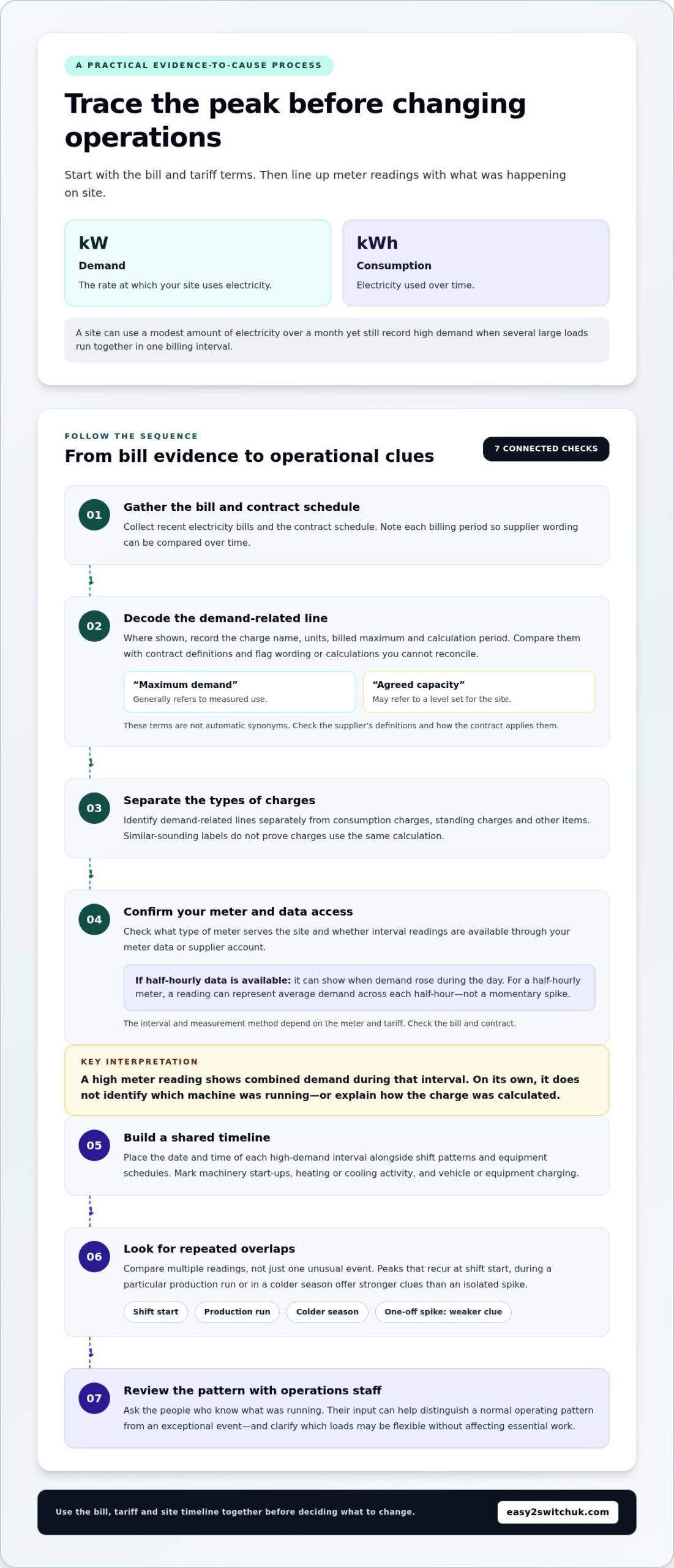
Peak demand is the highest rate at which your site uses electricity during a set billing interval. For a business with a half-hourly meter, a reading can represent average demand across each half-hour rather than a momentary spike. The interval and measurement method depend on the meter and tariff, so check your bill and contract rather than assuming every supplier calculates the charge in the same way.
Demand is measured in kilowatts (kW), which describe the rate of electricity use. Total consumption is measured in kilowatt-hours (kWh), which add up electricity used over time. A business can use a modest amount of electricity over a month but still record high demand if several large loads operate together during one billing interval.
A tariff may use the site’s highest measured demand, rather than total monthly consumption, to calculate a charge. That means a brief coincident peak can matter.
Which bill terms might refer to demand or capacity?
Look for wording such as “maximum demand”, “agreed capacity” or other capacity-related terms, but don’t treat them as automatic synonyms. Maximum demand generally refers to measured use; agreed capacity may refer to a level set for the site. How either term affects your bill depends on the contract and charging arrangement. Check the supplier’s definitions, the calculation period and whether the charge is based on actual demand, a capacity level or another basis.
Names and calculations vary by tariff and meter arrangement. Compare the bill description with the relevant contract terms before deciding that a line is a peak-demand charge. This distinction is the starting point for working out how to reduce peak demand charges for my business.
Why do several loads running together create a peak?
Imagine heating switching on as refrigeration equipment cycles and production machinery starts. Each load adds to the site’s total electricity demand. When they overlap within the same measurement interval, the combined rate can be higher than if those activities run at different times. Timing can matter as much as the rated power of any one appliance.
That overlap is a demand-management issue. Demand response describes adjusting electricity use in response to system conditions. For a business, the practical question is whether flexible loads can be timed differently without affecting essential work. One high reading alone won’t identify the cause: it shows combined demand during that interval, not which machine was running. Match meter data with equipment schedules to investigate.
How to find the cause of your business’s peak demand
Start with evidence, not equipment changes. A short review can connect the charge on the bill to the interval when demand rose and the activity taking place at your site. The bill and tariff determine what counts as chargeable demand, so a high meter reading alone does not explain how the charge was calculated.
What should you check on the bill and contract?
Work through these steps in order:
- Collect recent electricity bills and the contract schedule. Keep them together and note the billing period so you can compare the supplier’s wording over time.
- Find demand-related descriptions. Where shown, record the charge name, units, billed maximum and calculation period. Compare these details with the contract definitions, and flag terms that do not match or calculations you cannot follow.
- Separate charge types. Identify demand-related lines separately from consumption charges, standing charges and other items. A bill may not show every type of charge, and similar-sounding labels do not prove that charges are calculated in the same way.
- Check your meter and data access. Confirm what type of meter serves the site and whether interval readings are available through your meter data or supplier account. Half-hourly data, where available, can show when demand rose during the day.
Network charging arrangements can add another layer to a bill. Ofgem’s Targeted Charging Review provides regulatory context for changes to electricity network charging. Your bill and contract remain the starting point for understanding the charges applied to your site.
How can meter data reveal operational causes?
Build a timeline showing the date and time of each high-demand interval alongside shift patterns and equipment schedules. Mark machinery start-ups, heating or cooling activity, and vehicle or equipment charging. Half-hourly readings can reveal whether these activities repeatedly overlap, but they will not identify the exact machine responsible on their own.
Look for patterns across multiple readings, not just one unusual event. Peaks that recur at shift start, during a particular production run or in a colder season offer stronger clues than an isolated spike. Review the timeline with operations staff who know what was running. They can help distinguish a normal operating pattern from an exceptional event.
For wider context on reviewing bills and contract terms, read this business energy comparison guide. Once you understand your usage pattern, comparing business energy contracts can help you assess how supplier terms fit your site’s needs. Explore business energy comparison.
Which peak-demand reduction measures suit your business?
The right response depends on what your meter data shows. A recurring peak caused by overlapping flexible loads may be manageable through scheduling, while a brief peak tied to essential production might need a different approach. Compare each option with the cause, operating constraints and tariff terms instead of assuming one measure suits every site.
Can scheduling and load management reduce avoidable peaks?
Start with operational changes. Staggering the start of flexible machinery, charging equipment at different times or adjusting heating and cooling schedules may reduce overlap while keeping essential processes running. First identify which loads could move, then review production, safety, staff comfort and service requirements with the people responsible for operations. Track demand before and after a change under comparable conditions, since normal operating variation can affect readings.
| Measure | Suitable situation | Limitation | Evidence to gather |
|---|---|---|---|
| Schedule flexible loads | Peaks coincide with tasks that can run at another time. | Production deadlines or operating hours may limit flexibility. | Interval readings, shift plans and equipment schedules. |
| Stagger equipment starts | Several machines or systems start together. | Start times may be tied to process or safety requirements. | Start-up logs and demand readings around the relevant intervals. |
| Use load controls | Loads can be monitored and managed automatically or by staff. | Controls must suit the equipment and avoid disrupting essential operation. | Load profiles, control settings and operational constraints. |
| Consider battery storage | A measured, recurring peak may be suitable for further assessment. | Suitability depends on system design, operating profile and tariff terms. | Peak timing and duration, usage data and relevant contract terms. |
| Assess on-site generation | Generation may align with periods of site demand. | Solar can lower grid imports when producing, but does not automatically remove a coincident peak. | Demand intervals, generation profile and site operating patterns. |
When might batteries or on-site generation be relevant?
Consider technology when the data shows a repeatable pattern that simpler scheduling cannot address. Storage may help manage a recurring peak, but whether it fits depends on the site’s demand profile and the tariff’s calculation method. Assess generation against when the business uses electricity: lower grid imports at one time do not guarantee lower measured demand during the chargeable interval.
Compare options using actual operating and meter data. Treat any expected effect as something to measure, not assume. A low-disruption operational adjustment is often a useful first test before assessing a technology investment.
How to build a practical peak demand reduction plan
A useful plan turns meter readings into a controlled operational test. Assign one person to review the data and record outcomes, then involve staff who understand production schedules, equipment and service needs. This keeps decisions grounded in how the site runs, not just what a chart appears to show.
What should a useful baseline include?
Before changing anything, document the bill period, the demand measure used, available interval patterns and the site’s operating calendar. Note unusual events, seasonal loads and planned changes, such as a shift-pattern change or new equipment, that could affect comparisons. Use consistent measurement periods and record assumptions, including any gaps in the data.
A simple baseline can show the highest recorded demand, when it occurred and what the site was doing at the time. Keep a copy of the relevant bill and tariff wording too, so you can assess results against the charge that actually applies.
How do you test changes without disrupting operations?
Start with reversible adjustments to flexible loads, such as shifting a non-essential start time. Before changing equipment schedules or controls, agree who can make the change, which operating limits must be respected and when to restore the usual schedule. Set safeguards for safety, production, comfort and service continuity.
Where practical, change one factor at a time. Compare similar operating periods and track both peak demand and operational outcomes. A lower reading is not a success if it causes missed production targets or service problems.
How should you review the results?
After the trial, compare meter data and the bill with the baseline. Check whether the relevant peak shifted or changed, whether the tariff’s demand measure reflects that difference, and whether operations stayed within agreed limits. A single result can mislead if weather, workload or an unusual event changed during the comparison period. Record what worked, what did not and whether to keep, adjust or reverse the change.
- Establish a baseline: record bill and meter details alongside operating conditions.
- Choose one low-risk change: focus on a flexible load linked to a recurring peak.
- Measure and review: compare similar periods, operational outcomes and the next relevant bill.
Once you understand your usage and tariff terms, supplier discussions can address the contract side of demand costs. For wider context on supplier and contract conversations, read this commercial energy broker guide. To explore business energy contract comparison, compare business energy options with Easy2switch UK Ltd. Contract review complements operational changes; it does not replace reducing avoidable peaks.
How supplier and contract comparisons fit into reducing demand charges
Operational changes and contract review address different parts of your electricity costs. Adjusting flexible equipment use may help reduce avoidable peaks. Comparing supplier offers can help you understand how contract terms treat demand and whether an offer fits your business’s usage pattern. Switching alone will not remove a demand charge or guarantee a lower total bill, so assess the terms alongside your operational plan.
What information helps compare business electricity offers?
Gather recent bills, current contract details, meter information and a clear picture of how the site operates. Include when your business uses the most electricity and any recurring peaks you have identified. This gives you a practical basis for comparing offers against real usage rather than relying on a headline unit rate.
Review the relevant rates, contract duration and demand-charge wording. Check how each offer defines and calculates demand-related charges, and consider those terms alongside consumption and any standing charges. Offers and terms depend on your circumstances and the proposals suppliers make. Comparing the whole contract gives you a clearer view of its fit than looking at one rate in isolation.
When is brokerage support a useful next step?
Once you have identified the charge types on your bill and gathered your available usage evidence, supplier comparison can clarify the contract side of the picture. Easy2switch UK Ltd compares supplier offers for businesses and supports the switching process. This helps you review contract options in the context of your business, but it does not control site demand or replace operational changes that may reduce avoidable peaks.
Easy2switch UK Ltd’s brokerage service is free to customers. The selected supplier pays a commission, which is incorporated into the customer’s tariff. As you compare offers, consider the contract terms and overall fit with your usage, not just the quoted unit rate.
If you’re asking how to reduce peak demand charges for my business, treat supplier comparison as one part of the answer. First understand your usage and the demand definitions in your current agreement. Then compare available offers in that context, without assuming a switch will change how your site uses electricity.
Once you understand your usage and contract, you can compare business energy options.
Take control of your business’s peak demand costs
Reducing avoidable demand charges starts with understanding what your bill measures and when your site reaches its peak. Use meter data and operating schedules to identify possible causes, then test practical changes carefully and track demand alongside production and service outcomes.
That evidence also gives you a stronger basis for reviewing supplier contracts. Operational changes and contract comparisons play different roles. A new contract will not automatically eliminate demand charges, but comparing supplier terms against your usage can help you assess the overall fit.
Easy2switch UK Ltd compares supplier offers and supports customers through the switching process. The service is free to customers; the selected supplier pays a commission incorporated into the tariff. Once you understand your usage and current contract, compare business energy options with Easy2switch UK Ltd.
Start with the data you have, make one measured change at a time and build a clearer path to managing your energy costs.
Frequently Asked Questions
What are peak demand charges for a business?
Peak demand charges are charges linked to a business’s measured electricity demand or capacity under its particular tariff. Demand is usually expressed in kilowatts (kW), while energy consumed over time is measured in kilowatt-hours (kWh). The charge name, measurement interval and calculation can vary with the contract and meter arrangement. Check the bill and contract wording before assuming that a particular line item is a demand charge.
How can I find peak demand charges on my electricity bill?
Review your bill and contract for terms such as “maximum demand”, “capacity” or other demand-related wording. Note the units, billing period and any stated maximum, then compare the bill description with the contract schedule. Suppliers may use different terminology. If the calculation is unclear, use the contract and available meter data to understand the charge before choosing operational changes.
Can changing equipment schedules reduce my business’s peak demand?
It can help if flexible equipment runs at the same time and creates avoidable coincident demand. Compare interval data with operating schedules to see whether peaks recur when loads overlap. If operations allow, trial staggered start times or another low-risk scheduling change, then compare results across similar periods. Protect safety, production, comfort and service requirements. Scheduling may reduce some avoidable peaks, but it will not prevent every peak.
Do all UK businesses pay peak demand charges?
No. UK business tariffs and billing arrangements vary, and not every electricity bill shows a separate line labelled “peak demand”. Some contracts include demand- or capacity-related terms, while others structure charges differently. The meter arrangement and supplier terms also affect the calculations and data available. Review your bill and contract to establish whether a demand-related charge applies and how it is worked out.
Will solar panels automatically reduce my business’s peak demand charges?
No. Solar generation may reduce electricity drawn from the grid while it is producing, but that does not guarantee a lower recorded peak or demand-related charge. The outcome depends on when your site’s peak occurs, how generation aligns with demand and how the tariff calculates the charge. Compare interval demand data with operating patterns and generation times before treating solar as a solution to a specific peak.
Can a battery reduce a business’s peak demand?
A battery may be worth assessing for peak shaving if your data shows a recurring demand peak, but it is not a universal solution. Suitability depends on the site’s demand profile, system design, operating requirements and tariff terms. First identify when the peak occurs and how long it lasts, then compare that pattern with the site’s needs. Do not assume costs or savings without analysis based on the specific project.
Will switching energy suppliers remove peak demand charges?
No. Switching suppliers does not automatically remove demand-related charges or guarantee a lower total bill. Once you understand how your current charge is calculated, compare supplier offers and contract terms against your actual consumption and demand profile. Easy2switch UK Ltd compares supplier offers and supports businesses through the switching process. The service is free to customers, with commission paid by the selected supplier and incorporated into the customer’s tariff.
