
A headline unit rate isn’t enough to prove that a new energy supplier is the right choice. Getting finance team buy-in for new energy supplier means showing the full cost, contract conditions and practical impact of switching, so colleagues can judge the decision on evidence rather than assumptions.
Finance teams may want to know whether projected savings are realistic, what charges or risks are part of the contract, and how a switch could affect budgets and workload. A clear comparison answers those questions by setting out consumption and contract details, including unit rates, standing charges and other applicable charges. It should also explain the steps involved and who will manage them.
This guide explains how to build a decision case, prepare for common finance questions and set out a clear approval route. Easy2switch UK Ltd compares energy offers and supports customers through the switching process. Its service is free to customers: the chosen supplier pays commission, which is incorporated into the tariff. Present that arrangement alongside the comparison, and describe potential savings as estimates rather than guarantees.
Key Takeaways
- Build a finance-ready case around documented costs, contract terms, risks and switching steps, not a headline-rate promise.
- Compare offers using consistent consumption periods, sites and assumptions. Show unit rates, standing charges, contract length and applicable charges.
- When getting finance team buy-in for new energy supplier, address budget predictability, material terms and operational concerns before asking for approval.
- Make the decision easy to review: summarise the current position, alternatives, preferred option, rationale and approval deadline.
- After approval, assign responsibility for confirming the agreement, managing supplier communications and checking account information.
Why a New Energy Supplier Needs a Finance-Ready Business Case
Finance colleagues need more than a promising quote. They need evidence to assess the cost, understand the commitment, plan for budget impacts and see who is accountable for the decision. Getting finance team buy-in for new energy supplier starts with a documented comparison of costs, contract terms, risks and switching steps, with assumptions clearly labelled.
Keep potential savings separate from confirmed figures. A lower quoted rate may point to an opportunity, but it doesn’t guarantee a particular bill or saving. Actual costs depend on consumption and the full contract structure. Compare the overall contract impact, including unit rates, standing charges and applicable charges, rather than relying on one headline rate. Make clear what is known, what is estimated and what could change the result.
Energy procurement is one part of Energy management, where cost control and the use of resources inform business decisions. Make any commercial arrangements clear, too. Easy2switch UK Ltd charges customers no separate brokerage fee. The chosen supplier pays commission, which is incorporated into the energy tariff.
What finance needs to see before approving an energy supplier change
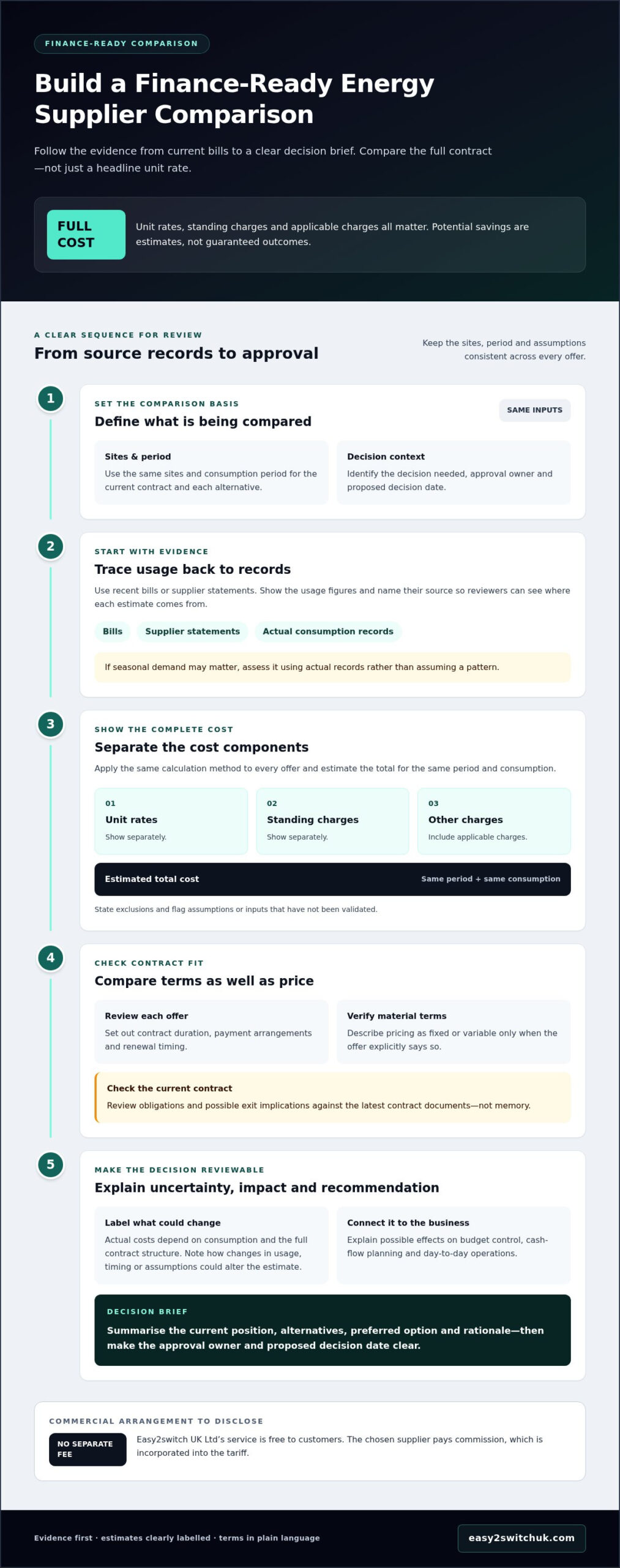
Make the request easy to assess. Identify the decision needed, the approval owner, the sites covered and the proposed decision date. Summarise the current contract and relevant consumption information, then compare alternative offers using consistent assumptions. Flag missing inputs, estimates and figures that still need validation. This gives finance the information to review the decision without having to fill gaps or infer what approval means.
How to make the case relevant to your business
Explain how the proposed agreement could affect budget control, cash-flow planning and day-to-day operations. For a farm, consider whether seasonal demand is relevant to the consumption assessment, using actual records rather than assuming a pattern. For wider comparison context, see this business energy comparison guide. Tailor the case to the sites and operating needs involved, and explain how the recommendation fits them.
Close with a clear rationale and the evidence behind it. A well-organised case doesn’t promise an outcome. It gives finance a sound basis to weigh the costs, commitments and practical implications before approving a supplier change.
Build a Credible Business Energy Supplier Comparison
A useful comparison puts the current contract and each alternative side by side, using the same sites, consumption period and assumptions. This helps finance distinguish differences in the offers from differences in the inputs. Set out the information consistently, and make each estimate traceable to bills, supplier statements and offer documents.
Start with recent bills or supplier statements. Show unit rates and standing charges separately, then calculate an estimated total for the same period and consumption. Label estimates, state which sites they cover, and explain that actual charges may differ if usage or other inputs change. Include applicable charges where relevant rather than presenting the unit rate as the whole cost.
Which figures belong in the finance comparison
Use a concise side-by-side summary so reviewers can scan the main differences. Include:
- Sites and consumption period used for each estimate.
- Usage figures and their source, such as bills or supplier statements.
- Unit rates, standing charges and estimated total costs, shown separately.
- Applicable charges, with assumptions or unvalidated inputs clearly flagged.
Add a short scenario note to explain which changes in consumption, timing or other assumptions could alter the estimated total. This helps finance understand the limits of the comparison without treating an estimate as a promised bill. Use the same calculation method for every offer and state any exclusions so the differences are easy to interpret.
How to compare contract fit as well as price
Price is only one part of the decision. Set out contract duration, payment arrangements and renewal timing alongside the cost figures. Describe pricing as fixed or variable only when the offer explicitly says so, and explain other material terms in plain language. Check the current contract’s obligations and any possible exit implications against the latest contract documents rather than relying on memory.
For getting finance team buy-in for new energy supplier, make both the preferred option and the trade-offs easy to understand. Easy2switch UK Ltd compares electricity and gas offers and supports customers through the switching process. Its service has no separate brokerage fee for the customer: commission from the chosen supplier is incorporated into the tariff. The commercial energy broker guide offers additional market context, or you can explore business energy comparison support from Easy2switch UK Ltd to organise supplier options for review.
Answer Finance’s Main Concerns About Switching Energy Supplier
A lower quoted rate can look attractive, but it doesn’t automatically make an offer the better contract. Finance should consider the full terms, charges, payment arrangements and fit with the business’s needs. An estimate isn’t a guaranteed saving: actual costs depend on the agreed terms and energy used. Keep the decision grounded in what the offer says, not just its headline figure.
A supplier change is a change to the commercial agreement for energy, not normally a physical change to the equipment or network supplying a site. This can help address concerns about disruption, without promising that every part of the process will be issue-free. There may still be administration, and contract and account details need to be handled accurately.
Is changing energy supplier risky for the business?
Separate the questions finance may be combining: what commitment is the business accepting, how could the cost vary, and what needs to happen to manage the change? Before approval, check current contract dates and terms, the sites and meters covered, and the consumption information used in the offer. Review any relevant notice or exit provisions against the current contract documents. These checks reduce avoidable uncertainty, though they can’t remove every commercial or administrative risk.
Set expectations about the process, too. Easy2switch UK Ltd supports customers through supplier switching by telephone or online, helping organise the steps involved. Don’t promise a particular completion date or describe the process as entirely free of administration. Instead, identify who will handle communications, keep colleagues informed and review subsequent account information.
How to explain broker commission and value clearly
Be direct about how the brokerage is paid. Easy2switch UK Ltd receives commission from the selected supplier, and that commission is incorporated into the customer’s energy tariff. The service is free to the customer, with no separate brokerage fee. Include this commercial arrangement alongside the offer so finance can consider it as part of the decision.
Then assess the complete proposition: contract terms and estimated costs, the information used to prepare the comparison, and the support involved in moving through the switch. Avoid presenting the recommendation as wholly impartial or claiming that commission has no bearing on the arrangement. Transparent disclosure gives finance a fair basis to weigh the offer and brokerage support together.
For getting finance team buy-in for new energy supplier, answer objections with specific evidence and clearly stated limits. This gives colleagues a practical way to assess the commitment, understand the transition and decide whether to approve the next step.
Present the Supplier Recommendation and Approval Request
A strong comparison needs a clear conclusion and a precise request. Finance shouldn’t have to work out which option you prefer or what you need approved. A short decision brief can bring the evidence together, show the trade-offs and make the next step clear.
A one-page energy supplier decision brief
Lead with the decision required and why it’s being considered now, such as an upcoming contract milestone. Then present the current position, alternatives and preferred option. A compact table keeps the comparison easy to scan:
- Option: current contract or alternative supplier offer.
- Estimated total cost: for the stated sites and period, based on the same consumption assumptions.
- Contract fit: duration, payment arrangements and material terms.
- Benefits and drawbacks: reasons for recommending the option, plus disadvantages or unresolved questions.
- Assumptions and risks: inputs used, details still to validate and any relevant current-contract obligations.
Keep totals comparable and label estimates as estimates. Explain why the preferred option suits the business, without implying that a quoted figure guarantees a particular bill. Finish with the named approver, the approval requested, the person responsible for the next action and the relevant contract milestone or decision deadline.
Assign ownership before the meeting. Identify who reviews the supplier offer and current contract documents, who records the approval, and who manages switching administration and internal updates. This makes accountability clear and helps prevent the decision from stalling after finance agrees in principle.
How to handle finance questions in the meeting
Bring the evidence behind the figures: recent bills or supplier statements, consumption data, the sites included and the date of each offer. If an estimate uses assumptions or excludes information, say so plainly. Answer questions about obligations and material terms using the supplier’s offer and the business’s current contract documents, rather than relying on memory. Record questions that need follow-up and assign an owner instead of guessing.
If the recommendation includes business gas, this guide to comparing gas suppliers offers additional context. For getting finance team buy-in for new energy supplier, a balanced brief helps finance weigh the evidence, trade-offs and practical next steps in one place.
Easy2switch can help organise supplier options for a business energy comparison. Explore business energy comparison support to prepare a clearer recommendation for finance.
Move from Finance Approval to a Managed Supplier Switch
Finance approval is the handover point, not the end of the decision process. Before taking action, confirm that the approved offer matches the one the business intends to accept. Record who authorised the decision and give the person managing the switch access to the comparison and relevant contract documents. This helps keep the approved terms, sites and assumptions clear during supplier communications.
A post-approval checklist for the business
Keep a clear record so the decision and follow-up actions are easy to track. Include:
- The selected supplier and offer, contract terms, decision date and approval owner.
- The comparison used to support the decision, including its consumption assumptions and sites.
- The authorised contact responsible for supplier communications and required documentation.
- The agreed contract start and the person responsible for internal updates.
- A scheduled review of account information and the first relevant bill against the business case assumptions.
Use accurate business and site details when completing the supplier’s process. If the offer or contract information differs from what finance approved, pause to clarify the discrepancy and record any agreed change. After the contract begins, compare actual billing information with the assumptions behind the estimate. Investigate differences, such as changed usage or charges, before drawing conclusions about the outcome.
Get support with your business energy comparison
Clear ownership makes the administrative handover more manageable. Easy2switch helps businesses compare electricity and gas offers and supports customers through the switching process by telephone or online. Finance can retain the comparison and approval record, while the person coordinating the switch tracks communications, documentation and follow-up tasks.
Keep the brokerage arrangement visible in the records: Easy2switch receives commission from the selected supplier, incorporated into the customer’s energy tariff. The service is free to the customer, with no separate brokerage fee. This gives colleagues a clear account of how the comparison support is funded as they review the agreed offer.
For getting finance team buy-in for new energy supplier, a documented handover and planned bill review help carry the decision through into account management. Compare business energy options with Easy2switch.
Turn a Clear Recommendation into Confident Action
Finance approval is easier to secure when the recommendation is grounded in comparable costs, clear contract terms and honest assumptions. Keep potential savings distinct from guaranteed outcomes, and show how the preferred offer fits the business’s budget and operational needs.
Make the decision actionable: record who approved it, assign responsibility for supplier communications and documentation, and review the first relevant bill against the business case. This keeps accountability in place beyond the approval meeting.
Easy2switch compares electricity and gas offers from hundreds of suppliers and supports customers through the switching process by telephone or online. The service is free to customers, with commission from the selected supplier incorporated into the tariff. Disclosing this arrangement helps finance assess the comparison with the full commercial picture in view.
For getting finance team buy-in for new energy supplier, a transparent case and managed handover can turn a complex choice into a practical business decision. Compare business energy options with Easy2switch and take the next step with confidence.
Frequently Asked Questions
Is switching business energy suppliers worth presenting to the finance team?
It can be worth presenting if a like-for-like assessment identifies an option relevant to the business. Getting finance team buy-in for new energy supplier starts with reviewing the current contract, available offers, consumption and business priorities. A lower unit rate alone doesn’t establish value. Present estimated total costs, contract terms, assumptions and risks, and distinguish confirmed figures from estimates. Don’t promise savings before checking the offer and usage assumptions.
How do I prove that a new energy supplier could save the business money?
Compare the current contract and proposed offer across the same sites and consumption period, including relevant charges. Show unit rates and standing charges separately, then calculate estimated totals using documented usage. Include contract duration and any terms that affect the comparison. Label assumptions and estimates clearly, including the source of consumption data. Present any difference as potential savings, not a guaranteed outcome, because actual costs depend on the agreed offer and energy used.
Can a business change energy supplier without interrupting its energy supply?
A supplier switch changes the commercial agreement, rather than the physical supply arrangement to the site. Still, don’t treat every detail as risk-free: follow the supplier’s process and check contract terms, site information and switching communications. Keep copies of key records, and assign someone to monitor progress and subsequent account information. For current UK process details or protections, consult Ofgem guidance and the relevant contract documents before acting.
What should finance compare besides the unit rate?
Finance should compare standing charges, contract length, payment arrangements, applicable charges, renewal timing and the terms attached to each offer. Calculate estimated totals using consistent consumption and site assumptions. The lowest headline rate may not be the best fit if contract duration, payment conditions or operational requirements differ. Record uncertainties and explain which inputs could change the estimated outcome, so approvers can judge the whole commitment rather than one figure.
How can I explain energy broker commission to finance?
Explain the payment arrangement plainly. Easy2switch receives commission from the selected energy supplier, and that commission is incorporated into the customer’s tariff. Put this information alongside the offer comparison, contract terms and switching support provided. Finance can then assess the full commercial arrangement without relying on claims that the service has no commercial incentive or guarantees savings.
What information do I need to prepare a business energy supplier comparison?
Gather recent energy bills or supplier statements, business and site details, available consumption information, and the current contract’s terms and dates. These records help keep the comparison consistent and identify relevant contract milestones. Set out finance priorities, such as budget predictability or preferred contract duration. Label assumptions and gaps clearly, and handle business account information through appropriate channels. Accurate inputs make it easier to assess offers on a like-for-like basis.
What should an energy supplier business case include?
Include the decision requested, current contract position, comparable offers, estimated total costs, contract terms, key risks, assumptions and recommended next step. Name the approval owner and the person responsible for managing the process after approval. A concise comparison table can make the evidence easier to review. Show disadvantages as well as benefits, and keep potential savings separate from confirmed figures so the recommendation remains balanced and clear.
