
Could the quote with the lowest unit rate still be the wrong deal for your business? Commercial gas quotes UK suppliers provide can use different rates and contract conditions, so comparing headline figures alone may leave important costs out of view. A useful comparison starts with accurate supply information and ends with checking the full written offer.
Renewing can feel like another time-consuming task, particularly if you’re unsure which meter or contract details to collect. This guide explains what to prepare, what a commercial gas quote should include and how to compare offers without focusing on just one figure.
You’ll learn which details, including your MPRN, annual consumption and contract end date, can help make a quote relevant. We’ll also cover unit rates, standing charges, contract length and other terms to review, along with questions to ask a broker and what to expect after choosing an offer. If you use a brokerage service, check how it’s funded too: Easy2switch’s service is free to the customer, with supplier commission incorporated into the selected tariff.
Key Takeaways
- Commercial gas quotes UK businesses receive depend on their supply details and contract needs. A quote alone doesn’t confirm whether the terms suit the business.
- Start with your latest gas bill and current contract. Check that the business, supply address and meter details are accurate.
- Compare offers on a like-for-like basis by checking the unit rate, standing charge, contract term and key conditions.
- Track each step from quote request to supplier confirmation, and check the details carefully before accepting an offer.
- Easy2switch supports businesses seeking gas or electricity contracts online or by telephone. Its service is free to the customer and funded by supplier commission included in the selected tariff.
Commercial gas quotes UK: what a business quote tells you
A commercial gas quote is an offer based on your business’s supply details and contract requirements. It sets out proposed charges and conditions for supplying gas to a particular site. Treat it as a proposal to review, not proof that the contract is the right fit or that every detail is final. Before accepting, confirm the offer, its validity and its terms with the supplier.
Business gas contracts are arranged on commercial terms, which can differ from domestic tariffs. The Ofgem price cap doesn’t apply to business gas, so don’t assume household tariff rules or protections apply to your agreement. The wider context of the UK’s oil and gas industry helps explain the market behind supply, but the costs and conditions in your quote depend on the specific offer.
What information does a commercial gas quote show?
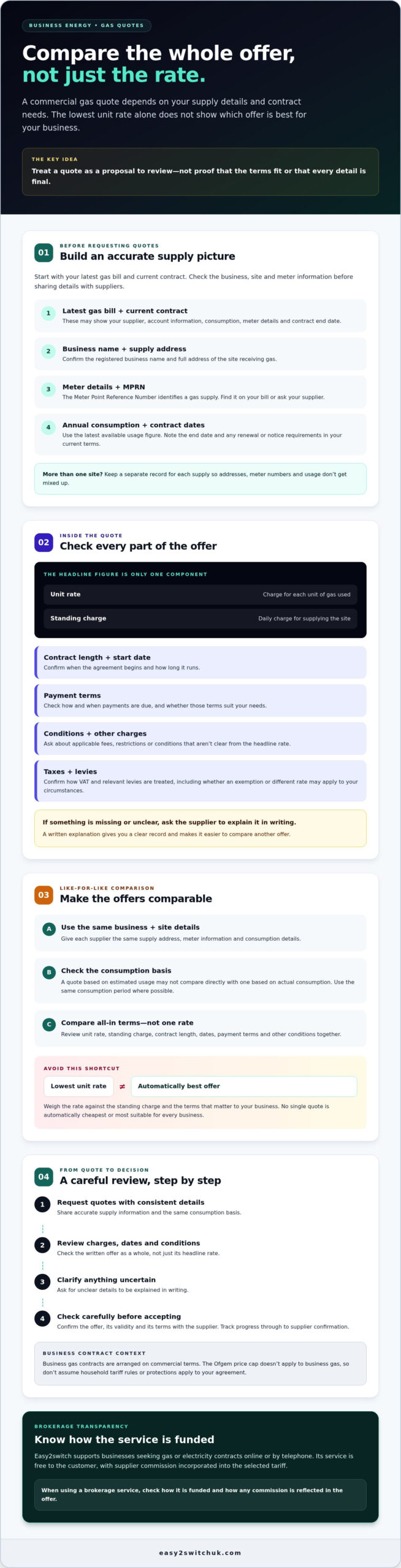
Look beyond the headline figure. A quote will generally show the proposed unit rate, the charge for each unit of gas used, and the standing charge, a daily amount for supplying the site. Check that it also clearly states:
- Contract length and start date: Confirm when the agreement begins and how long it runs.
- Payment terms: Check how and when payments are due, and whether the quoted terms suit your needs.
- Conditions and charges: Ask about applicable fees, restrictions or other conditions that aren’t clear from the headline rate.
- Taxes and levies: Confirm how VAT and any relevant levies are treated, and whether an exemption or different rate may apply to your circumstances.
If a detail is missing or unclear, ask the supplier to explain it in writing. That gives you a clear record of what’s being offered and makes it easier to compare the quote with another one.
Why can business gas quotes differ?
Offers may vary because suppliers assess different consumption levels, site details, contract timings and commercial terms. A quote based on estimated usage may not be directly comparable with one based on actual consumption. Even small differences in the information supplied can affect the offer.
For a fair comparison, give each supplier the same business and supply details, including site and consumption information. Then check that the contract dates and conditions are comparable too. A lower unit rate alone doesn’t show which offer is better. Weigh it against the standing charge, contract length and terms that matter to your business. There’s no single quote that’s automatically the cheapest or most suitable for every business.
What to prepare before requesting UK commercial gas quotes
Preparing a few details can make quote requests clearer and reduce back-and-forth. Start with your latest gas bill and current contract, then work through the list below. Requirements can vary between suppliers and according to your business circumstances, so ask if you can’t provide something.
- Find your latest gas bill and current contract. These can show your current supplier, account details, consumption, meter information and contract end date.
- Confirm the business and supply address. Check the registered business name and the full address of the site receiving gas.
- Note the meter details and MPRN. The Meter Point Reference Number helps identify a gas supply. Look for it on your bill or ask your supplier if you can’t find it.
- Record annual consumption and contract dates. Use the latest available figures and note the contract end date, along with any renewal or notice requirements in your current terms.
Which details should I have to hand?
Keep your current supplier’s name, account number, supply address, MPRN and recent consumption records together. If your annual usage figure isn’t shown, check bills covering a consistent period or ask your supplier how to confirm it. For several sites, create a separate record for each supply so addresses, meter numbers and usage don’t get mixed up.
Business energy contract conditions can vary. Ofgem’s guide to business energy contracts provides further information about business contracts and relevant protections. Check the guidance against your circumstances rather than assuming the same provisions apply to every business.
How to make quotes easier to compare
Give each supplier the same site details and consumption period. If one request uses a recent annual figure and another uses an estimate from a different period, the offers may not be directly comparable. Keep each site’s information separate, and record its contract end date and any renewal or notice requirements shown in the current terms.
For wider advice on assessing business energy offers, read this business energy comparison guide. If you’d prefer help gathering and reviewing business energy offers, you can also contact Easy2switch about business energy brokerage.
How to compare commercial gas quotes beyond the headline rate
To compare commercial gas quotes UK businesses receive fairly, first check that each offer uses the same supply details and consumption assumptions. Then assess the whole contract, not just the unit rate. A lower rate may not be a better fit if the standing charge, contract length or conditions differ.
A simple table can make gaps and differences easier to spot. Enter the supplier’s actual terms, and label estimates or details awaiting confirmation rather than treating them as final.
| Supplier | Unit rate | Standing charge | Term | Key conditions |
|---|---|---|---|---|
| Offer 1 | Enter quoted rate | Enter quoted charge | Enter duration | Confirmed terms, estimates or details to verify |
| Offer 2 | Enter quoted rate | Enter quoted charge | Enter duration | Confirmed terms, estimates or details to verify |
Keep the business name, supply address, meter details and usage period consistent across requests. If a quote uses estimated consumption, mark it clearly and ask whether the supplier can confirm the offer using verified figures. For context on how brokers support businesses and how the market works, see this commercial energy broker guide.
Which contract terms should I check?
Check the contract duration, start date, payment arrangements and renewal conditions. Ask whether the quoted terms depend on a credit check, confirmed meter information or any further supplier review. Clarify what happens if the supplier’s final offer differs from the quote. Also ask the supplier to confirm how applicable taxes and levies are treated, including whether an exemption relevant to your business has been recognised.
How to assess whether a quote fits your business
Consider when and how your business uses gas, its operating needs and how much certainty it wants from a contract. If your business has several sites, confirm that every supply is included and check the rates and conditions for each one. Don’t rely on a headline rate or an unverified savings estimate alone. Weigh confirmed costs and terms against your requirements.
Before deciding, mark each table entry as confirmed, estimated or awaiting supplier confirmation. This makes unanswered questions easier to spot and helps you compare each offer using the same complete information.
What happens after you request a business gas quote?
After requesting commercial gas quotes, UK businesses can expect a series of steps, although the details and timing depend on the supplier and the information provided. Keep track of what’s confirmed at each stage:
- Request: You provide the business and supply details needed to seek an offer.
- Information review: The supplier or broker checks the information and may ask you to clarify missing or uncertain details.
- Supplier offer: You receive proposed rates, contract dates and conditions. Check whether any terms are provisional or still need supplier confirmation.
- Customer decision: Review the written offer and raise questions before accepting or authorising a switch.
- Supplier confirmation: The supplier confirms the agreed details. Keep its confirmation with the quote and accepted terms.
If you’re working with a broker, ask who will communicate with the supplier and what support, if any, continues after the change. Make sure you also understand how the broker is funded. Easy2switch’s brokerage service is free to the customer, and the selected supplier pays commission that is incorporated into the customer’s tariff. For more background on supplier choice, see this gas supplier comparison guide.
What should I confirm before accepting an offer?
Match the written offer against the correct business, supply address and meter details. Check the contract start and end dates, unit rate, standing charge, payment arrangements and conditions. If a term is unclear, ask the supplier or broker to explain it before you authorise a switch. Save copies of the quote, accepted terms and relevant messages so you can refer back to what was agreed.
Will switching interrupt my gas supply?
A supplier change is generally a change to the contract for the existing supply, rather than a replacement of the physical gas connection. However, don’t assume continuity is guaranteed in every circumstance. Ask the supplier to confirm any arrangements specific to your site, and raise unresolved account, meter or supply-detail issues before the proposed change.
Once you’ve reviewed the offer and know who will handle supplier communication, you can contact Easy2switch about business energy brokerage for support seeking gas or electricity contracts.
Getting commercial gas quotes through Easy2switch
Easy2switch helps UK businesses seeking gas or electricity contracts by supporting them as they gather and review supplier offers. You can get in touch online or by telephone. Sharing accurate business, supply and consumption details can help identify offers relevant to your requirements. Availability depends on your business and supply, so ask which options can be considered before comparing terms.
The service is free to the customer. Easy2switch receives commission from the selected energy supplier, and that commission is incorporated into the customer’s tariff. This is a commercial relationship worth understanding as you assess an offer. Ask how the commission works and compare the written tariff and contract conditions, rather than assuming the service is commission-free or that an offer will be the cheapest.
How does Easy2switch’s service work?
The process starts with your business and supply information. Easy2switch can use these details to help identify relevant supplier offers for your requirements. You can then review the available rates and contract terms, ask questions and decide whether to proceed. Check which supplier offers are available for your business, and make sure you understand any conditions before accepting an agreement.
You remain in control of the decision. Review the supplier’s written terms and confirm that the site details, dates, charges and conditions match your needs before authorising a switch.
What should I ask an energy broker?
Clear questions can help you understand both the options and the broker’s role. Consider asking:
- Which suppliers and contract options have been considered for my business, and why do they fit the details I provided?
- Are the rates and terms confirmed by the supplier, or could they change after further checks?
- How are you paid? Is supplier commission included in the tariff I would pay?
- Who will manage communication with the supplier, and what support is available after I accept an offer?
These questions help you assess commercial gas quotes UK businesses may receive without relying on a headline rate or an unexplained recommendation. If you have your supply details ready and want help exploring relevant offers, you can request help with commercial gas quotes. Review any offer at your own pace and proceed only when its terms are clear.
Take the next step with confidence
Comparing commercial gas quotes UK businesses receive is easier when each offer uses the same supply information and you look beyond the unit rate. Check the standing charge, contract dates, payment terms and conditions, then confirm any estimates or unclear details with the supplier before accepting.
Having your latest bill, current contract, meter details and consumption records ready can make it easier to request relevant offers. Keep written quotes and confirmations together so you can see what’s agreed and make a considered choice for your business.
Easy2switch supports businesses seeking gas or electricity contracts online or by telephone. Its brokerage service is free to the customer, with commission from the selected supplier incorporated into the customer’s tariff. Ask which offers may suit your requirements and how their full terms compare. To explore your options, request help comparing commercial gas quotes.
With the right information and a careful review, you can approach your next energy contract decision with greater clarity and confidence.
Frequently Asked Questions
How do I get commercial gas quotes in the UK?
To get commercial gas quotes, UK businesses can contact suppliers directly or seek support from a business energy broker. Have your latest bill and current contract ready, along with your supply address, MPRN, consumption and contract end date where available. Easy2switch supports businesses looking for gas or electricity contracts online or by telephone. Ask which supplier offers are available for your requirements, then review the written terms before deciding.
Are business gas quotes free?
Getting a quote doesn’t necessarily mean you’ll pay a fee, but charges can depend on who provides the service, so check before proceeding. Easy2switch’s brokerage service is free to the customer. The selected energy supplier pays Easy2switch commission, which is incorporated into the customer’s tariff. Ask how any broker you use is paid and whether commission is reflected in the offer, so you understand the commercial arrangement as well as the quote.
What information do I need for a commercial gas quote?
Prepare your business name and supply address, current supplier and account details, MPRN, recent gas consumption and contract end date. Your latest bill and current contract are useful starting points. The MPRN helps identify the gas supply and is usually shown on a bill. If you can’t find the annual consumption or contract date, check your records or ask your supplier. Requirements can vary, particularly for businesses with multiple sites.
How do I compare commercial gas quotes?
Compare offers using the same site details and consumption assumptions. Look at the unit rate alongside the standing charge, contract length, start date, payment terms and conditions. Check whether each detail is confirmed or still an estimate, and ask the supplier to clarify anything uncertain. A lower headline rate doesn’t necessarily make an offer the best fit if other charges or contract terms differ. Compare the full written offers before accepting.
Can a business switch gas supplier before its contract ends?
Possibly, but check your current contract before arranging a change. It may specify when you can renew or switch, whether notice is required, and whether charges or other conditions apply to leaving early. Don’t assume you can switch immediately or that the same terms apply to every business. Ask your current supplier to explain the relevant clauses, then confirm the proposed start date and any requirements with the new supplier before authorising a switch.
Will switching business gas supplier interrupt my supply?
A supplier switch usually changes the contract for your existing gas supply rather than replacing the physical connection, but don’t assume every site’s arrangements are identical. Ask the proposed supplier to confirm what will happen at your premises and whether any site-specific steps are needed. Raise unresolved account, meter or supply-detail issues before agreeing to the change. Keep the supplier’s written confirmation so you can check the agreed details and proposed dates.
Is an energy broker impartial when getting business gas quotes?
Don’t assume a broker is impartial without asking how its service is funded and which offers it can consider. Easy2switch’s brokerage service is free to the customer, with commission from the selected supplier incorporated into the customer’s tariff. Ask which suppliers and contract options have been considered for your business, how commission affects the offer, and whether terms are confirmed. Then compare the written options yourself and decide whether one suits your needs.
