
A cheaper energy contract alone won’t keep a leisure centre running efficiently. Effective sports club and leisure centre utility management reviews supply arrangements alongside how facilities use energy, then targets avoidable consumption and operational risks. Energy is typically the second-highest operating cost for a leisure facility, after staffing, so a joined-up approach matters for controlling costs and protecting day-to-day services.
That pressure is familiar to operators: bills need managing, while facilities must stay available to the people and clubs that rely on them. This article explains how sports club and leisure centre utility management can help control energy use and costs, reduce avoidable waste and support lower emissions. It covers common energy demands, practical efficiency measures and the role of contract management. Reviewing both consumption and supply gives operators a clearer basis for decisions, rather than treating a tariff change as the whole solution.
Key Takeaways
- Compare facility energy use across operating periods to spot avoidable consumption and prioritise practical efficiency improvements.
- Review supply arrangements and changing demand together to make utility costs more manageable and reduce the risk of service disruption.
- Identify where energy upgrades could cut emissions, and explore relevant public-sector support programmes for eligible projects.
- Account for electricity, gas and water needs across pools, showers and other high-use areas; a suitable business energy broker can help with contract options.
Energy efficiency and consumption reduction
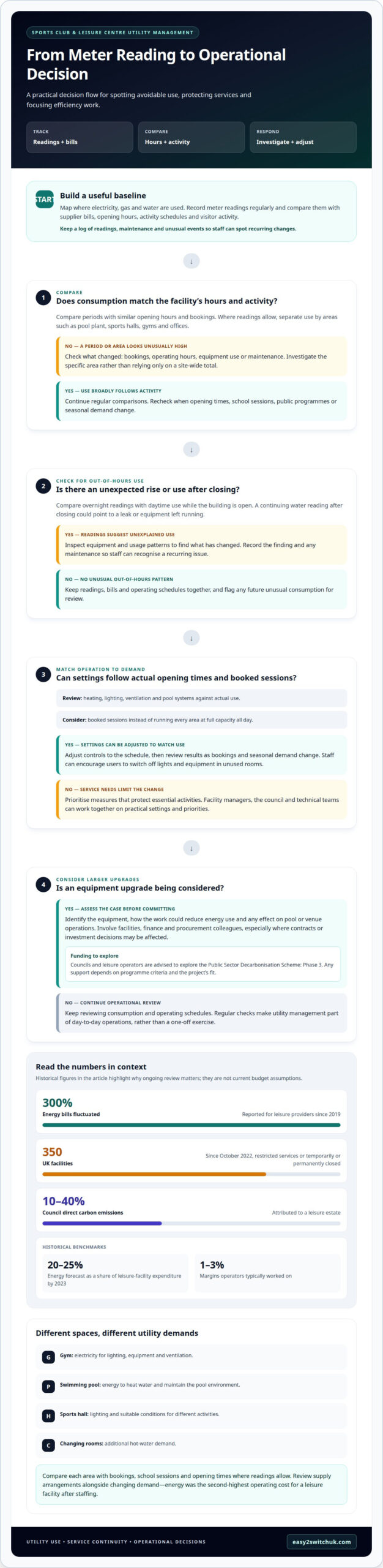
Start by mapping where electricity, gas and water are used at each facility. Compare consumption with opening hours and activity schedules to identify practical opportunities to reduce waste.
Utility Use Monitoring
Record meter readings regularly and compare them with bills, operating hours and visitor activity. If a swimming pool or changing area shows an unexpected rise, inspect equipment and usage patterns to find what has changed.
For example, compare overnight readings with daytime use while the building is open. A continuing water reading after closing could point to a leak or equipment left running. Keep a log of readings, maintenance and unusual events so staff can spot recurring changes and respond promptly.
Reducing Energy Consumption
Review heating, lighting, ventilation and pool systems against actual opening times. Adjust controls to match booked sessions instead of running every area at full capacity all day. Staff can also encourage users to switch off lights and equipment in unused rooms.
For a council facility, prioritise measures that protect essential activities while reducing avoidable use. Review results regularly and adjust settings as bookings and seasonal demand change. This makes utility management part of day-to-day operations, not a one-off review.
Funding options include the Public Sector Decarbonisation Scheme: Phase 3, which councils and leisure operators are advised to explore.
When assessing an upgrade, identify the equipment involved, how the work could reduce energy use and any effect on pool or venue operations. Facility managers, the council and technical teams can work together to set priorities. Any support available to a council depends on programme criteria and the project’s fit.
Leisure-centre energy costs and service disruption
Energy bills influence operating decisions as well as budgets. A clear picture of facility use helps managers plan around busy swimming sessions, school bookings and public programmes.
Utility Management Systems
A useful system brings meter readings, supplier bills and operating schedules together. Managers can compare consumption across buildings or periods, then investigate changes against opening hours, bookings and maintenance records. This helps distinguish a busier week from equipment running unnecessarily.
Choose a process that turns readings into clear actions, such as flagging unusual consumption for review. For example, compare a quiet day’s readings with a similar day when groups use the sports hall. Energy bills for leisure providers have fluctuated by 300 per cent since 2019, making regular review valuable for planning.
Costs can also affect continuity: since October 2022, 350 UK facilities have restricted services or temporarily or permanently closed. Monitoring supports earlier decisions about where to adjust operations and protect essential programmes.
Venue-Specific Utility Needs and Costs
A gym mainly uses electricity for lighting, equipment and ventilation. A swimming pool also needs energy to heat water and maintain the pool environment. Sports halls require lighting and suitable conditions for different activities, while changing rooms add hot-water demand.
These differences mean one site-wide figure can hide where consumption occurs. Track each area separately where readings allow, and compare use with bookings, school sessions and opening times.
Energy was forecast to represent around 20%-25% of leisure-facility expenditure by 2023, while operators typically worked on margins of 1%-3%. Treat these as historical benchmarks, not a current budget. Review staffing, activity schedules and utility use together before changing sessions or services. That gives managers a clearer basis for weighing operational challenges and keeping leisure facilities accessible to local groups.
Energy efficiency and carbon emissions
A leisure estate accounts for between 10 and 40 per cent of a council’s direct carbon emissions. For councils in England, that makes sports and leisure facilities a practical focus for emissions planning, alongside their contribution to fitness and participation. Measure energy use alongside service activity to show where operational changes could reduce emissions without undermining access.
Start with a facility-level review. Separate energy use by areas such as pool plant, sports halls, gyms and offices, then compare readings with opening hours and bookings. This helps identify which equipment or operating periods drive demand. Record changes as well, so managers can assess whether adjustments have reduced consumption while activities continue.
Prioritise operational changes before building a larger investment case. Match heating and lighting schedules to actual use, and review settings when school bookings or public programmes change. For swimming facilities, include pool operations rather than looking only at the building’s general electricity use. Review results regularly, as seasonal schedules and participation patterns can change demand.
For larger upgrades, councils and leisure operators are advised to explore grant programmes, including the Public Sector Decarbonisation Scheme: Phase 3. Build a clear proposal that links the facility, the planned work and its expected energy-saving mechanism. Involve facilities, finance and procurement colleagues early, particularly where changes affect existing contracts or require investment decisions.
A practical plan connects emissions goals with day-to-day management. Set out which facilities are being assessed, what consumption data will be reviewed and who will track progress. Prioritise work that supports lower energy use while keeping fitness sessions, school activities and community participation running. This gives organisations a clear basis for decisions without separating carbon reduction from service delivery.
What utilities do sports clubs and leisure centres typically use?
Most facilities manage electricity, gas and water, and wastewater can also be relevant. The balance depends on the venue: a gym needs electricity for equipment and lighting, while a swimming pool adds water use and substantial heating demand. Reviewing each utility separately helps managers understand which activities drive consumption.
Electricity supports lighting, fitness equipment, ventilation and pool plant. Compare usage with opening hours and bookings. For example, a sports hall with limited daytime activity may still use power outside sessions if equipment remains on.
Gas may supply heating and hot water, including for showers and pool systems. Review gas alongside electricity rather than treating each bill in isolation. Changes to heating schedules can affect both comfort and the energy needed to operate the venue.
Water and wastewater deserve attention in wet leisure settings. Swimming pools lose water through evaporation, filtration backwashing and hygiene processes. High visitor numbers also increase water use in toilets, showers, hospitality areas and catering facilities. Ageing infrastructure or undetected leaks can add waste and prompt reactive maintenance, so compare meter readings with visitor activity and investigate unusual changes.
Some venues also need to manage trade effluent and wastewater monitoring. Seasonal use can create a mismatch between capacity charges and actual demand. Smaller operators may pay fixed water costs for capacity used mainly during peak periods. Large venues can face minimum monthly demand charges outside major events and tournaments. Review contract terms against seasonal patterns, event schedules and day-to-day use.
A practical review starts by listing each meter, the area it serves and its main operating hours. Then match bills and readings to pool sessions, gym use, sports-hall bookings and visitor levels. This gives managers a clearer picture of demand before making operational decisions. To review electricity and gas supply arrangements, explore business energy brokerage as part of your utility planning.
Easy2switch UK: Farm Energy Brokerage
Easy2switch UK Ltd can help sports clubs and leisure centres review electricity and gas supply contracts through its Business Energy Brokerage. This can be useful when comparing supply options or planning a contract change alongside wider efforts to manage facility costs.
Easy2switch UK Ltd searches supplier offers for an appropriate contract and manages the switching process. Its service is designed to make the transition straightforward, while the chosen energy supplier pays Easy2switch UK Ltd a commission. Charities can also explore its Charity Energy Brokerage.
Bring your current supply details and operational priorities into the discussion, such as the needs of pool facilities, gyms or sports halls. This helps focus the review on your organisation’s energy requirements. Contact Easy2switch UK Ltd to discuss business energy brokerage for your sports or leisure facility.
Make your next utility review count
Start with a practical step: bring your current supply arrangements and facility priorities into one review. Consider how contracts support your operating schedule, planned improvements and the services local people rely on. This gives your team a clearer basis for decisions and makes sports club and leisure centre utility management part of routine planning, rather than a task revisited only when bills change.
Where reviewing electricity or gas supply is the next step, Easy2switch UK Ltd can help your organisation compare supplier offers and manage a switch. The right time to begin is when you’re assessing contract options or bringing utility decisions into a wider operational plan. Discuss your organisation’s utility needs with Easy2switch UK Ltd.
Take the next decision at a pace that suits your facility. A focused review can help your team plan more clearly and keep attention on the people and activities the venue serves.
Frequently Asked Questions
How much do UK sports clubs and leisure centres spend on energy, water and waste?
There is no single spend figure that fits every UK club or leisure centre. Annual bills reflect facility size, opening hours, visitor numbers, pool provision, energy contracts and seasonal demand. Waste costs also depend on the venue’s waste streams and collection arrangements. To build a useful budget, separate each utility and waste cost, then compare bills with usage, bookings and previous periods.
What are the average electricity and gas prices for UK leisure facilities?
There is no single electricity or gas rate for every UK leisure facility. The amount paid depends on the contract, consumption profile, site requirements and supplier offer. Compare unit rates and standing charges on the same basis, using the facility’s actual consumption. Check contract terms and renewal dates too, so the comparison covers the complete supply arrangement, not just a headline rate.
How can sports clubs reduce energy use in swimming pools and gyms?
Match operating settings to actual use. For a swimming pool, review heating and filtration schedules against session timetables, and use a pool cover when it is closed. In gyms, switch off idle equipment and light only areas in use. Record readings before and after each change, then compare similar operating periods to see which adjustments reduce consumption without disrupting sessions.
How can UK leisure facilities compare and switch business energy suppliers?
Gather recent bills, meter details, consumption records and the current contract’s end date. Compare supplier offers using the same usage information, unit rates, standing charges and contract terms. If the facility has a fixed contract, check for exit fees before deciding to leave early, and weigh them against potential savings. At renewal, review options early enough to make an informed decision.
What are the risks of poor utility management in sports and leisure facilities?
Poor oversight can leave a facility paying for avoidable consumption, missing leaks and facing reactive maintenance. An unexplained rise in water use, for example, can continue unnoticed if readings are not reviewed. Unchecked energy use can also pressure operating budgets, making it harder to plan repairs or maintain programmes. Inadequate monitoring may delay action until a fault affects services or access to the facility.
