
A short lease doesn’t guarantee a short or simple energy contract. If you’re arranging business energy supply for a short-term lease, the available contract may start before you move in or continue after you hand back the keys.
Check more than the unit rate. Who is responsible for the meter, account and final bill can affect both your move-in and handover. If responsibility isn’t clear, you could face billing confusion or be placed on a deemed contract with the existing supplier.
This guide explains how to match energy arrangements to your lease dates, what to check before agreeing to a contract, and how to record a change of tenancy and final meter reading. It also covers notice periods and early termination terms, so you can understand the commitment before signing.
Easy2switch can help compare supplier offers against your expected timeline and support the switching process. Its brokerage service is free to customers. The selected supplier pays a commission that is incorporated into the tariff.
Key Takeaways
- For business energy supply for a short-term lease, confirm who is responsible for the account before arranging a contract.
- Compare contract dates and terms with your planned occupancy, then check notice, renewal and exit conditions.
- Look beyond the headline unit rate. Record account responsibility and key contract terms side by side when comparing offers.
- Prepare for a clear handover by recording meter readings, meter identifiers and dated photographs where available.
- Easy2switch can help compare supplier offers against your lease requirements. Its service is free to customers, with commission paid by the selected supplier and incorporated into the tariff.
Business energy supply for a short-term lease: what needs arranging?
Arranging business energy supply for a short-term lease means clarifying two things: who is responsible for the energy account during the tenancy, and which supplier contract terms apply. Your lease may last only a few months, but that doesn’t mean an energy contract will match those dates or let you leave without following its exit terms.
Start with the premises, not the tariff. Check the lease, written handover documents and the landlord’s or managing agent’s instructions. Confirm which meters serve your unit, who currently holds each account, and whether the landlord’s arrangement covers energy or expects you to arrange it directly. Supplier choice and account setup are separate questions. First establish who is responsible for the supply account, then check whether that party can choose a supplier and tariff. If you pay the bills directly, you can choose your supplier.
Supplier options have changed over time. For background on the companies historically known as the Big Six, see Wikipedia’s overview of suppliers that dominated the gas and electricity market. Don’t assume a familiar supplier name, or the existing supplier at the premises, determines which arrangements are available to you.
Who is responsible for the business energy account?
Ask whether the tenant, landlord or managing agent holds the current electricity and gas accounts. Check the lease and handover paperwork to establish who must pay the bills and arrange any account changes. Responsibility depends on the premises arrangement and contract, so don’t rely on verbal assumptions. Get the agreed arrangement confirmed in writing before comparing offers or accepting responsibility for charges.
Which dates matter when taking temporary premises?
Record the lease start and expected end dates, along with any earlier access or later handover dates. Confirm when account responsibility transfers, who will submit the opening meter readings, and how those readings will be shared with the supplier. A change of tenancy (CoT) is the process of notifying the supplier that responsibility for the supply at a property is changing. Telling the supplier and keeping dated readings helps establish where one account holder’s usage ends and the next begins.
Before asking for offers, gather the meter identifiers and recent bills, if available. These details help identify the supply and clarify the existing arrangement. Once the dates and responsibility are clear, compare contract start dates, terms and exit conditions with the actual tenancy. Don’t assume that a short lease guarantees a short energy commitment.
Business energy contracts for short leases: terms to understand before agreeing
A lease and an energy contract are separate commitments. A tenancy lasting a few months doesn’t mean a supplier will offer a contract for the same period, or that you can leave when you hand back the keys. Availability and terms vary, so compare the proposed contract with your expected occupancy dates before agreeing.
Check the start date, stated contract term and how the supplier defines the end date. Then review the notice period, renewal provisions and any early termination conditions. Ask what happens if your lease ends first, and get the response in writing. Don’t rely on a verbal assurance that the agreement can be transferred or cancelled.
Can a business energy contract match a short lease?
Possibly, but don’t assume a supplier offers a term that matches your tenancy exactly. Ask suppliers or a business energy broker to identify available offers that suit your dates, then compare the full terms. For a fixed arrangement, check how long the rates apply. For a variable arrangement, check how and when rates can change. In either case, confirm the contract end date and what action is needed to avoid an unwanted renewal.
Before accepting an offer, find the relevant clauses and ask for plain-English clarification of anything unclear, especially notice deadlines and exit charges. Business energy contracts can be legally binding once agreed, and there’s no mandatory 14-day cooling-off period for business customers. Make sure the person agreeing to the offer understands the commitment.
What happens if the lease ends before the energy contract?
The outcome depends on the signed contract and account arrangements. Check whether the terms explain early termination, notice and what happens if another occupier takes over the premises. A new tenant doesn’t automatically become responsible for your contract, and your responsibility doesn’t necessarily end just because the lease does. Confirm the process with the supplier and landlord in writing before moving out.
Also check which supplier arrangement applies. A deemed contract can apply when a business moves into premises without arranging a contract in advance, with the existing supplier providing the supply under its deemed terms. An out-of-contract arrangement may apply when a fixed contract ends and no new agreement is in place. These aren’t interchangeable labels, and supplier terms can differ. Ask which arrangement applies, what rates and conditions govern it, and how to move to an agreed contract.
Easy2switch can help review supplier offers against your lease timeline. Its brokerage service is free to the customer. The selected supplier pays a commission that is incorporated into the tariff. You can compare business energy offers with your dates and requirements in mind.
How to compare business energy supply options for temporary premises
Compare each offer with your lease dates and the way your business uses energy. For business energy supply for a short-term lease, the lowest headline unit rate may not be the most suitable option if the contract starts too early, runs beyond your tenancy or has exit conditions you can’t meet.
Use a table to assess offers side by side. Fill it in from the supplier’s written terms, and ask for clarification if a charge or condition isn’t clear.
| What to compare | What to check |
|---|---|
| Contract dates and term | Start date, stated length and offer validity against your move-in schedule |
| Rates and charges | Unit rate, standing charge and any other charges listed in the offer |
| Payment terms | Payment method, billing frequency and any stated conditions |
| Notice and renewal | Notice deadline, renewal provisions and what happens at contract end |
| Exit conditions | Any termination terms or charges, and what happens if your lease ends first |
| Account responsibility | Who is named on the account and who is liable during a handover gap or dispute |
Don’t assume charges that aren’t shown. Check the supplier’s offer for its standing charge and any other applicable fees, then compare the complete cost structure rather than relying on the unit rate alone. Confirm how long the offer remains valid, too. A quote may no longer align if your move-in or handover date changes.
Check the fuels and meters at the premises
Confirm whether the unit uses electricity, gas or both, and identify the meters serving your business. Electricity and gas may have separate accounts, suppliers and contract dates, so check each one rather than assuming they’re bundled. If gas is relevant, this business gas supplier comparison guide offers broader points to consider.
For each fuel, ask who is responsible for consumption during any disputed or overlapping handover period, and get the answer in writing. Matching meter readings and account responsibility to the correct dates can help prevent confusion about which occupier should be billed.
For wider criteria to use when weighing supplier offers, see the business energy comparison guide. Apply those checks to your occupancy dates and written offer terms, then confirm any unclear conditions with the supplier before agreeing.
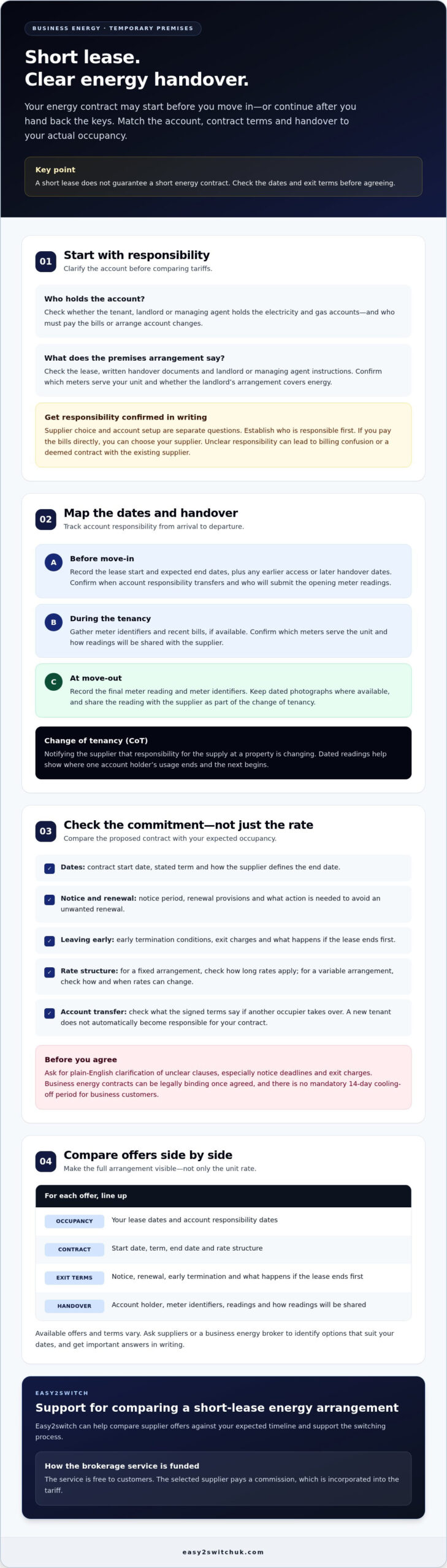
Short-term lease energy checklist: prepare for move-in and move-out
A clear record at both ends of the tenancy can help prevent confusion over usage, bills and account responsibility. Use this checklist to organise business energy supply for a short-term lease and keep the evidence with your tenancy records.
- Get account responsibility confirmed in writing. Ask the landlord or managing agent to confirm who is responsible for each energy account and when that responsibility begins. Keep the confirmation with your lease documents.
- Check the existing supply details. Confirm the current supplier, account holder, fuels supplied and meter identifiers. Make sure you know which meter serves your premises, particularly if the building has shared areas or multiple units.
- Agree who will contact the supplier. Confirm whether you, the landlord or managing agent will notify the supplier about the change in occupation. Clarify when account responsibility transfers and who will submit the opening readings.
- Record opening readings at move-in. Take a reading for each relevant meter on the agreed handover date. Photograph the meter and reading where possible, and record the date. Submit the readings through the supplier’s stated process and save any confirmation.
- Keep a handover file. Store supplier messages, account references, meter identifiers, dated photographs and opening readings alongside the tenancy paperwork. This gives you a clear record if a bill later covers a disputed period.
- Review the end date before departure. Check your lease dates against the energy contract’s end date, notice requirements and exit terms well ahead of handback. Confirm with the supplier what steps are required if your occupancy ends before the contract.
- Document the final handover. Take dated final readings and photographs where available. Notify the supplier of the change in occupation using its process, confirm where the final bill will be sent, and keep the notification and any acknowledgement.
These steps help incoming and outgoing occupiers establish a clear record of meter readings and account changes. If your move-in or handback date changes, update the landlord or managing agent and supplier, and retain the revised confirmation.
Need help comparing supplier offers with your lease dates and business requirements? Compare business energy options with Easy2switch. The brokerage service is free to customers, with commission paid by the selected supplier and incorporated into the tariff.
How Easy2switch can help compare energy supply for a short lease
A broker can reduce the work involved in comparing supplier offers, but your lease dates and account arrangements still need to be clear. Easy2switch helps businesses review electricity and gas offers from hundreds of supplier options, taking requirements such as expected occupancy dates, meter details and business needs into account. Availability and terms vary, so check the contract dates and conditions before assuming an offer will suit a short tenancy.
Easy2switch is an energy consultancy, not an energy supplier. Its brokerage service is free to the customer. The selected supplier pays Easy2switch a commission, which is incorporated into the customer’s tariff. Understanding this relationship helps you assess the comparison service alongside the supplier’s actual offer. For more context on what a broker does, read the commercial energy broker guide.
What information should a business have ready?
Having key details ready can make a comparison more focused. Prepare:
- Your business and premises details, plus the expected lease start and end dates.
- The current supplier and account information, if available.
- Meter identifiers and recent readings, where you can access them.
- The fuels used at the premises and any operating requirements that affect energy use.
- Written details of the landlord’s or managing agent’s account arrangements, including when responsibility transfers.
If some information isn’t available, say so rather than guessing. Confirm the details with the landlord, managing agent or current supplier where appropriate. Clear dates and account responsibility help ensure you’re comparing offers for the right supply and occupancy period.
What to expect when asking Easy2switch to compare offers
Easy2switch can review supplier terms against your business requirements and lease timeline, and support the switching process if you decide to proceed. Before agreeing, compare each offer’s start date, contract term, notice requirements and exit conditions. A broker can help with the comparison, but can’t guarantee that a supplier will have a suitable offer, that you’ll be eligible for a particular tariff, or that a switch will be completed within a specific timeframe.
Ready to assess your requirements against available supplier offers? Compare business energy options with your premises details and lease dates in mind.
Make your lease dates part of the energy decision
The right business energy supply for a short-term lease depends on more than the length of your tenancy. Confirm who holds the account, compare contract start and end dates with your expected occupancy, and check notice and exit terms before agreeing. At move-in and move-out, keep dated meter readings and written supplier confirmations with your tenancy records.
Easy2switch helps businesses compare electricity and gas offers from hundreds of supplier options, with support available online or by telephone. The service is free to the customer. The selected supplier pays commission that is incorporated into the tariff. Review the offer terms carefully, as availability and suitability depend on your requirements and the supplier’s terms.
Ready to compare your business requirements and lease dates with available offers? Compare business energy options with Easy2switch and plan your next steps for the tenancy.
Frequently Asked Questions
Can I get a business energy contract for a short-term lease?
Possibly, but don’t assume a supplier offers a contract that matches your lease exactly. For business energy supply for a short-term lease, check the proposed start date, contract length, notice period and exit terms against your expected occupancy dates. Options vary by supplier and offer. If none appears to fit, ask the supplier or a broker to explain the available arrangements and what each means if your tenancy ends first.
Who pays the energy bill during a short business lease?
The responsible party depends on the lease, account arrangements and agreed handover. It may be you as the tenant, the landlord or another party, so confirm the details in writing before moving in. Establish who contacts the supplier, who receives bills and when responsibility begins. Record the opening meter reading on the agreed date and keep a copy, especially if the account holder and the person using the premises are different.
What happens to my business energy contract when my lease ends?
Your energy contract doesn’t necessarily end when your lease does. Check the contract end date, notice requirements, termination provisions and any process for a change in occupation. Contact the supplier well before you leave to confirm how to submit the final reading and what happens to the account afterwards. Keep written confirmation, dated readings and handover records so you can show when your responsibility ended and where the final bill should go.
Can I transfer a business energy contract to the next tenant?
Don’t assume the contract transfers automatically to the next tenant. The supplier, named account holder, contract terms and incoming occupier’s arrangements all affect what can happen. Ask the supplier what process applies and get its response in writing. Before handing back the premises, agree the final meter reading and account responsibility with the landlord or incoming occupier. Keep the supplier’s confirmation with your tenancy documents.
What information do I need to arrange business energy at leased premises?
Prepare your business and premises details, expected occupancy dates, required fuels, current supplier information and meter identifiers, if available. Recent readings can help establish the opening position, so note them and keep dated evidence where possible. Ask the landlord or managing agent to confirm who currently holds each account and how the handover will work. The supplier may request additional information before setting up an account or providing an offer.
Is Easy2switch free for businesses using its energy brokerage service?
Yes. Easy2switch’s brokerage service is free to the customer. The selected energy supplier pays Easy2switch a commission, which is incorporated into the customer’s tariff. Easy2switch helps businesses compare electricity and gas offers, but it doesn’t sell energy or guarantee a particular tariff or saving. Review the written offer, including applicable rates and charges, and ask for clarification if any term or the commission arrangement is unclear.
Should I compare business energy before signing a short lease?
Start by confirming who will hold the energy account and when responsibility begins, then compare available supplier terms with your planned lease dates. Check the contract start date and duration, notice provisions and exit conditions, not just the headline unit rate. Confirm the handover process with your landlord or managing agent before moving in. This preparation can help you identify timing mismatches early and understand the commitment before agreeing to an offer.
Compare business energy options with Easy2switch, using your lease dates and business requirements to guide the comparison.
