
Feeling the squeeze from high or unpredictable energy bills? You’re not alone. For many across the UK, the process of finding better energy deals can feel daunting, filled with confusing jargon and the fear of being locked into a bad contract. It’s easy to feel stuck, paying more than you should simply because switching seems too complicated and time-consuming.
This 2026 guide is designed to change that. We’re here to cut through the noise and give you back control with clear, straightforward advice. We will demystify the UK energy market, showing you exactly how to find and compare the best gas and electricity tariffs to lower your bills with confidence. Whether you’re managing costs for your home, optimising them for your business, or seeking a sustainable plan for your farm, you’ll find the practical steps you need right here. Get ready to make a seamless switch and achieve lasting peace of mind.
Key Takeaways
- Look beyond the headline price by understanding the two core parts of your bill-the unit rate and standing charge-to find genuine value.
- Choosing between a fixed, variable, or green tariff has a major impact on your monthly costs and long-term budget stability.
- Comparing energy deals effectively requires knowing what to look for on comparison sites and when expert assistance might be a better option.
- Business and farm energy contracts operate differently from domestic tariffs, offering unique opportunities for bespoke savings.
What Makes a Good Energy Deal? Decoding Your Bill
For busy farm owners in Worcester, finding the best energy deals goes far beyond the headline price advertised. The cheapest tariff on paper can often hide costs that make it unsuitable for your specific needs. Taking control of your farm’s energy expenditure starts with understanding the two core components of any bill, giving you the transparency needed to make a truly informed decision.
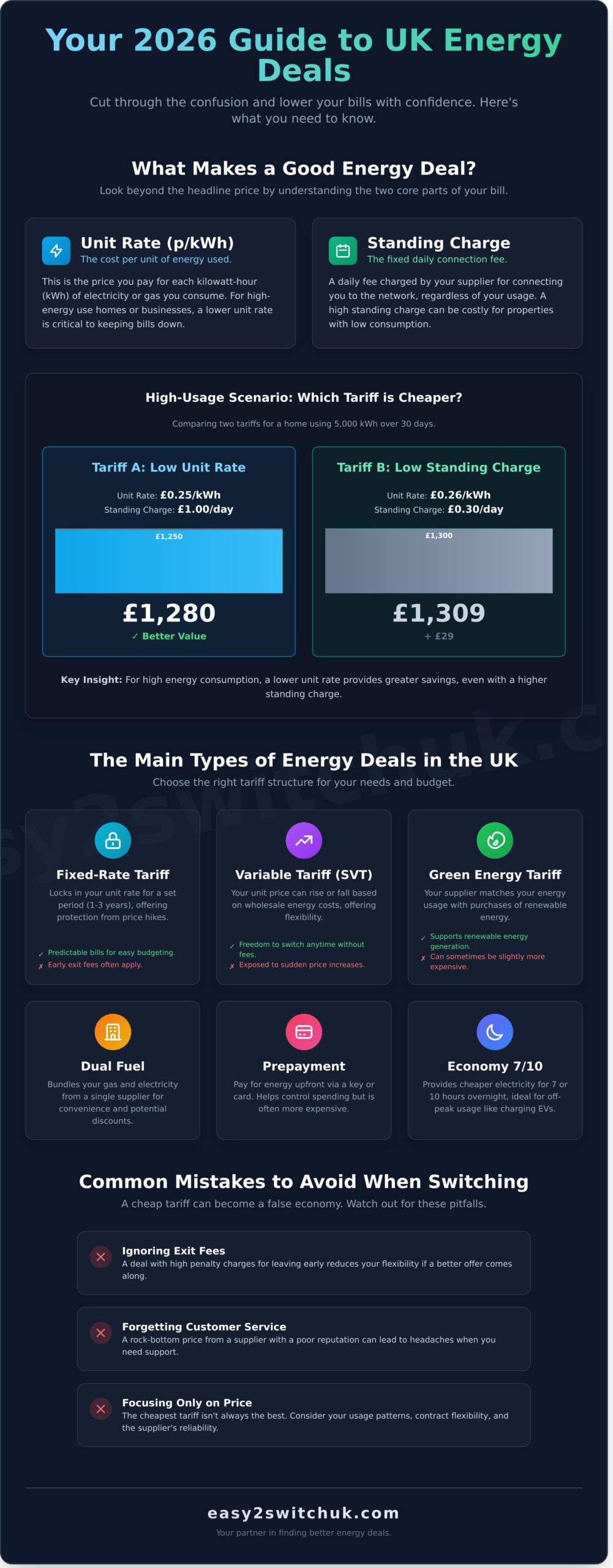
Unit Rate (p/kWh) vs. Standing Charge
Every energy bill is built on two key figures. Getting to grips with them is the first step in optimising your costs.
- Unit Rate (p/kWh): This is the price you pay for each kilowatt-hour (kWh) of electricity or gas you consume. For energy-intensive operations like running grain dryers or milking parlours, a lower unit rate is critical.
- Standing Charge: This is a fixed daily fee charged by your supplier simply for connecting your farm to the network, regardless of how much energy you use. A high standing charge can make a tariff expensive, especially for outbuildings or sites with low consumption.
A farm with high, consistent energy usage should prioritise a low unit rate, while a site with very low consumption might benefit from a tariff with no standing charge, even if the unit rate is slightly higher.
Quick Example: A bill for 30 days using 5,000 kWh of electricity.
Tariff A (Low Unit Rate): (5,000 kWh x £0.25) + (30 days x £1.00 standing charge) = £1,250 + £30 = £1,280
Tariff B (Low Standing Charge): (5,000 kWh x £0.26) + (30 days x £0.30 standing charge) = £1,300 + £9 = £1,309
In this high-usage scenario, Tariff A offers better value despite its higher standing charge.
Contract Types and Flexibility
The structure of your contract provides either stability or flexibility. Fixed-term deals lock in your unit rate and standing charge, typically for 12 to 24 months, protecting you from price hikes. In contrast, Standard Variable Tariffs (SVTs) can fluctuate as they are tied to wholesale market prices, which are influenced by the complex landscape of Energy in the United Kingdom. While SVTs offer the freedom to switch anytime, they also carry the risk of sudden cost increases.
When comparing fixed-term energy deals, always check for exit fees. This is a penalty charge for leaving your contract before the end date. A deal with high exit fees reduces your flexibility if your circumstances change or a better offer becomes available. Finally, never underestimate the value of good customer service. A cheap tariff from a supplier with a poor reputation can quickly become a false economy when you need support.
The Main Types of Energy Deals Available in the UK
Navigating the UK energy market to find the best tariff for your farm can feel complex, but it boils down to a few key choices. Understanding the main types of energy deals is the first step toward taking control of your expenditure and securing genuine savings. Each tariff is designed for different needs, so matching one to your farm’s operational rhythm is crucial for optimization.
Fixed vs. Variable Rate Tariffs
Your most fundamental choice is between a fixed or a variable rate. A fixed-rate tariff locks in the price you pay per unit of energy (kWh) for a set period, typically 12, 24, or 36 months. This offers excellent budget certainty, protecting your business from sudden market price hikes.
- Pros: Predictable bills for easier financial planning and peace of mind.
- Cons: You won’t benefit if market prices fall, and early exit fees often apply.
Conversely, a standard variable tariff (SVT) means the unit price can rise or fall based on wholesale energy costs. While you might benefit from price drops, you are also exposed to increases. Once you decide which tariff structure suits your farm’s financial strategy, the official regulator provides clear guidance on how to switch your energy supplier for a seamless transition.
Dual Fuel, Prepayment, and Economy 7/10 Deals
Beyond the fixed and variable choice, other tariff structures offer specific benefits:
- Dual Fuel Tariffs: These bundle your gas and electricity from a single supplier. The primary benefits are the convenience of one bill and, often, a small discount for your loyalty.
- Prepayment Tariffs: With a prepayment meter, you pay for energy upfront by topping up a key or card. This helps control spending but is typically one of the more expensive ways to buy energy.
- Economy 7/10 Tariffs: These provide cheaper electricity for 7 or 10 hours overnight. This is ideal for farms that can shift high-energy tasks, like charging electric vehicles or running storage heaters, to off-peak hours.
Green Energy Tariffs
A green tariff means your supplier matches some or all of the electricity you use with purchases of renewable energy. This is a powerful way to reduce your farm’s carbon footprint. Suppliers prove their green credentials by showing that they source power from wind, solar, or hydro projects. It’s a common misconception that green energy deals are always more expensive; today, many are highly competitive, allowing you to make a sustainable choice without compromising your budget.
How to Find Energy Deals: DIY vs. Expert Assistance
Once you’ve optimised your farm’s energy usage, the next logical step is to ensure you’re on the best possible tariff. Securing better energy deals isn’t just about finding the lowest price; it’s about finding the right contract for your specific operational needs. Broadly, there are two paths you can take: the hands-on DIY approach or the streamlined ‘done-for-you’ expert route.
The DIY Method: Using Comparison Sites
For those who prefer to manage the process themselves, online comparison websites are the primary tool. The process is straightforward but requires careful attention to detail. To get started, you will need:
- Your latest energy bill: This contains crucial details like your current supplier, tariff name, and annual consumption in kilowatt-hours (kWh).
- Your meter numbers: Your MPAN for electricity and MPRN for gas, also found on your bill.
Once you input this data, the site generates a list of available tariffs. Reputable consumer resources like MoneySavingExpert.com offer excellent guidance on how to find the best gas and electric deals by comparing tariffs effectively. However, it’s vital to remember that not all comparison sites show every supplier on the market; some have commercial agreements that limit their results. This means you might need to check several sites to get a complete picture of your options.
The Expert Method: Partnering with an Energy Broker
For busy Worcester farm owners, time is a valuable commodity. An energy broker acts as your dedicated procurement expert, handling the entire process for you. Instead of you spending hours comparing tariffs, a broker leverages their market knowledge and supplier relationships to find the most suitable contract. They can often access bespoke pricing and wholesale energy deals not advertised on public comparison sites. This approach provides peace of mind, ensuring a thorough market sweep is conducted by a specialist who understands the complexities of business energy. Let us find your next energy deal, hassle-free.
Ultimately, the choice depends on your priorities. The DIY method offers direct control but demands more of your time and effort. Partnering with a broker saves you that time, provides expert guidance, and can unlock savings you might otherwise miss, allowing you to focus on running your farm.
Unlocking Better Business & Farm Energy Deals
While optimising your energy usage on-site is a powerful step, the contract you are on forms the foundation of your costs. The commercial energy market operates very differently from the domestic one, and understanding these distinctions is crucial for securing the best business and farm energy deals. For SMEs, agricultural businesses, and charities in Worcestershire, navigating this landscape without expert guidance can lead to significant overspending.
A specialist broker does more than just compare prices; we understand the complexities of the market, from contract negotiation to tax levies, ensuring you get a tariff that truly fits your operational needs.
Key Differences in Business Energy
Unlike switching your home supply, the business energy market is less regulated and requires a more proactive approach. Key differences include:
- Bespoke Contracts: There are no “off-the-shelf” tariffs. Suppliers provide custom quotes based on your consumption, business type, and credit score. This means prices are negotiable.
- No Cooling-Off Period: Once you agree to a business energy contract, it is legally binding. There is no grace period to change your mind, making it vital to get the decision right the first time.
- The Rollover Trap: If you don’t arrange a new contract before your current one expires, your supplier can place you on expensive “deemed” or “out-of-contract” rates. Some may even “roll you over” into a new, uncompetitive 12-month contract automatically.
Specialist Advice for Farms and Charities
Standard business tariffs rarely account for the unique demands of agricultural and non-profit sectors. Farms often have irregular usage patterns, with high seasonal demand for crop drying, irrigation, or heating livestock sheds. A broker who understands this can find a supplier with a tariff structure that won’t penalise you for these essential peaks.
Charities, meanwhile, may be eligible for significant financial relief, including a reduced VAT rate of 5% (down from 20%) and an exemption from the Climate Change Levy (CCL). These savings are not applied automatically and require the correct paperwork. A knowledgeable advisor handles this for you, ensuring you don’t pay a penny more than you need to. Let us manage the complexities so you can focus on your core mission. Get a free energy review for your farm or business.
Common Mistakes to Avoid When Switching Energy Supplier
Securing the right energy deals for your farm is a powerful way to manage overheads, but the process has pitfalls for the unwary. Taking control of your costs means looking beyond the headline price. By understanding a few common traps, you can switch with confidence, knowing the process is safe, secure, and regulated by Ofgem to protect your business.
Ignoring the Fine Print
The cheapest unit rate can sometimes hide unfavourable terms. Before committing to a new supplier, it’s crucial to look closer at the contract details. A few minutes of due diligence can save you significant hassle and unexpected costs down the line. Always check for:
- Exit Fees: Many fixed-term contracts include a penalty, which can be hundreds of pounds, if you need to leave the deal early. Ensure you know what this fee is, or choose a tariff without one if you need flexibility.
- Price Clauses: Understand exactly how and when your supplier can change your prices. Some contracts may seem cheap initially but allow for price hikes later on. A truly fixed deal provides budget certainty.
- Customer Service: A low price is little comfort if you can’t get help when you need it. Check independent review sites like Trustpilot to see how a supplier treats its customers. For a busy farm, reliable service is non-negotiable.
Falling for the ‘Rollover’ Trap
Unlike domestic energy, business contracts do not automatically move to a standard variable tariff. Instead, if you fail to arrange a new contract before your current one expires, your supplier can place you on a ‘rollover’ contract. These are often on punishingly high out-of-contract rates, wiping out any previous savings.
The key to avoiding this is knowing your contract end date and acting well within your renewal window. This is where a reliable energy broker provides immense value. A specialist partner manages these critical dates for you, ensuring you never fall into the rollover trap and proactively securing competitive rates ahead of time.
By being aware of these common mistakes, you can navigate the market effectively and find a contract that truly works for your Worcester farm. Navigating the market can feel complex, but you don’t have to do it alone. At Easy2switch UK Ltd, we handle the details with complete transparency, so you can focus on what you do best.
Your Path to Smarter Energy Savings Starts Now
As this guide has shown, finding the best energy deals in the UK is a powerful step toward taking control of your household or business finances. The key lies in understanding your own usage, knowing the crucial differences between tariffs, and confidently avoiding the common switching mistakes that keep you overpaying. This knowledge empowers you to make an informed decision instead of simply accepting high rates.
But you don’t have to navigate the market alone. At Easy2Switch UK, our UK-based specialists provide a seamless, done-for-you switching service that removes the hassle completely. We leverage our expertise in domestic, business, and specialist farm energy, comparing hundreds of tariffs from trusted UK suppliers to find a bespoke deal that delivers significant savings and genuine peace of mind.
Take control of your energy costs. Let our UK-based experts find you a better deal today.
Stop overpaying and start saving with confidence.
Frequently Asked Questions
When is the best time of year to look for new energy deals?
Traditionally, spring and autumn are considered ideal times to find competitive energy deals, as wholesale prices can be lower outside of peak winter demand. However, the most important time to look is within the renewal window of your current contract-typically 49 days before it ends. This allows you to switch without incurring exit fees and secure a new rate before you are moved onto more expensive out-of-contract tariffs. Proactive searching is always your best strategy.
Will my gas or electricity supply be interrupted when I switch?
Absolutely not. Your energy supply will continue uninterrupted throughout the entire switching process. The change is purely administrative and happens behind the scenes between your old and new suppliers. The same pipes, wires, and meters are used to deliver energy to your Worcester farm, so you will not experience any downtime or disruption to your daily operations. It is a seamless transition designed to be completely hassle-free for you and your business.
How long does the energy switching process actually take?
The switching process is now faster than ever. Once you agree to a new contract, the switch can be completed in as little as five working days. UK regulations also provide you with a 14-day cooling-off period from the day you agree to the contract. During this time, you can cancel the switch without any penalty. This ensures the entire process is both swift and gives you complete peace of mind from start to finish.
Can I switch energy supplier if I’m renting or have a prepayment meter?
Yes, in most situations you can. If you are a tenant and you pay the energy supplier directly, you have the right to choose your provider. We always recommend checking your tenancy agreement first, but it is rare for it to prevent a switch. If you use a prepayment meter, you can also switch suppliers to find a better tariff. The process is straightforward and can lead to significant savings, giving you more control over your farm’s energy costs.
What is Ofgem and what role does it play in protecting consumers?
Ofgem, the Office of Gas and Electricity Markets, is the independent energy regulator for Great Britain. Its primary role is to protect the interests of energy consumers by promoting competition and ensuring a reliable, secure supply. Ofgem sets the rules that all suppliers must follow, from billing transparency to the switching process itself. They work to ensure the market is fair, which gives you the confidence to switch suppliers and seek better value for your business.
Is it really free to use an energy broker like Easy2Switch?
Yes, our service is completely free for you to use. We provide expert advice and manage the comparison and switching process without charging you a fee. Our commission is paid by the energy supplier you choose to switch to, after the switch is successfully completed. This is a standard industry practice that allows us to offer impartial, bespoke support while ensuring you get the best available rate without any hidden costs. Our focus is on your savings.
