
What if the lowest quoted unit rate isn’t the best fit for your vertical farm? High, steady electricity use and changing demand as you scale can make contract details just as important as the headline price. Choosing energy solutions for vertical farming UK operators can rely on starts with understanding how much electricity the farm uses, when it uses it and how that profile may change.
It’s understandable to be cautious. Demand can be hard to predict before a farm reaches full capacity, and switching suppliers needs to be organised around a critical operation. This guide explains how to describe your electricity needs clearly, compare procurement options and assess which contract structure may suit your operating profile.
You’ll also learn what to check in unit rates, standing charges and contract terms, when to begin comparing offers, and how to plan a switch. A specialist energy broker can organise supplier comparisons and help manage the switching process, while you keep the final decision. Easy2switch’s brokerage service has no direct customer fee, but commission from the chosen supplier is incorporated into the tariff.
Key Takeaways
- Define energy solutions for vertical farming UK as procurement choices and operating strategies, then map the farm’s main electricity loads.
- Compare available contract structures against expected demand and operating flexibility, checking current offers and eligibility.
- Assess the full offer, including unit rates, standing charges, payment terms, renewal conditions and exit provisions.
- Use a practical buying checklist to gather meter and consumption details, review comparable offers and confirm contract terms before switching.
- An energy broker can organise supplier comparisons and help manage the switch. Easy2switch charges customers no direct fee, but supplier commission is incorporated into the selected tariff.
Why energy procurement matters for vertical farming in the UK
For a vertical farm, energy solutions for vertical farming UK operators consider are not one product. They are the choices involved in buying electricity and planning around how the site uses it. Lighting, climate control and water systems may all run on electricity, so the farm’s operating pattern can shape both total consumption and when demand occurs.
The modern concept of vertical farming brings growing into controlled indoor environments. That control can support consistent growing conditions, but it also means the electricity profile depends on how the farm is set up and run. A procurement plan should reflect the site’s actual needs or best available estimates, rather than relying on a generic figure.
A vertical-farm energy procurement plan is a record of the site’s electricity use, expected changes in demand and contract requirements, used to compare supplier offers against the farm’s operating needs.
Which vertical-farm systems influence electricity demand?
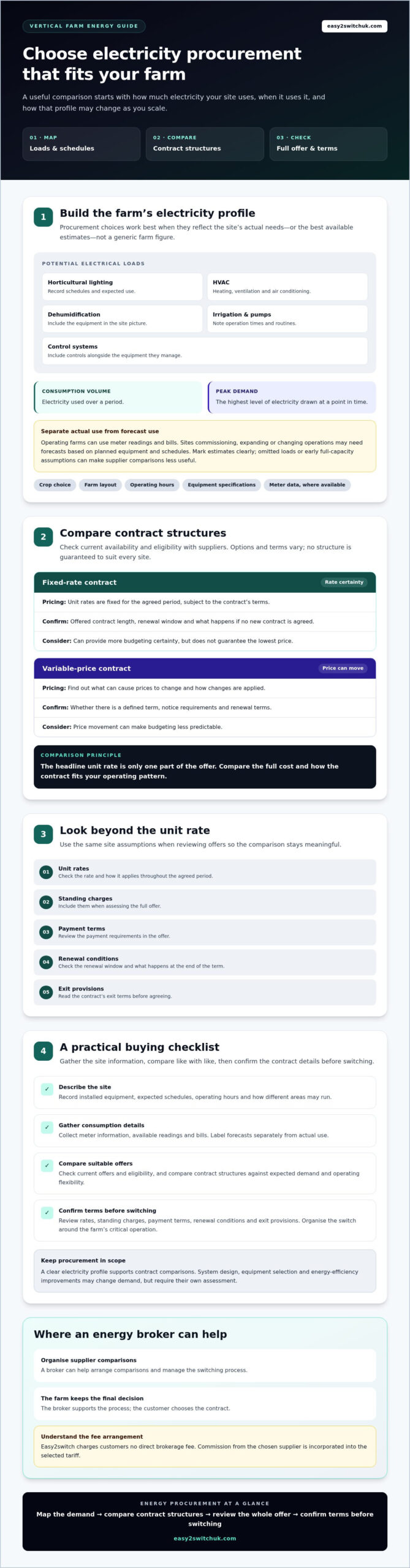
Potential electrical loads include horticultural lighting, heating, ventilation and air conditioning (HVAC), dehumidification, irrigation equipment, pumps and control systems. Their combined use matters: lighting schedules may overlap with climate-control or pumping activity, while different areas of a farm may follow different routines.
There’s no single demand profile for every farm. Crop choice, layout, operating hours and equipment specifications all affect consumption. Record what is installed and how it is expected to run. Another site’s figures are not a reliable forecast for yours unless the equipment and operating assumptions are comparable.
Why the demand profile matters when buying electricity
Suppliers need a clear picture of the site to make comparable offers. Consumption volume is the electricity used over a period; peak demand is the highest level drawn at a point in time. Operating hours help show when equipment runs, while meter data provides a record of actual site use where available.
Separate established demand from forecast demand. An operating farm can use meter readings and bills to describe its current profile. A site still commissioning, expanding or adjusting operations may need to estimate future use from planned equipment and schedules, clearly marking those figures as forecasts. If estimates omit loads or assume full capacity too early, supplier comparisons may be based on different assumptions and become less useful.
Use procurement work to set out expected consumption, timing and contract requirements. Keep it distinct from technical decisions about system design, equipment selection or energy-efficiency improvements. Those choices may change demand, but they require their own assessment. A clear profile gives the farm a practical starting point for comparing electricity contracts without confusing purchasing decisions with engineering advice.
Which electricity procurement options should a UK vertical farm compare?
The right comparison depends on your site’s demand, meter data and tolerance for price changes. Contract types and terms vary between suppliers, so confirm that each offer is currently available and that your farm meets its eligibility conditions before comparing it. These are procurement options to investigate, not guaranteed choices for every site.
The headline unit rate is only one part of the comparison. Standing charges, contract terms and how well an offer fits your operating pattern also affect its value.
| Option to check | Contract length | Pricing structure | Renewal terms | Operational considerations |
|---|---|---|---|---|
| Fixed-rate contract | Confirm the offered term with the supplier. | Unit rates are fixed for the agreed period, subject to the contract’s terms. | Check the renewal window and what happens if no new contract is agreed. | Can provide more certainty for budgeting, but doesn’t guarantee the lowest price. |
| Variable-price contract | Check whether there is a defined term or another arrangement. | Find out exactly what can cause prices to change, and how those changes are applied. | Confirm notice requirements and the terms that apply at renewal. | May suit some operating preferences, but price movement can make budgeting less predictable. |
Fixed and variable contract terms: what to check
For either structure, review the unit rate alongside the standing charge, contract duration, payment terms, renewal conditions and exit provisions. A fixed rate offers protection from some price movement during the agreed term, not a promise that the deal will be cheapest. “Variable” can mean different things across contracts, so ask the supplier to explain what changes the price and how you’ll be notified.
Check the renewal window early enough to compare alternatives before your current agreement ends. Don’t assume the listed terms apply to your meter or usage. Confirm them in writing with the supplier.
On-site generation and flexibility: how they fit the decision
Solar generation, battery storage, demand response and power purchase agreements may be worth investigating alongside a supply contract. Their suitability depends on the farm’s site, operating requirements, technical design and agreement terms. A UK Urban AgriTech account of the V-FAST project describes work exploring renewable generation and storage alongside low-emission food production. It’s an example to consider, not a standard solution.
Keep the roles clear: Easy2switch brokers energy contracts and doesn’t install or supply generation equipment. Projects involving generation, storage or complex agreements call for specialist technical and legal advice. For a supply-contract comparison, a business energy brokerage service can help organise supplier offers; the customer retains the final decision. Supplier commission is incorporated into the selected tariff.
How to compare vertical-farm electricity offers beyond the unit rate
A useful comparison starts with like-for-like information. If suppliers quote against different consumption estimates, meter details or contract start dates, their prices may not be directly comparable. For energy solutions for vertical farming UK operators are assessing, a clear comparison brief helps show which offer fits the farm’s actual or forecast operating profile, not just which rate looks lowest.
Build a consistent comparison brief for suppliers
Collect the same core details for each quote. Include recent electricity bills, site and meter information, annual consumption and available half-hourly data. Then describe how the farm operates and what may change, such as staged commissioning, longer operating hours or planned capacity increases.
- Separate actual meter readings and historic consumption from estimates.
- Label forecasts clearly and record the assumptions behind them.
- Ask each supplier to confirm how the consumption estimate, meter details and contract start date affect its quote.
For example, a site moving from commissioning to full operation should identify the expected increase rather than presenting early-stage readings as its settled annual demand. Suppliers can then clarify whether an offer is based on current usage or the forecast profile. Keep the same assumptions across quotes so you can compare their terms consistently.
Check contract risks before choosing an offer
Look beyond the quoted unit rate and standing charge. Compare contract duration, payment conditions, renewal deadlines, notice requirements and any termination terms stated in the offer. Ask what happens if the farm’s operations or forecast demand change materially during the contract, and whether the supplier’s terms address that situation.
Before accepting, check the written offer against the comparison brief. Confirm the meter details, quoted consumption basis, pricing structure, start date and all relevant conditions. If a point is unclear, ask the supplier to explain it in writing. A low headline rate may be less suitable if the contract assumptions don’t reflect the site or its planned operating changes.
Rank offers by overall fit, not price alone. A simple comparison sheet can record each supplier’s quoted rates and charges alongside contract length, payment terms, renewal arrangements and exit provisions. Note assumptions and unanswered questions beside each offer. This makes differences visible and supports a more confident decision, while keeping technical efficiency and equipment choices separate from electricity procurement.
A practical buying checklist for vertical-farm energy contracts
A clear sequence keeps procurement manageable, especially if the farm is commissioning or expanding. Gather the information first, compare written offers against consistent assumptions, then confirm the full terms before agreeing to a contract. These details help suppliers assess the site, but they don’t replace technical work on electrical design, efficiency or equipment selection.
Prepare site and consumption information
Bring together the records that describe the current supply and how the farm expects to operate. Ask an energy professional what information is needed for comparable supplier offers, and keep confirmed usage separate from projections.
- Collect recent electricity bills, meter identifiers, current contract details and relevant supplier correspondence.
- Record actual consumption separately from estimates for future capacity, new growing rooms or commissioning stages.
- Note planned operating hours and the intended contract start date, and identify assumptions that could change.
Label estimates clearly. For example, distinguish usage recorded while one growing room is operating from the forecast once additional rooms are commissioned. This gives suppliers context without presenting a projection as established demand.
Review, select and confirm the contract
Compare each written offer using the same site details and usage assumptions. Check unit rates and standing charges alongside contract duration, payment terms, renewal arrangements, exit provisions and any conditions attached to the quote. Mark missing information and ask the supplier to clarify it in writing.
- Confirm the contract start date and whether it matches the site’s current agreement and commissioning plans.
- Check renewal deadlines and notice requirements so you know when to review alternatives.
- Verify payment conditions, supplier requirements and any terms that apply if demand or site use changes.
- Keep the final offer and its assumptions on file before accepting.
Switching steps and timelines can depend on the supplier, the contract and the circumstances, so confirm the process for your site rather than assuming every transfer follows the same schedule. Procurement is about choosing and arranging the supply contract; decisions about wiring, equipment or energy-efficiency measures need separate technical assessment.
For additional context on comparing rates, see the farm electricity prices guide. This checklist also gives you a practical starting point for assessing energy solutions for vertical farming UK farms can procure against their operating needs.
Easy2switch provides business electricity comparisons and switching support. Its service has no direct fee to the customer; the chosen supplier pays commission incorporated into the selected tariff, and the customer retains the final decision. The farm energy brokerage service can help organise supplier offers and the switching process.
How an energy broker can help a UK vertical farm take the next step
Once you’ve assembled your site and usage information, an energy broker can help organise supplier comparisons and manage the switching process. That support can make procurement easier to coordinate, particularly when you’re balancing current consumption with commissioning or planned growth. The broker’s role is to help with energy contracts, not to assess farm engineering or guarantee a particular rate or outcome.
What to expect from the brokerage process
The process can begin with a discussion of your site details, current contract, electricity usage and procurement timing. Share which figures are actual readings and which are forecasts, so available supplier offers can be considered against the right assumptions. Offer availability and eligibility depend on supplier terms and your site’s circumstances.
A broker can organise the comparison and help manage the switch, but you remain in control of the decision. Review the supplier’s written offer before accepting it. Check the quoted usage basis, meter details, unit rate, standing charge, contract duration, payment terms, renewal conditions and any exit provisions. If the farm’s expected demand is changing, ask how that affects the comparison and which assumptions the supplier has used.
Questions to ask before authorising a switch
Clear questions make it easier to understand both the offer and the process. Before you proceed, ask:
- Which suppliers and contract terms are included in the comparison, and are the offers available for this site?
- What consumption, meter and start-date assumptions were used to request each offer?
- How is supplier commission incorporated into the selected tariff, and is there any direct customer fee?
- What start date is proposed, and what account information or action is required from the farm?
- Who will manage each switching step, and what timing should be confirmed with the supplier?
Easy2switch helps businesses compare electricity and gas supplier offers and manage the switching process online or by telephone. Its brokerage service is free to the customer in the sense that the customer pays Easy2switch no direct fee; the chosen supplier pays commission, which is incorporated into the tariff. Ask how this applies to the specific offer, then compare the written terms before making your choice.
Easy2switch’s farm energy brokerage service can help you discuss your current contract and usage, understand which supplier offers may be available, and decide whether to take the next step. That gives you a clearer route from comparing energy solutions for vertical farming UK sites to choosing a contract with your operating profile in view.
Take control of your farm’s next energy contract
The most suitable energy solutions for vertical farming UK operators can choose start with a clear picture of how the site uses electricity, including any expected changes as the farm grows. Use consistent consumption and meter details to compare supplier offers, then look beyond the unit rate to standing charges, payment terms, renewal conditions and exit provisions.
Before accepting an offer, check its assumptions and confirm the terms in writing. If demand is still developing, make sure forecasts are clearly identified and ask how they affect the quote. A careful comparison can help you choose a contract that reflects your operating profile, while keeping the final decision in your hands.
Easy2switch specialises in supporting farming businesses with supplier comparisons and switching. Its service has no direct fee for the customer; the chosen supplier pays commission incorporated into the selected tariff. Support is available online or by telephone. To discuss your farm’s requirements, speak with Easy2switch about comparing your farm’s energy options.
With clear information and the right questions, you can approach your next procurement decision with greater confidence and keep your operation moving forward.
Frequently Asked Questions
What energy solutions are available for vertical farms in the UK?
Energy solutions for vertical farming UK operators can consider include different electricity contract structures, renewable electricity offers, and operating approaches that may shift or manage demand. Depending on the site, operators might also investigate on-site solar generation, battery storage or demand response. Availability and suitability vary with supplier terms, site conditions and the farm’s operating profile. A broker can help compare supply contracts, but technical projects need specialist advice.
How much electricity does a vertical farm use?
There’s no single typical figure that applies to every vertical farm. Electricity use depends on factors such as crop, growing layout, lighting schedule, climate control, pumps, equipment specifications and operating hours. For a useful estimate, use meter readings and bills from an established site. If the farm is commissioning or expanding, separate actual consumption from forecasts and record the assumptions behind expected capacity and operating schedules.
Can a vertical farm negotiate a business electricity contract?
Yes. A vertical farm can request and compare business electricity offers and review the terms with suppliers before agreeing to a contract. Whether a particular rate or structure is available depends on supplier offers, eligibility, meter details and the farm’s usage information. Compare the full written terms, including unit rates, standing charges, payment conditions, contract length, renewal arrangements and exit provisions, rather than relying on a verbal quote or headline rate.
How should a vertical farm compare electricity suppliers?
Give each supplier the same site, meter and consumption information, and make clear which figures are actual readings and which are forecasts. Compare unit rates and standing charges, then check contract duration, payment terms, renewal deadlines, notice requirements and exit provisions. Ask suppliers to explain any assumptions or conditional terms in writing. A lower quoted rate may not be the best fit if the offer doesn’t reflect the farm’s likely operating profile.
Is switching business electricity suppliers likely to interrupt supply?
A supplier switch is generally a change to the commercial supply arrangement, not a planned interruption to the electricity reaching the site. However, don’t treat continuity as guaranteed in every circumstance. Confirm the proposed start date, switching steps and any site-specific requirements with the supplier before authorising a change. Check that account and meter details are accurate, and ask who will handle any information needed to complete the switch.
Can a vertical farm use renewable electricity or on-site generation?
Potentially. A farm can ask suppliers whether renewable electricity options are available for its site and explore on-site generation such as solar, with storage or demand flexibility where appropriate. These are separate decisions: contract availability depends on supplier terms, while generation and storage require site-specific technical assessment. Review any associated agreements carefully and seek specialist technical and legal advice for projects involving equipment, grid arrangements or complex commercial terms.
How does an energy broker get paid?
Easy2switch is paid commission by the energy supplier the customer chooses. That commission is incorporated into the selected tariff, so the customer doesn’t pay Easy2switch a direct fee for its brokerage service. This doesn’t mean the service is free of all cost, because the commission forms part of the tariff. Ask which suppliers and terms were compared, and how commission applies to the offer you’re considering.
What information does a vertical farm need to get an energy quote?
Prepare recent electricity bills, meter identifiers, current contract details and available usage data. Include annual consumption and half-hourly data if you have it. Describe operating hours, commissioning stages and planned changes, such as adding growing rooms or increasing capacity. Mark forecasts clearly and explain their assumptions. Providing consistent information helps suppliers prepare more comparable offers; confirm what additional details each supplier needs and check the quote against the site’s written contract requirements.
