
The lowest headline rate may not be the best fit for your dairy. Choosing dairy farm electricity tariffs UK starts with understanding when and how your farm uses power, from milking routines to milk cooling and storage. So how can you compare offers when essential operations run to their own timetable?
Tariff names, standing charges and contract terms can make the decision feel harder than it needs to be. A rate that looks attractive at first glance may not suit your usage pattern or current agreement. This guide explains what to check on your bill and contract, which usage information matters, and how to compare offers on a like-for-like basis.
You’ll also learn how renewal timing and exit fees can affect a decision, and why comparing the full offer matters more than focusing on one figure. Easy2switch UK Ltd provides free Farm Energy quotes and advice, with commission paid by the chosen supplier and built into the tariff price. A dedicated personal Account Manager can help you compare options and understand the switching process, so you can make an informed choice with straightforward support.
Key Takeaways
- Choose dairy farm electricity tariffs UK by considering when your farm uses electricity, not just the headline rate.
- Learn how unit rates and standing charges affect a bill, and where to find key tariff and usage details.
- Compare offers using the same site details and billing period, including contract, payment and exit terms.
- Use a practical checklist to gather meter details, contract dates and recent usage before reviewing written offers.
- Explore how Easy2Switch’s Farm Energy comparison and switching service can help, with quotes and advice free to access and supplier-paid commission built into the chosen tariff.
Why dairy farm electricity tariffs depend on how the farm operates
A farm electricity tariff sets out how a site is billed for its electricity supply. It can include a charge for each unit of electricity and a daily standing charge. The right terms depend partly on the farm’s demand: how much electricity it uses and when it uses it. That’s why dairy farm electricity tariffs UK should be considered in the context of the individual site, not just its sector.
Electricity supports time-sensitive work. Milking equipment needs power during scheduled parlour sessions, while milk cooling is part of handling milk after milking. Other everyday farm operations also contribute to demand. A tariff review should start with how the site operates, rather than assuming essential electricity use can be moved to suit a particular deal.
Operating hours and equipment influence demand across the day. A farm may use more electricity around milking and cooling periods, while other activities take place at different times. Bills and meter records can help reveal these patterns. Annual consumption shows the total amount used, but may not show when the farm draws power.
Which dairy operations shape electricity use?
Milking parlours, vacuum pumps and milk cooling are common electricity-using operations on dairy farms. Their contribution to demand depends on the equipment, herd size, milking routines and how the buildings and systems are configured. Two farms with similar output can therefore have different electricity profiles.
Use the farm’s own records to distinguish essential demand from more flexible activity. Note when parlour and cooling equipment runs, then compare that timing with other site loads. Don’t assume a process can be shifted simply because it happens outside milking hours. Operational requirements and equipment controls matter.
Why one dairy farm’s tariff may not suit another
Milking schedules, cooling equipment and operating arrangements vary. One farm might have concentrated demand around set milking sessions, while another’s routines or equipment create a different pattern. A tariff structure that suits one site may not suit another, even if both are dairy farms. The sector label alone can’t establish the best fit.
Annual consumption helps show how much electricity the farm uses, but it doesn’t necessarily show when that electricity is needed. If bills or meter records break usage down by time period, review them alongside the farm’s operating schedule. If they don’t, use the records available rather than treating estimates from other farms as a benchmark.
Actual bills and usage patterns are the best starting evidence for matching a tariff review to the way your dairy operates. Use them to identify the site’s main demand periods and the operations behind them. This gives you a practical basis for comparing tariff terms without relying on assumptions about what a typical dairy farm uses.
How dairy farm electricity tariffs and bills are structured
A bill usually separates the cost of electricity used from charges that apply regardless of consumption. Understanding both helps you assess the offer as a whole, rather than judging it by one figure. For dairy farm electricity tariffs UK, the exact terms depend on the farm’s circumstances and the supplier’s offer, so use your own bill and contract as the reference point.
What unit rates and standing charges mean
The unit rate is the charge for each unit of electricity used, usually shown in kilowatt-hours (kWh). A standing charge is a separate daily amount where the tariff includes one. It applies independently of consumption, so compare both elements across offers. A lower unit rate may not mean a lower overall bill if the standing charge or the farm’s usage pattern differs.
Check whether the paperwork describes a fixed or variable tariff. A fixed tariff generally holds the agreed unit rate steady for a stated period, while a variable tariff can change according to its terms. Don’t assume every charge is fixed just because the unit rate is. Read the offer carefully, including how it describes changes and which charges may vary.
What to check in tariff and contract terms
On a bill, look for the tariff name or type, unit rate, standing charge, billing period and recorded consumption. The contract or renewal notice should set out the contract end date, renewal information, payment terms and any applicable exit fees. If the contract is fixed, check exit fees before making a change. Potential savings may outweigh early-termination costs, but compare the figures for your own circumstances.
Check which supply site the account covers. A farm may have one premises or several, and bills or contracts should make clear which site and meter each set of charges relates to. Confirm that usage records and written offers refer to the same site details and billing period before comparing them. This helps avoid comparing different account arrangements as though they were the same.
Business electricity contracts differ from domestic tariffs. Ofgem’s Ofgem Energy Price Cap information explains the cap for eligible domestic customers. Don’t assume it applies to a farm’s business contract. Review the commercial terms in the farm’s own agreement instead. For a broader explanation of farm charges and pricing, see this complete UK farm electricity prices guide.
Keep the latest bill and contract together. Note the site covered, usage period, tariff components, payment terms and renewal date. These details give you a clear basis for reviewing an offer. Easy2SwitchUtilities’ farm energy comparison service provides quotes and advice free to access. The chosen supplier pays commission, which is built into the tariff price.
Comparing dairy farm electricity tariffs: what matters beyond the headline rate
A lower unit rate can catch the eye, but it doesn’t show whether an offer suits your farm or what the total bill will look like. Compare each tariff against the same site details, billing period and usage information. This makes it easier to see how the complete terms differ, without relying on a headline figure or assumptions about what a dairy farm should use.
Not every dairy needs a special tariff to compare suitable offers. The useful question is whether the terms match the farm’s actual demand, payment arrangements and contract circumstances. Use this table to organise the comparison:
| What to compare | What to record |
|---|---|
| Unit rate | Charge per unit of electricity, and whether the offer describes it as fixed or variable. |
| Standing charge | Daily charge, if one applies, and how it contributes to the overall bill. |
| Contract terms | Start and end dates, renewal details, and any stated conditions affecting the agreement. |
| Payment terms | Payment method, frequency and any terms that differ between offers. |
| Exit conditions | Any applicable exit fees and the circumstances in which they may apply. |
How to compare complete tariff offers
Keep the comparison like-for-like: use the same supply site, meter details, billing period and recent usage information for each offer. Record charges and terms side by side, including differences in payment arrangements and contract dates. You can estimate the bill by applying each offer’s unit rate to the same usage, then adding any standing charge for the same billing period. If an offer doesn’t set out a detail clearly, don’t fill the gap with an assumption. Treat estimated savings as estimates, not a certain outcome.
Compare the full offer against the farm’s actual usage and contract circumstances. This keeps the decision grounded in the costs and terms that apply to your site, rather than one attractive number.
Fixed contracts, renewal timing, and exit fees
Note the renewal date well ahead of the contract end date, so there’s time to review options and understand the current agreement. Before leaving a fixed contract, check its exit fees. Potential savings may outweigh early-termination costs, depending on the individual figures, so weigh both rather than assuming a change will pay off. The 2026 business energy comparison guide offers further context for reviewing business energy terms.
For dairy farm electricity tariffs UK, a consistent comparison is a practical way to judge fit without assuming every farm needs the same structure. Easy2SwitchUtilities provides Farm Energy comparison and switching support, with quotes and advice free to access. The chosen supplier pays commission built into the tariff price. Explore farm energy comparison support.
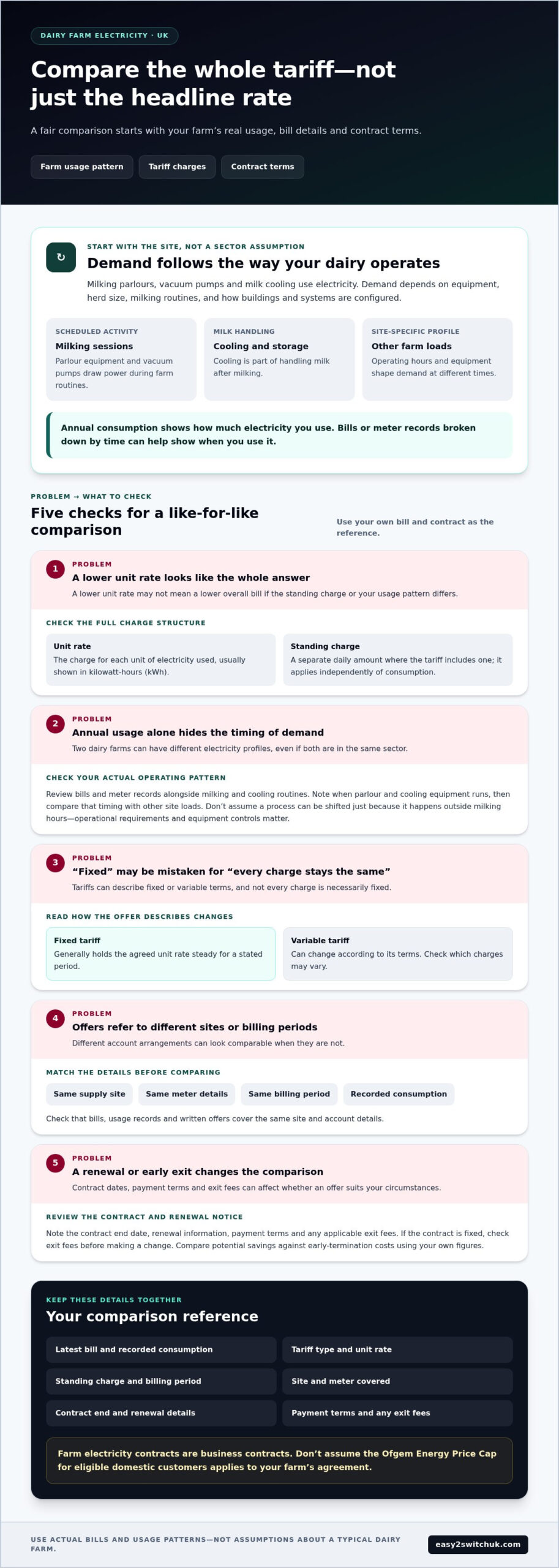
A practical checklist for reviewing your dairy farm electricity tariff
A clear review doesn’t need to start with complicated calculations. Gather the records you already have, confirm which site and contract they relate to, then compare written offers on the same basis. This helps you assess dairy farm electricity tariffs UK against your farm’s circumstances rather than generic consumption estimates.
Information to gather before comparing offers
Collect recent bills and your current contract or renewal information. Note the supply site, meter details, contract dates and the periods covered by your usage records. If the farm has more than one premises, keep the details for each site distinct. This helps ensure the figures and terms you compare refer to the right account.
How to assess an offer without overcomplicating it
Work through the checklist in order. Keep a copy of each written offer beside your records, and note any assumptions or points that need a clearer explanation.
- Gather recent bills. Use bills that show the relevant site, billing periods and recorded electricity use. Keep the periods consistent when reviewing options.
- Find your current contract details. Record the contract end date, renewal information, payment terms and any exit fees that may apply.
- Confirm site and meter information. Match the meter and premises details on bills and contract documents. Note whether the account covers one site or multiple farm premises.
- Summarise recent usage. Record the consumption shown on the bills or meter records, including the dates those figures cover. Use these actual records rather than generic estimates.
- Note changes that could affect future use. Record relevant changes to equipment, herd size, operating routines or site arrangements. Don’t assume every dairy farm has seasonal peaks. Use your own history and known plans to describe expected changes.
- Compare written offer details. Put the unit rate, standing charge, contract terms, payment conditions and exit fees side by side. Check that each offer reflects the same site and information you supplied.
Before deciding, review assumptions in the offer and write down questions about unclear terms. This gives you a focused basis for understanding what you’re comparing, without predicting savings from incomplete information. Easy2SwitchUtilities provides Farm Energy comparison and switching support, with quotes and advice free to access. The chosen supplier pays commission built into the tariff price. Get a free farm energy comparison.
How Easy2Switch helps dairy farms compare electricity tariffs
Farm Energy is Easy2Switch’s farm energy comparison and switching service. It helps dairy businesses review available offers against their site details, usage and contract circumstances, with support throughout the process. This can make comparing dairy farm electricity tariffs UK more straightforward, especially when tariff terms and renewal dates are difficult to weigh up alongside daily farm responsibilities.
What support farmers receive
Easy2Switch compares offers from hundreds of suppliers each week, and customers receive support from a dedicated personal Account Manager. Over 90% of proposed contracts are accepted. If you choose to switch, the new supplier handles the switch, with no disruption to your energy supply. In most cases, meters or other equipment don’t need to change. A smart-meter upgrade is only relevant if you choose one.
The switching process usually takes 2-3 weeks, depending on the supplier. Your Account Manager can help you understand the offer and the steps involved, so you don’t have to manage the comparison and switch alone. The right choice depends on the written terms and your farm’s needs.
Free-to-access advice, commission, and trust
Quotes and initial advice are free to access, with no cost or obligation. If you choose an offer, commission is paid by the chosen supplier and built into the tariff price. This model is disclosed so you can understand how the service is funded as you review the terms and decide whether an offer suits your business.
Easy2Switch has a Trustpilot rating of 4.6 from 49 reviewers. That feedback offers a reference point, not a promise of an individual result. Easy2Switch abides by the Data Protection Act, FCA, TPI Code of Practice, and Business Protection from Misleading Marketing Regulations 2008. The team treats customers with respect, is honest, open and fair, remains impartial, delivers what’s promised, and acts in customers’ best interests.
Clear support matters, but so does keeping control of the decision. Review the offer details, raise any points you want explained, and choose only when you’re comfortable with the terms. Quotes and advice are free to access, and commission is paid by the chosen supplier and built into the tariff price.
To compare farm energy offers with personal support, get a free farm energy comparison. If you decide to switch, the process usually takes 2-3 weeks, depending on the supplier, and your electricity supply continues without disruption.
Make your next tariff review a planned decision
Give your next energy review a place in the farm’s routine, rather than leaving it until a renewal deadline is close. A note in your calendar can prompt you to revisit the decision when your operating plans or contract circumstances change. That way, your approach to dairy farm electricity tariffs UK can keep pace with the business instead of relying on an old comparison.
You don’t need to predict every change in the market to take a useful next step. Start with the records you have, decide what matters most for your farm, and use those priorities to guide a fresh comparison. Clear advice can help you weigh the options and make a decision that fits your operation.
Get a free, no-obligation farm energy comparison and take the next step with support from a dedicated personal Account Manager.
Frequently Asked Questions
How do dairy farms compare electricity tariffs in the UK?
Start with your farm’s own records rather than a typical-use estimate. For dairy farm electricity tariffs UK, gather bills and meter details for the relevant premises, then note the contract end date and any exit fees. Check that each written offer uses the same site and billing period. If milking routines or equipment have changed since those bills, include this information so the comparison reflects the farm’s current circumstances.
Are there electricity tariffs specifically for dairy farms?
Some suppliers may present farm-focused tariffs, but a dairy label alone doesn’t establish whether a tariff suits your site. Two farms with different parlour schedules or cooling equipment may have different demand patterns. Review the charges and contract conditions against your own bills and operating routine. Supplier offers can vary, so base your decision on the terms that apply to your farm, not the name used to describe a tariff.
Can a dairy farm switch electricity supplier while on a fixed contract?
It may be possible to switch during a fixed contract, but check the agreement’s exit terms first. Find out whether an exit fee applies and what conditions affect it. Then compare that cost with the offer you’re considering. Potential savings may outweigh early-termination costs, depending on the individual figures, but don’t assume a switch will automatically benefit the farm. Make the decision using the written terms and your circumstances.
Will switching electricity supplier interrupt a dairy farm’s supply?
No, switching doesn’t cause downtime or interrupt the farm’s electricity supply. The new supplier handles the switching process, so you don’t need to arrange an interruption to milking, cooling or other operations. Keep the agreed changeover details with the contract paperwork so whoever manages the farm’s bills knows which supplier and terms apply after the switch.
How long does it take to switch a dairy farm electricity contract?
Easy2Switch’s switching process usually takes 2-3 weeks, depending on the supplier. Treat this as a guide rather than a guaranteed completion date. As you review an offer, keep the current contract end date and any exit conditions in view, particularly if the agreement is fixed. The new supplier handles the switch, and your farm’s electricity supply continues without disruption while the change is processed.
Is an electricity tariff comparison for a dairy farm free?
Yes, Easy2Switch quotes and initial advice are free to access, with no cost or obligation. If you choose a tariff, the selected supplier pays commission to Easy2Switch, and that commission is built into the tariff price. Any separate ongoing broker-service fees, if applicable, are agreed in advance and paid quarterly by the customer. These are distinct from obtaining an initial quote or advice, which carries no charge or obligation.
Does a dairy farm need a new meter to switch electricity tariffs?
In most cases, a meter or other equipment doesn’t need to change when you switch tariffs. A meter change may arise only if you choose to upgrade to a smart meter. Changing supplier doesn’t by itself mean you need to replace an existing meter. Review the information for your site and current meter as part of the offer paperwork, and keep any optional upgrade separate from the tariff decision.
