
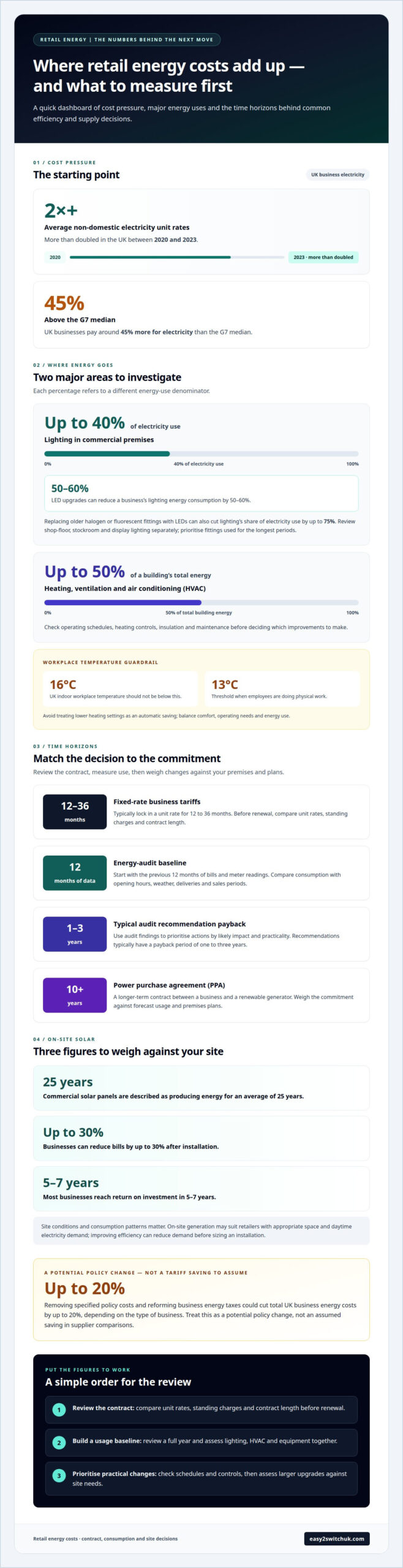
Average electricity unit rates for UK non-domestic customers more than doubled between 2020 and 2023, and UK businesses pay around 45% more for electricity than the G7 median. Reducing energy costs for retail businesses means tackling both sides of the bill: reviewing the energy contract and using less through practical efficiency measures.
Rising energy costs can make it tempting to switch suppliers straight away, but a better deal is only part of the picture. Your store’s opening hours, lighting, heating and equipment all affect consumption, so the right priorities depend on where your energy is going.
This article explains why costs are changing and how to weigh a supplier switch against an energy audit, quick operational changes and longer-term upgrades. You’ll get a clear way to decide what to address first, and how to connect immediate savings efforts with a more efficient retail space.
Key Takeaways
- Compare your contract terms with your store’s usage patterns to decide whether switching or reducing consumption should come first.
- Weigh solar, wind, green tariffs and power purchase agreements against your site’s needs and longer-term plans.
- Review a full year of energy use to spot waste and identify which changes deserve priority.
- Start with practical habits and controls, then assess whether larger upgrades to lighting, heating or cooling make sense.
1. Are business energy costs rising?
Yes. Average electricity unit rates for UK non-domestic customers more than doubled between 2020 and 2023, and UK businesses pay around 45% more for electricity than the G7 median. Retailers face particular pressure because lighting, heating and cooling are usually among their largest energy costs.
Lighting efficiency offers a practical place to start. Lighting can account for up to 40% of electricity use in commercial premises. Replacing older halogen or fluorescent fittings with LEDs can cut lighting’s share of electricity use by up to 75%. LED upgrades can also reduce a business’s lighting energy consumption by 50-60%. Review shop-floor, stockroom and display lighting separately, then prioritise fittings used for the longest periods.
Heating, ventilation and air conditioning (HVAC) also deserve attention: these systems can account for up to 50% of a building’s total energy consumption. Check operating schedules, heating controls, insulation and maintenance before deciding which improvements to implement. For machinery, compare how often equipment runs and whether older models consume more energy than efficient alternatives. These checks help target investment rather than replacing equipment without a clear reason.
Efficiency must work alongside suitable workplace conditions. According to the Health and Safety Executive, UK indoor workplaces should not have temperatures below 16ºC, or below 13ºC when employees are doing physical work. Avoid treating lower heating settings as an automatic saving; balance comfort, operating needs and energy use. For non-domestic efficiency planning, record consumption and assess lighting, HVAC and equipment together. This gives retailers a practical baseline for tracking sustainability and climate goals, while supporting a more competitive business through better control of energy use.
2. Should you switch suppliers, or focus on efficiency?
A supplier switch and efficiency improvements address different parts of your energy costs. A practical plan for reducing energy costs for retail businesses starts by reviewing the contract, then checking whether lower consumption or renewable supply fits your store. UK business fixed-rate tariffs typically lock in a unit rate for 12 to 36 months. Before renewal, compare supplier offers and contract terms, including unit rates, standing charges and contract length.
Policy costs and business energy taxes also affect bills, so changing supplier alone does not remove them. Removing specified policy costs and reforming business energy taxes could cut total UK business energy costs by up to 20%, depending on the type of business. Treat this as a potential policy change, not an assumed saving in tariff comparisons. Check how charges appear on your bill and compare the elements suppliers can offer.
Renewable electricity can come through a green tariff, which matches a business’s energy use with renewable generation using certificates. A power purchase agreement (PPA) is a longer-term contract between a business and a renewable generator. These agreements typically last 10 or more years, so weigh that commitment against forecast usage and premises plans. Wind and solar can also support sustainability goals.
On-site generation may suit retailers with appropriate space and daytime electricity demand. Commercial solar panels are described as producing energy for an average of 25 years; businesses can reduce bills by up to 30% after installation, with most reaching return on investment in 5-7 years. Site conditions and consumption patterns matter. Improving LED lighting, heating and cooling efficiency can reduce demand before sizing a solar installation.
For reducing energy costs for retail businesses, compare contract terms with the operational changes you can implement now. If a supplier review is your next step, explore business energy contract options alongside your efficiency plans.
3. Are energy audits worth it for small businesses?
An energy audit can show where a shop uses electricity and gas, then turn findings into a practical action plan. Start by reviewing the previous 12 months of bills and meter readings. This consumption baseline helps distinguish normal seasonal changes from persistent waste. Compare opening hours, weather, deliveries and sales periods with energy consumption to identify patterns worth investigating.
A professional audit examines how the premises operate, not just the energy contract. It can assess lighting, heating, cooling, insulation, ventilation and equipment schedules, and flag systems running outside trading hours, poorly controlled temperatures or stockroom lights left on. Recommendations typically have a payback period of one to three years.
Use the findings to prioritise changes by likely impact and practicality. Walk through the shop at opening and closing, note which appliances remain powered, and assign clear switch-off responsibilities. Smart meters, energy management systems and real-time monitoring can help reveal consumption patterns between checks.
Audits are most useful when you measure the results. Set a baseline, make the simplest operational changes, then compare later bills with similar trading periods. Track electricity and gas separately, and note changes in opening hours or equipment. This helps distinguish genuine savings from seasonal variation and gives you a sound basis for deciding whether to pursue further efficiency improvements or review your energy contract. Better usage data can support emissions tracking, but reductions depend on the actions taken and the energy used.
4. Quick wins and long-term energy-saving investments
Retailers can reduce energy use without affecting customers by targeting waste outside trading hours. Turn off unused displays and back-room equipment, use heating timers, and match settings to opening hours. Keep customer-facing areas comfortable and maintain the conditions required for stored stock.
Make staff habits part of the energy-efficiency plan. Give employees clear opening and closing tasks, such as switching off lights in empty rooms and reporting equipment left running. The Carbon Trust indicates behavioural change in commercial settings can reduce energy use by 5-15%. Review meter data with staff so they can see whether agreed actions are changing consumption.
For heating, lowering thermostats by 1°C in winter can reduce heating bills by around 8%. Apply changes carefully: the Health and Safety Executive’s workplace temperature guidance remains relevant, and food retailers must protect appropriate storage conditions. Avoid switching off refrigeration or ventilation without considering stock, customer comfort and the equipment’s operating needs.
For larger projects, an energy audit can help prioritise controls, insulation, efficient windows, LED lighting or heating upgrades. Energy-efficiency upgrades may introduce a return on investment within two years. Most businesses are described as reaching return on investment for solar panel installations in 5-7 years. Battery payback depends on installation costs, electricity use, storage capacity and when stored power is used.
UK retailers may be able to access grants or loans for energy-saving upgrades. Eligibility and financing terms affect whether support suits a project, so include them in your investment assessment rather than assuming funding is available. Before committing to new technology, compare expected savings with operating needs and potential carbon benefits. Start with lighting, heating or equipment improvements that match actual trading patterns.
Ready to review the supply side alongside efficiency upgrades? Compare business energy options as part of your cost-saving plan.
Easy2switch UK Ltd: Farm Energy Brokerage
Easy2switch UK Ltd helps businesses compare electricity and gas contracts when renewal is approaching or a supplier switch is under consideration. Through its Business Energy Brokerage, it reviews supplier offers and manages the switching process. Its Farm Energy Brokerage and Charity Energy Brokerage serve those sectors.
Easy2switch UK Ltd earns commission from the energy supplier a customer chooses to switch to. Keep this in mind when weighing contract options alongside efficiency measures. If you’re ready to review business energy contracts for your retail premises, visit easy2switchuk.com.
Make your next energy decision count
Make energy management a routine rather than a last-minute reaction. Set regular dates to review contract terms, meter readings and operational changes. Give someone responsibility for recording actions and noting changes in the shop. That record helps show which decisions are worth carrying forward.
When reducing energy costs for retail businesses, choose priorities that fit your premises. You might review a contract renewal, investigate unusual usage or plan an upgrade around trading needs. Keep customer comfort, stock conditions and staff routines in view as you make changes.
If you’re ready to consider your supply contract, Easy2switch UK Ltd can help you review business energy options. Contact Easy2switch UK for help and take a clear next step towards managing your energy with confidence.
Frequently Asked Questions
Are business energy costs rising?
Yes, UK retail businesses remain exposed to high electricity costs, although each bill depends on its contract and consumption. Compare the unit rate and standing charge separately, then consider whether seasonal demand or longer opening hours changed usage. Ofgem reports that UK retail energy debt has reached £5.5 billion, reflecting financial pressure across the market. Reviewing costs before renewal can help you plan ahead.
Are energy audits worth it for small businesses?
An audit can help if you’re unsure which changes to tackle first. A shop with unexpectedly high overnight use, for example, can investigate refrigeration, signage and equipment left running. Ask the assessment to separate avoidable consumption from essential operating needs. This gives you a focused action list to compare with daily routines, rather than investing in upgrades before identifying the source of waste.
Could a half-hourly meter reduce your costs?
It can help reveal when consumption peaks, but the meter itself doesn’t reduce use. UK businesses drawing more than 100kWh in any 30 minutes are legally required to have a half-hourly meter installed. Actively using smart meter data could reduce electricity use by around 3-4% and gas use by around 3%. Apply the readings to suitable tasks, such as scheduling equipment outside peak periods.
Should you switch suppliers, or focus on efficiency?
Compare both, then act on what your figures reveal. If your contract terms look uncompetitive, assess available tariffs; if usage rises outside trading hours, investigate controls and staff routines. You can address avoidable waste first, then review supply terms with a clearer picture of your needs. This avoids treating a contract change as a solution to inefficient operations.
Why is it Important to Save Energy?
Saving energy can help control operating costs and support a retailer’s carbon and sustainability aims. It also encourages closer attention to how the premises run. For example, assigning someone to check lights and non-essential equipment at closing makes responsibility clear, while reviewing consumption shows whether the routine is working. These practical steps make energy management part of everyday store operations.
How much can LED lighting save a UK retailer?
LED upgrades can reduce a business’s lighting energy consumption by 50-60%. Replacing halogen or fluorescent lighting with LEDs can cut lighting’s share of electricity use by up to 75%. The result for an individual shop depends on its existing fittings and how long lights operate. Prioritise areas with long operating hours, then compare lighting use after the change.
