
A fixed electricity rate doesn’t automatically make every bill predictable. For SMEs, business electricity contracts in the UK can lock the unit price and standing charge for up to five years, depending on the supplier. Automatically renewing contracts are usually fixed for 12 months.
It’s understandable to focus first on the rate, but electricity use, standing charges and contract terms also affect what you pay and how easily you can switch. Microbusiness protections can shape your options, too.
This guide explains how business electricity contracts for SMEs in the UK work, what influences costs and which terms to review. You’ll also learn how microbusiness status affects contract endings and renewals, helping you compare options with confidence.
We’ll start with fixed and variable rates, then explain how business size and consumption affect contracts, costs and protections. This gives you a clearer basis for deciding what to do when your current deal is due for review.
Key Takeaways
- Compare both the unit rate and standing charge, and weigh fixed-price certainty against the flexibility of a variable rate.
- Use your business’s annual energy consumption and size to understand which contract options and protections may apply.
- If you qualify as a microbusiness, know the rules for ending evergreen contracts and how rollover terms can affect your choices.
- Review your electricity use alongside your tariff to make sense of costs, then consider brokerage support when you’re ready to compare contracts.
Fixed-rate and variable-rate contracts
For UK SMEs, fixed tariffs can lock in electricity unit rates and standing charges for the agreed term, which may be up to five years depending on the supplier. Variable tariffs can change under their terms. When comparing business electricity contracts for SMEs in the UK, weigh price certainty against flexibility and your budget needs.
Tariff Types for SMEs
A fixed tariff holds agreed rates for its contract term; a variable tariff can change. Rollover contracts may renew automatically, often for a fixed term of 12 months. Deemed rates apply when a business takes a supply without agreeing a contract, and they’re usually higher than negotiated rates. Green tariffs relate to renewable electricity, while pass-through contracts separate supplier charges from costs that may change. Flexible tariffs allow purchasing decisions over time. Compare billing rules, renewal terms and charges that can move.
Budget Certainty from Fixed Rates
A fixed business electricity tariff makes the unit rate and standing charge easier to budget for during the agreed term. Fixed business gas tariffs can also provide price certainty, but compare the terms for each fuel separately. Some contracts run for up to five years, so consider whether that commitment fits your expected usage and business plans. UK business energy contracts have no cooling-off period after agreement. Before accepting, read the rates, exit terms and renewal conditions.
For example, estimate annual electricity use at 10,000 kWh, then compare the quoted unit rate and daily standing charge against your bills. For business electricity contracts for SMEs UK firms are considering, check whether a green tariff explains its renewable sourcing and whether pass-through costs affect billing. Most UK businesses pay 20% VAT on electricity, while eligible business customers may pay 5%.
SMEs can manage electricity costs by improving efficiency, using smart-meter readings to identify consumption patterns and reviewing when equipment runs. Where operations allow, schedule energy-intensive tasks for lower-demand periods. Meter data can reveal avoidable usage and help guide practical changes.
How business size and energy use affect contracts and protections
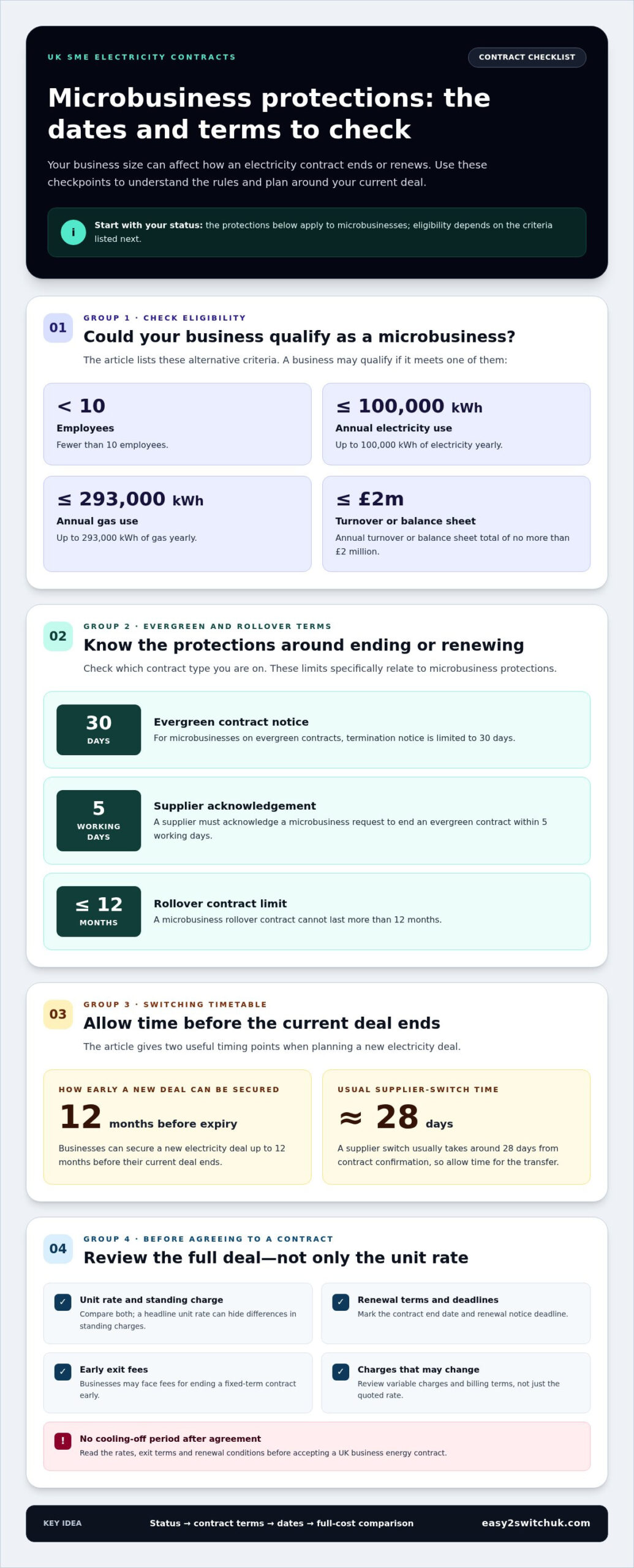
Business size and annual consumption help determine which contract terms and protections may apply. A UK business may qualify as a microbusiness if it has fewer than 10 employees, uses up to 100,000 kWh of electricity yearly, or uses up to 293,000 kWh of gas yearly. An annual turnover or balance sheet total of no more than £2 million is another criterion. Small-business criteria include 11 to 50 employees, turnover up to £6.5 million, electricity use up to 200,000 kWh, or gas use up to 500,000 kWh.
Business and domestic energy contracts differ in how suppliers structure rates, terms and billing. Business bills commonly separate the unit rate from the standing charge, with taxes and other charges also affecting the total. Most UK businesses pay 20% VAT on electricity, while eligible business customers may pay 5%. A business using electricity partly for domestic purposes should understand how that use affects VAT eligibility and keep relevant consumption information with its billing records.
The premises’ location can affect available business tariffs and charges, so compare offers for its actual UK region. Wholesale energy costs influence supplier pricing, while usage patterns, meter setup and contract term also shape an offer. A renewable energy tariff may suit a business seeking electricity from renewable sources, but compare its rates and terms with other options. Looking only at the unit rate can obscure differences in standing charges and contract conditions.
Energy use can affect contract structure as well as price. Businesses with maximum electricity demand of 100 kWh or greater in any 30-minute period must have a half-hourly meter. This records consumption in half-hour intervals and can inform how suppliers price a contract. Before comparing business energy deals, gather recent bills, annual kWh use, meter details and current contract end date. Then compare the unit rate, standing charge, renewal terms and any charges that may vary, rather than relying on a headline rate alone.
Microbusiness protections for contract termination and renewals
Microbusiness rules can affect how you end or renew a contract, while tariff details shape your next deal. UK energy suppliers offer contracts to small businesses, with rates and terms that vary according to business needs.
Renewals and Switching
For microbusinesses on evergreen contracts, termination notice is limited to 30 days. Suppliers must acknowledge a request to end an evergreen contract within 5 working days. A microbusiness rollover contract cannot last more than 12 months. Mark your contract end date and renewal notice deadline, then compare quotes before accepting a new term.
Businesses can secure a new electricity deal up to 12 months before their current deal ends. A supplier switch usually takes around 28 days from contract confirmation, so allow time for the transfer. For renewable tariffs, review what the supplier says about generation sources and carbon claims. If the offer refers to REGO-backed supply, read how certificates support its renewable electricity claim. Renewable sourcing and carbon-free power are not interchangeable descriptions.
Fees, Risks and Exit Charges
Review the contract for early exit fees, standing charges, renewal terms and charges that may change. UK businesses may face exit fees for ending a fixed-term contract early. Before signing, weigh the cost and consequences of leaving early against the remaining term. A low unit rate may not suit a business expecting to move premises or change its energy needs.
Deemed rates are usually higher than negotiated contract rates, so avoid leaving a premises without an agreed deal. Review rollover terms, variable charges and exit costs, not just the headline unit rate. Keep signed terms and renewal notices together, and record the agreed tariff, standing charge and contract end date for future comparisons.
Micro-business electricity costs and consumption
A microbusiness’s annual electricity spend depends on consumption, the unit rate and the standing charge. Two premises with similar usage can still have different bills because contract rates and daily charges vary. Treat annual consumption as the starting point when assessing a tariff, not the only cost factor.
Its average unit rate is 32.2p per kWh, with a 46.8p daily standing charge. These figures show why comparing unit rates alone gives an incomplete picture. The standing charge applies across the billing period, while the unit rate applies to each kWh consumed.
Indicative microbusiness electricity rates can vary, so treat published figures as a guide and compare them with your own contract. Compare those components with your own contract and meter readings. Check that the consumption period matches your annual estimate, and account for seasonal changes, opening hours and equipment use. A rate contract should be assessed against the actual usage it will cover.
Start with recent bills and note the meter readings, billing dates and annual kWh total. Then compare the unit rate, standing charge, contract term and any charges that can vary. Smart-meter or interval data can show when usage rises, including hourly patterns where available. Use the readings to identify equipment left running outside working hours and adjust schedules where practical. Reducing avoidable consumption cuts the kWh charged at your tariff rate.
To compare business electricity options against your usage and contract needs, explore business energy brokerage support.
Easy2switch UK: Farm Energy Brokerage
Easy2switch UK Ltd helps businesses compare electricity and gas contracts through its Business Energy Brokerage, including when a current deal is nearing renewal or usage has changed. It reviews supplier offers and manages the switching process, helping you assess options against your consumption, tariff terms and budget priorities.
Farms can use Farm Energy Brokerage to consider contracts around their operational energy needs, while charities can access Charity Energy Brokerage. Easy2switch UK Ltd earns commission from the energy supplier a customer chooses to switch to, so you can factor that payment arrangement into your decision.
If you’re ready to explore contract options for your business, contact Easy2switch UK Ltd to discuss your energy needs.
Make your next contract decision count
Energy decisions are easier to manage as part of routine business planning than as a last-minute response to renewal. Revisit your contract when your premises, operating hours or equipment needs change. This helps you assess whether your current arrangement still suits how your business uses electricity.
Choosing business electricity contracts for SMEs in the UK is also a chance to clarify energy responsibilities within your organisation. Keep contract information accessible, agree who tracks renewal dates and usage, and record your priorities, such as predictable budgeting or renewable supply. These habits can make future comparisons more focused.
Easy2switch UK Ltd’s Business Energy Brokerage can help businesses compare supplier offers and manage switching. Its Farm Energy Brokerage and Charity Energy Brokerage serve those sectors, too. If you’re considering your next contract, contact Easy2switch UK Ltd to discuss your business energy needs and take a clear next step.
Frequently Asked Questions
What is Business Electricity?
Business electricity powers commercial premises, such as shops, workshops and offices. It’s purchased through a commercial account, with charges based on the agreed tariff and metered use. For example, a bakery’s ovens, lighting and refrigeration all contribute to its business consumption. Keeping invoices with operating records helps owners track energy spending against business activity.
How do business contracts differ from domestic contracts?
Business contracts cover electricity used for commercial activity, while domestic contracts serve household use. The distinction matters at mixed-use sites: a café with a flat upstairs needs clear records showing which premises and activities each supply serves. Keep the supply address and account details consistent across bills and contract paperwork so charges are assigned to the correct business or residential account.
How does business energy procurement work?
Business energy procurement is the process of choosing a supply contract that suits an organisation. Start with a buying brief: list each site, annual usage, operating pattern and preferred level of contract risk. Compare quotes using the same consumption assumptions, then assess start dates, billing methods and charges that can vary. Keep the accepted terms and confirmation together so you can refer to them if an invoice differs from the agreement.
How many kWh does a small business use per year?
A UK small-business electricity customer is described as using between 5,000 and 15,000 kWh a year. That’s a reference band, not a prediction for every firm: a small office with limited opening hours can use far less than a food business running refrigeration. Use a full year of meter readings where possible, and compare like-for-like periods before setting a budget or choosing a tariff.
What should SMEs consider?
Before accepting a quote, confirm that the legal business name, supply address and meter reference match the premises. Check how the contract handles a move, changes in occupancy or equipment expansion, as these can affect forecast consumption or require account updates. Review invoice frequency, payment method and the process for querying a bill, too. These details can affect cash flow and simplify contract administration.
What types of business electricity contracts are available to UK SMEs?
UK SMEs can choose fixed, variable, rollover, deemed, green, pass-through or flexible arrangements. Match the structure to how your business plans and manages energy: a fixed offer supports predictable rates, while flexible purchasing suits organisations able to monitor buying decisions. Green tariffs focus on renewable electricity. Read each quote’s charge breakdown and renewal wording, then choose an arrangement that fits your purchasing capacity and environmental priorities.
