
The energy contract that suits your startup today may not fit after your next hiring round or move. Choosing utility solutions for tech startups and scale-ups means planning around where the business is heading, not just its latest bill.
Energy needs can shift as your team, equipment and premises change. Comparing supplier offers takes time, and contract terms and renewal dates are easy to overlook. A clear process can make the decision more manageable.
This guide explains how to compare business energy options against your current usage and growth plans. You’ll learn what to consider when reviewing contract terms, preparing for a switch and deciding whether an offer fits your business. Easy2switch compares offers from hundreds of energy suppliers and supports businesses online or by telephone.
With a clear view of your needs now and the changes ahead, you can choose an arrangement that’s easier to manage as your business grows.
Key Takeaways
- For this guide, utility solutions for tech startups and scale-ups means business electricity and gas procurement, with choices shaped by changing premises, workloads and teams.
- Review contract duration, renewal timing and the usage information behind an offer to see whether the terms fit your next stage of growth.
- Compare supplier offers by rates, charges, contract terms and fit with your plans. A quoted rate alone won’t show whether an offer suits your business.
- Gather your current supplier and contract details, meter information and usage records before reviewing options.
- Understand how broker commission is handled, then use online or telephone support to make the comparison and switching process more manageable.
What utility solutions mean for UK tech startups and scale-ups
In this guide, utility solutions for tech startups and scale-ups means arranging business electricity and gas, rather than choosing every service a workplace needs. Broadband, water and managed IT may also matter to a growing company, but they are outside this energy procurement discussion. Energy deserves focused attention because changes in headcount, premises or working patterns can affect what the business needs from its contract.
The roles are distinct. An energy supplier provides electricity or gas under an agreement and bills the business. An energy contract sets the terms for that supply. An energy broker compares supplier offers and supports a business with the switching process. In short, a business energy broker helps organisations compare electricity or gas contracts and manage the move to a selected offer. For context on the market, Ofgem, the UK’s energy regulator, regulates electricity and downstream gas markets in Great Britain.
Which energy needs should a growing technology business assess?
Start by listing what uses energy at each site instead of treating the office as one undifferentiated load. A startup might rely on:
- Office lighting, heating, kitchen facilities and staff equipment.
- Computers, testing equipment, development hardware and other technical infrastructure.
- On-site server rooms, networking equipment or specialist systems, where these are part of the business’s operations.
Then distinguish the current pattern from likely changes. Note when people are on site, which equipment runs continuously and whether usage rises during particular work periods. Record whether each premises uses electricity, gas or both. This creates a clearer picture than relying on one bill or assuming every new team member adds the same demand.
How startup growth can change an energy decision
A hiring plan can mean more desks and devices. A move can change the premises and its energy setup, while an additional workspace may bring another supply arrangement to manage. Operating hours matter too: equipment running overnight or longer shifts can change the usage pattern compared with standard office hours.
Use forecasts to prepare, not as promises of exact consumption. A headcount plan or expected launch date can help identify possible changes, but projects may shift and actual usage may differ. Keep current consumption records alongside a simple outlook for planned hiring, moves, additional workspaces and schedule changes. This lets you compare an offer with both present needs and a realistic growth scenario.
Put the contract end date and renewal timing beside key business milestones, such as a lease review, planned office move or expansion. That gives your team time to review its needs before the existing arrangement ends, rather than letting an important date get lost in the pace of growth.
How business energy contracts fit changing startup requirements
A business energy contract has several moving parts, and each answers a different question. Contract duration is how long the arrangement runs. Renewal timing is when the business needs to review its next contract and take any necessary steps before the current one ends. Energy usage is the electricity or gas requirement an offer is based on. Considering these separately helps you assess whether the contract’s timeline and assumptions still fit your business.
That fit varies by premises and operating model. A small office with standard working hours has a different pattern from a site where equipment runs for longer periods, or a company using several workspaces. Electricity needs may shift with devices, technical systems and occupancy; gas use depends on whether the premises relies on it, for example for heating. For wider context on supply and demand, the government publishes UK energy market trends and data. Market context is useful, but your own sites and usage records should guide the decision.
Which contract details deserve close comparison?
Review the full offer, not just its headline rate. Compare the quoted unit rate for each fuel, any standing charge, the contract duration and the applicable terms. Note the end date and how renewal is handled, including when a decision is needed and what business or meter information may be required. These details make offers easier to compare on a like-for-like basis and help prevent a renewal date from being overlooked.
No single contract structure suits every startup. A business with stable premises and relatively predictable usage may value different features from one preparing to relocate or change its operating schedule. Focus on how the agreement matches likely needs and the business’s appetite for commitment, rather than assuming the longest, shortest or lowest quoted offer is automatically the right one.
How to plan for growth without overcommitting
Use current energy information as your baseline, then compare it with realistic scenarios: planned hiring, a possible move, an additional workspace or longer operating hours. Treat these as planning assumptions, not guaranteed consumption. A growth forecast can help reveal whether an offer may be a poor fit, but uncertainty around launch dates, occupancy and equipment use deserves attention before you commit.
Review contract terms alongside premises plans. A move or expansion can change the practical requirements for a contract, so factor expected changes into your comparison rather than focusing only on today’s bill. Record the contract end date beside milestones such as lease decisions and hiring plans. Supplier processes and contract wording can differ, so review the relevant offer details rather than assuming the same renewal steps apply everywhere.
Good utility solutions for tech startups and scale-ups balance current energy needs with credible plans for change. Easy2switch can help compare business electricity or gas offers and guide you through the switching process. Explore business energy comparison support.
How to compare utility solutions for a tech startup
A useful comparison turns supplier offers into a decision your team can explain and manage. Start with the same business details for each option, then assess more than the headline rate. Utility solutions for tech startups and scale-ups should reflect actual usage, contract commitments and the company’s plans, not just a promising figure on a quote.
| What to compare | Questions to consider |
|---|---|
| Supplier offer | What are the quoted electricity or gas unit rates and standing charges? Are the offers based on comparable usage information? |
| Contract terms | How long does the agreement run? What are the end date, renewal conditions and any stated requirements? |
| Support | What help is available to understand the offer and manage the switching process? |
| Business fit | Does the offer make sense for current operations and planned changes to premises, staffing or working hours? |
What to compare beyond the headline rate
A lower quoted unit rate doesn’t automatically make an offer the best fit. Consider standing charges and contract duration alongside the unit rate, then read the terms for renewal conditions, end dates and stated requirements. Compare offers using the same business and usage information wherever possible. For broader market context, Ofgem’s retail energy market insights can help frame your research, but they don’t replace reviewing the details of a specific offer.
Match each option against what you know about the business. A company using one office on a consistent schedule may assess fit differently from a team planning a move or longer operating hours. Keep assumptions visible, especially where future usage is uncertain. Don’t treat an estimate as guaranteed consumption, and don’t assume a quoted rate alone shows the contract’s overall suitability.
Direct supplier search or broker support?
Approaching suppliers directly gives your team control over gathering information and comparing responses. It also means setting aside time to collect offers, organise terms and manage the switching process. A broker offers another route: Easy2switch compares business electricity and gas offers from hundreds of suppliers and provides practical support online or by telephone. Both approaches benefit from clear business details and careful review of the resulting terms.
Understand how the broker is paid as part of your comparison. Easy2switch doesn’t charge the customer a separate brokerage fee; the chosen supplier pays commission, which is incorporated into the tariff. This gives you context for the offer and its payment model. For further reading, the published Business Energy Comparison 2026: A Strategic Guide for UK SMEs & Farms and Commercial Energy Broker Guide 2026 cover related decision points.
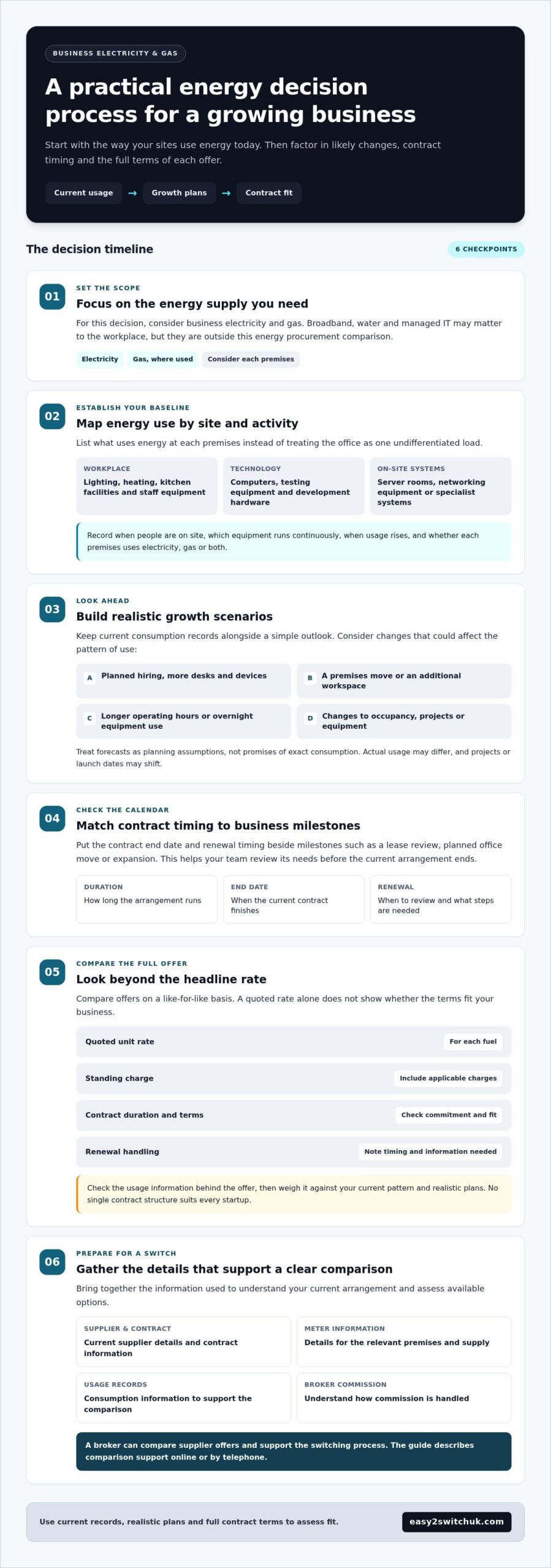
A practical decision process for selecting business energy
A simple preparation routine can make an energy decision easier to manage, especially when finance, facilities and growth planning are shared across the team. Use the same information to assess every offer, keep confirmed details separate from forecasts, and record why an option fits the business. This gives your team a clear basis for deciding whether to switch.
What information helps prepare for an energy comparison?
Gather the documents and details you already have before comparing offers. Check that the information relates to the correct premises and fuel, and note any gaps rather than filling them with guesses. A practical starting list includes:
- Recent bills and the current electricity or gas supplier details.
- Contract end date and any renewal information you have received.
- Relevant meter details for each premises, alongside available usage records.
- Whether the business needs electricity, gas or both at each site.
- Planned changes, such as a move or revised operating hours, clearly marked as forecasts.
Usage records help describe how the business operates now. Forecasts add context, but label them as estimates so a possible expansion or longer schedule isn’t mistaken for confirmed consumption.
How to make the decision manageable
Work through the comparison in a consistent order. This keeps the decision practical without assuming one offer will suit every startup.
- 1. Set the business requirements. Note the premises, fuels used, current operating pattern and expected changes that could affect energy needs.
- 2. Check the existing arrangement. Confirm supplier, contract end date, available meter information and usage records. Keep unclear items visible for review.
- 3. Compare offers on the same basis. Review quoted rates, standing charges, contract duration, renewal conditions and stated requirements against the same business details.
- 4. Test the fit. Consider whether the terms align with current operations and realistic plans, including a possible move, hiring or changed working hours.
- 5. Review before deciding. Read the offer terms and understand the stated switching steps before agreeing. Record the reason for your choice and the key dates your team needs to track.
Shortlisting options against shared criteria helps colleagues focus on meaningful differences instead of comparing isolated figures. Easy2switch supports businesses with comparing supplier offers and managing the switching process. The published guide Business Energy Consultants: Securing the Best Commercial Rates in 2026 also explores the role of energy advice in commercial decisions.
For a straightforward route from gathered details to a considered comparison, compare suitable business energy offers with Easy2switch.
How Easy2switch supports energy decisions as your business scales
Energy decisions can take time away from hiring, product development and running the business. Easy2switch makes comparison and switching more manageable by comparing business electricity or gas offers against your company’s requirements. The aim is to help you review relevant options with your current needs and plans in view, rather than treating one offer as right for every organisation.
What the Easy2switch comparison and switching support involves
Start with the information that shapes your energy needs, such as the fuel required, available usage details and relevant contract information. Easy2switch uses your business requirements to compare offers from hundreds of energy suppliers. You can access practical support online or by telephone while reviewing options and moving through the switching process.
Easy2switch is a broker, not the energy supplier. If you choose an offer, the supplier provides the energy under its contract. Customers pay no separate brokerage fee; the chosen supplier pays commission, which is incorporated into the tariff. Knowing how the broker is paid gives you useful context when reviewing the offer and its terms. Consider the full contract details and fit for your business, not just the quoted rate.
This support can be useful when the person responsible for energy is also managing finance, operations or a move. A structured comparison and guidance through the switch can reduce the administrative effort involved, while leaving your business in control of the decision. The final choice should reflect the terms you’ve reviewed and the requirements you’ve identified.
When to review your business energy arrangements
Put energy reviews on the business calendar, not only on the finance team’s to-do list. A known contract end date is a practical prompt to revisit your options in good time. So are changes that could affect how or where the business uses energy, including moving premises, opening another workspace, changing operating hours or revising growth plans.
A planned move may alter the premises linked to your energy arrangements, while a new operating schedule could change the business’s usage pattern. These developments don’t automatically point to a particular contract. They are reasons to reassess whether the current arrangement and its timing still make sense. Keep the review date alongside relevant business milestones so the decision doesn’t get lost among other priorities.
As your company grows, utility solutions for tech startups and scale-ups should remain grounded in current requirements while allowing you to reassess when plans change. Easy2switch compares supplier offers and provides online or telephone support through the switching process. Compare business energy options with Easy2switch.
Make your next energy decision part of the growth plan
As your business prepares for its next stage, include energy decisions in operational planning alongside premises, hiring and equipment. Assign someone to keep contract dates and business changes visible, so a review can begin with time to compare options. This makes energy procurement a deliberate part of scaling instead of a last-minute admin task.
The right utility solutions for tech startups and scale-ups should stay practical as the company changes. Turn current requirements and realistic growth assumptions into a clear comparison brief, then assess electricity or gas options against it. Easy2switch provides business energy comparison support online or by telephone. Customers pay no separate brokerage fee; supplier commission is incorporated into the tariff.
Compare business energy options with Easy2switch and take a considered step towards an arrangement that fits your plans. Planning ahead can help your team approach its next stage of growth with greater confidence.
Frequently Asked Questions
What utility solutions does a tech startup need?
Most startups need business electricity, gas, or both, depending on their premises and equipment. An office may mainly need electricity for lighting, computers and networking, while a workspace with gas heating may need both fuels. Specialist energy management software or backup power may be relevant to some operations, but those are separate decisions from arranging an energy supply contract. Start by identifying the supplies connected to each business site.
Can a startup use an energy broker to compare business electricity contracts?
Yes. A startup can use an energy broker to compare business electricity contracts and get support with the switching process. This can help when no one internally has time to collect and organise supplier offers. Easy2switch supports business customers with energy comparisons online or by telephone. The business remains responsible for reviewing the contract details and deciding whether an offer fits its needs before agreeing to proceed.
How do scale-ups compare business energy suppliers?
Scale-ups can compare offers by using consistent information for each site, then checking the terms against how the business operates. For a company with several offices, make a separate record of each site’s energy needs and contract dates. This helps show whether one arrangement suits all locations or whether requirements differ. Compare rates and charges alongside contract terms, renewal details and any conditions that affect the business’s plans.
Is business energy switching disruptive to a startup?
A supplier switch is generally an administrative change to the energy arrangement, rather than a change to the equipment your team uses. To keep the process organised, assign someone to track correspondence, decision dates and details requested for the switch. Check that the premises and meter information are accurate, and review the new contract before agreeing. The specific arrangements depend on the supplier offer and switching process.
When should a growing business review its energy contract?
Review the contract ahead of its end date so there’s time to assess the business’s current needs and consider available offers. A move, new workspace, substantial change in operating hours or revised growth plan can also prompt a review. If a lease decision could change which premises the company occupies, add an energy review to that planning timeline instead of waiting until the move is imminent.
Does it cost a business to use Easy2switch?
There’s no separate brokerage fee for the customer. Easy2switch receives commission from the energy supplier the customer chooses, and that commission is incorporated into the tariff. The brokerage service isn’t billed to the business as a separate charge. Review the tariff and contract terms together so you understand the arrangement you’re considering before making a decision.
What information is needed for a business energy comparison?
Useful details include the business name and premises address, current supplier, recent bills, available usage records, meter information and contract end date. Note whether you need electricity, gas or both, and identify any separate sites to assess. If the business expects to move or change its operating pattern, include that as a forecast rather than confirmed usage. Complete records help make the comparison more relevant.
